Best digital delay for most players
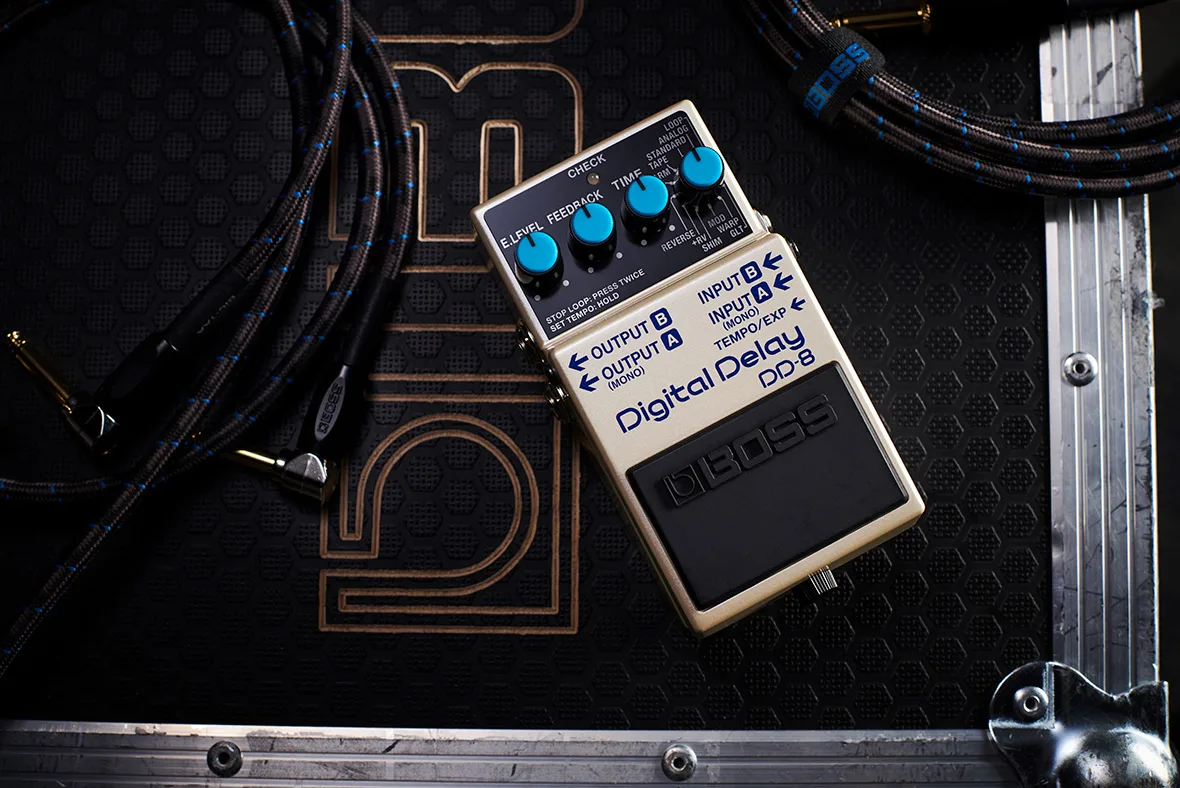
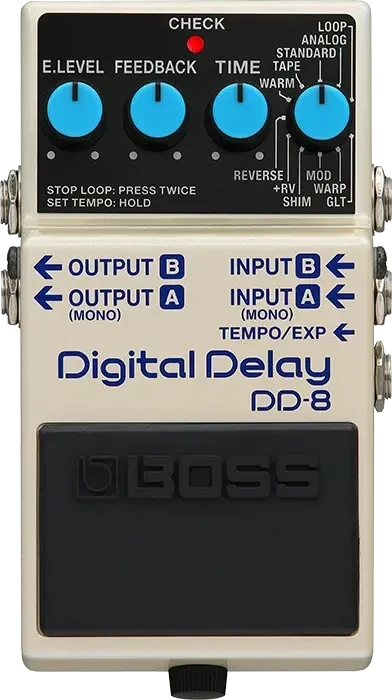
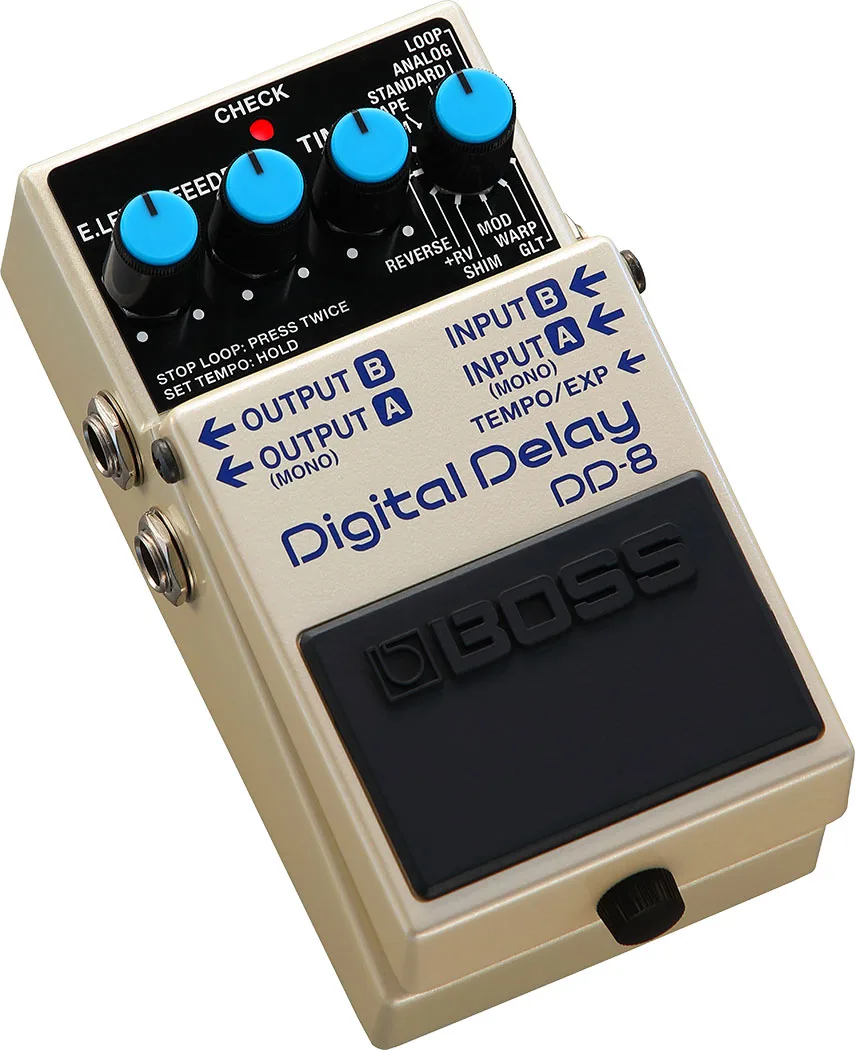
Boss DD-8
One compact pedal for slapback, tape echo, shimmer and stereo; plan on an adaptor and an external tap switch.
Photos: Boss
4 of 4 reviews recommend it30 owner reviews read
The Boss DD-8 is the safe choice because it covers almost every delay sound in one standard Boss compact pedal. Its 11 modes run from clean digital repeats through darker analogue-style ones, tape echo and reverse to shimmer, modulated repeats and delay with reverb, and it gives up to 10 seconds of delay, stereo inputs and outputs, and a looper that records 40 seconds in mono or 20 in stereo.
All four professional reviews found recommend it. Sound On Sound, Amazona, Bonedo and Delaydude describe clear, musical repeats with low noise, and Delaydude singles out the tape mode for its percussive character on rhythm parts. Of the 30 Thomann owner reviews read, the most repeated point is that one tough compact pedal has a delay mode for almost any job. A Carryover switch lets the repeats fade naturally when you switch it off, and the bypass is buffered.
Its drawbacks are practical. There is no tap switch and no presets: quick tap tempo needs an external footswitch, a few owners find the deeper settings fiddly, and Sound On Sound notes that the time knob does not change the delay smoothly while you play. It draws 100 mA, and Boss rates an alkaline battery at about 3.5 hours, so it really needs an adaptor. A few owners also find the clean sound a little sterile next to pricier delays.
- Best for
- Players who want one compact delay that covers clean digital, warm analogue-style and ambient sounds, in mono or stereo.
- Skip it if
- You need presets, MIDI or onboard tap tempo switches, or you run pedals on batteries.
What people like
- A delay mode for almost any job in one compact pedal
- Tough, reliable Boss build
What to know before you buy
- Deeper settings and tempo are fiddly to set
- Clean sound can feel sterile next to pricier delays
Video reviews
- Leon ToddAug 2023
- AndyDemosDec 2020
Best analogue delay
MXR Carbon Copy Analog Delay
For slapback and soft echo behind solos: warm, dark analogue repeats, but too soft for crisp rhythmic delays.
Photos: Dunlop
2 of 3 reviews recommend it30 owner reviews read
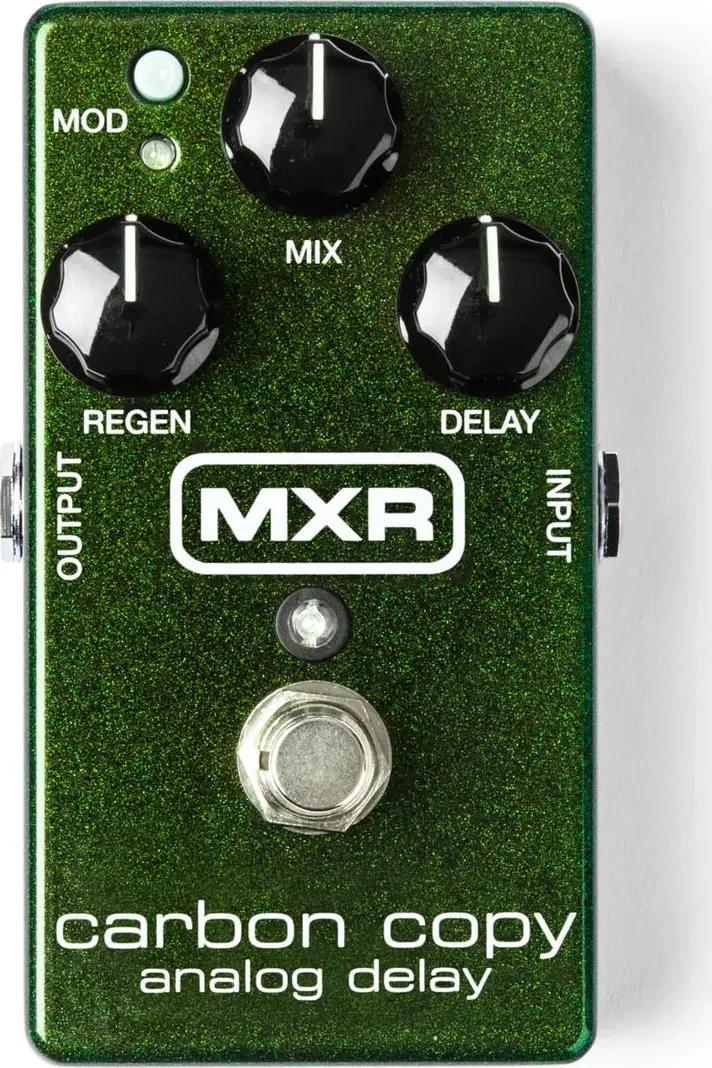
The MXR Carbon Copy Analog Delay does one sound, and that sound is the reason to buy it. Its bucket-brigade circuit gives warm, dark repeats that lose treble as they fade, so the echo sits behind the dry guitar instead of competing with it. That suits slapback, a soft echo under solos or a wash behind clean chords.
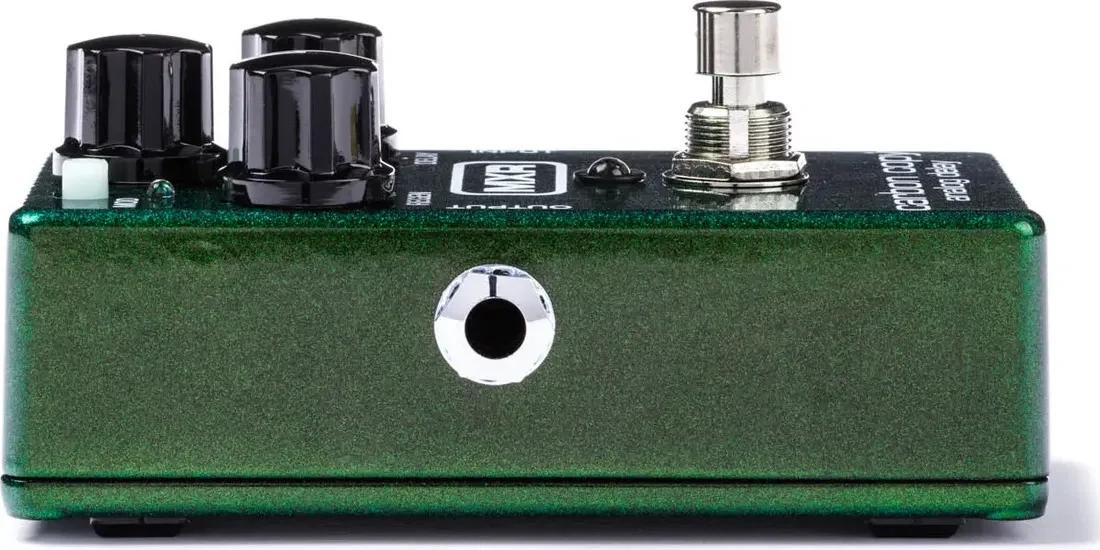
It gives 20 to 600 ms of delay, which MusicRadar pointed out is long for an analogue delay, as many stop at about half that. Three knobs set the time, the number of repeats and the mix, and a Mod button adds a slow wobble to the repeats, adjustable at two trim pots inside the pedal. MusicRadar and Premier Guitar both recommend it, Premier Guitar rating it among the most musical analogue delays its reviewer had tried, and "warm" is the word Thomann owners use most. It is true bypass and draws 26 mA.
The same darkness is its limit. Bonedo found the sound dull next to Electro-Harmonix's Memory Man and the repeats blurring into a cloud at longer times, so it does not suit tight, rhythmic delay parts where each repeat must be heard, and a couple of owners agree. It has no tap tempo, it is mono, and the trim pots and battery are inside the case. MXR's larger Carbon Copy Deluxe doubles the delay time and adds tap tempo; this pick is the original.
- Best for
- Players who want slapback, a soft echo behind solos or ambient washes from a small, simple pedal, and prefer repeats that sit behind the note.
- Skip it if
- You play tempo-locked, dotted-eighth parts that need bright, distinct repeats, or you want tap tempo, presets or stereo.
What people like
- Warm, dark repeats that blend with the dry guitar
- Simple to set with three knobs
What to know before you buy
- Dark tone can turn dull or muddy
- Modulation trim pots are inside the pedal and fiddly to set
Video reviews
- EquipboardMar 2024
- Andrew Reviews EverythingJul 2024
Best value delay with a looper
TC Electronic Flashback 2
A versatile, clean-sounding compact delay with a looper; tap tempo needs a cable or giving up MASH.
Photos: TC Electronic
Only 1 professional review so far, 1 recommending it30 owner reviews read
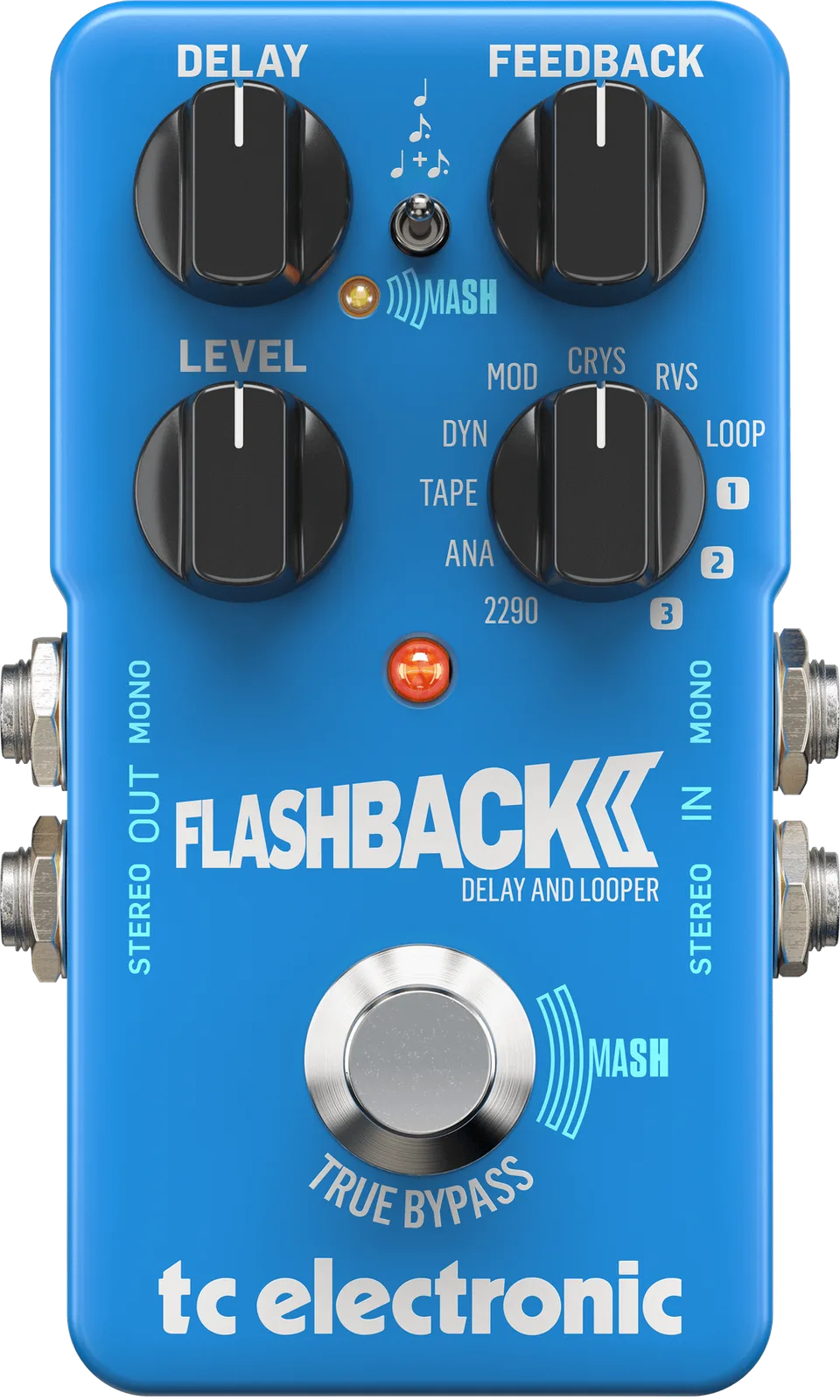
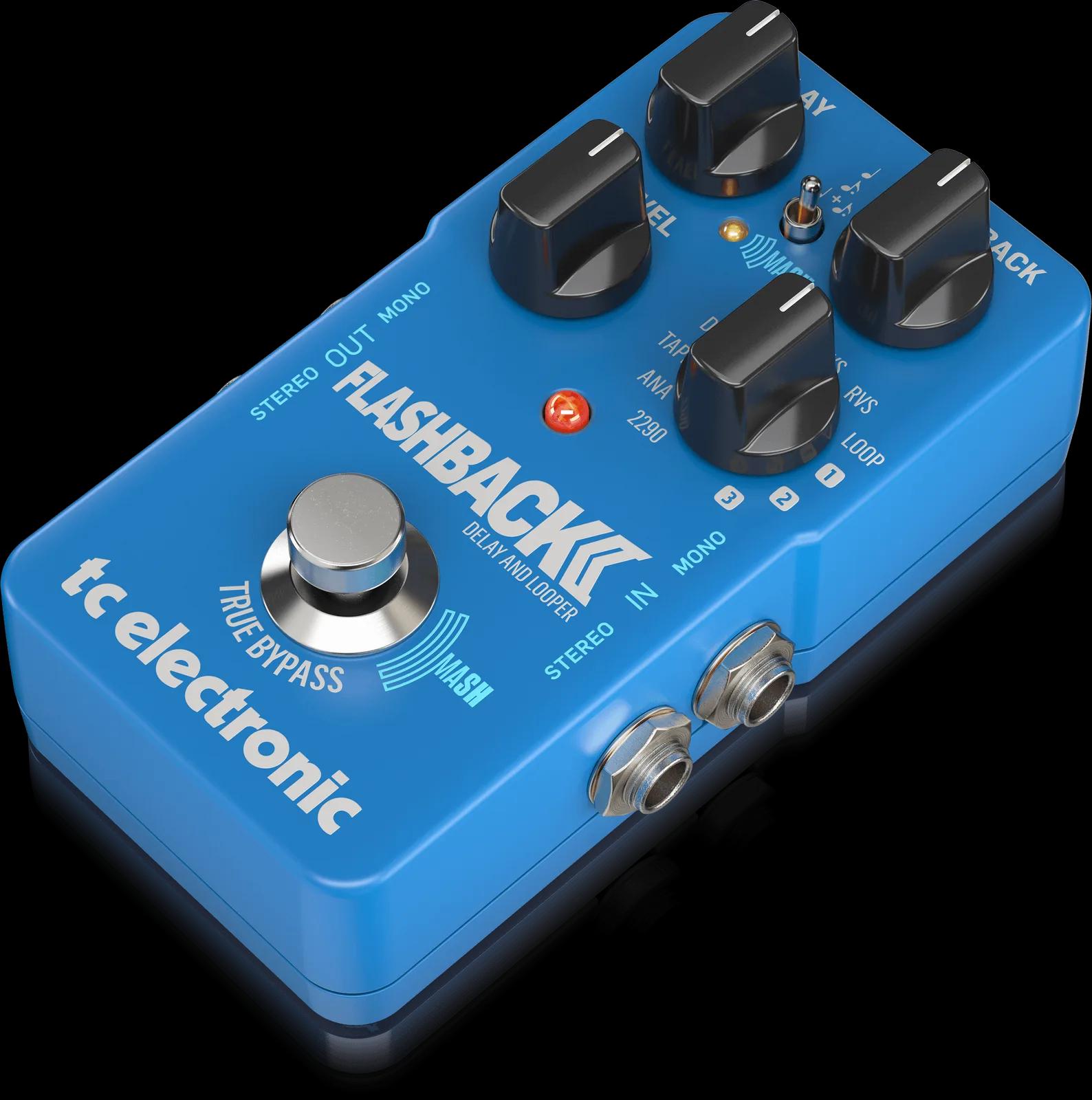
The TC Electronic Flashback 2 is the alternative to the Boss for players who want a wide range of delays in a small box. It has seven types (2290 digital, analogue, tape, dynamic, modulated, reverse and crystals, which pitches each repeat up an octave), up to 7 seconds of delay on most of them, a dotted-eighth subdivision, stereo, true bypass, and a looper that records 40 seconds in mono or 20 in stereo with unlimited overdubs.
Two features set it apart. Three TonePrint slots load sounds from TC's app or ones you build yourself, and the MASH footswitch is pressure-sensitive, so pressing harder raises a chosen control like a small expression pedal. Total Guitar calls it a versatile delay lifted from good to great by MASH, though less precise than a rocker pedal, and it picks out the tape, analogue and crystal modes. The 30 Thomann owner reviews read praise the range of usable delays, clean repeats and sturdy build, and ten call it strong value.
The evidence is thinner than for the DD-8, with one professional review beside the owner reviews. Tap tempo is the recurring complaint: the pedal has no tap switch, an external one needs a particular cable, and the alternative is a firmware setting that gives up MASH, which owners find hard to locate in the app. A couple of owners find the sound sterile, and three report a unit that failed, arrived faulty or would not update.
- Best for
- Players who want one compact delay, with a looper, that covers digital, tape, analogue-style and ambient echoes in mono or stereo.
- Skip it if
- You tap tempos on stage all the time, or need presets you can switch between with your feet.
What people like
- Wide range of good, usable delay types
- TonePrint slots add custom sounds
What to know before you buy
- Tap tempo needs an external switch with a special cable, or an app setting that gives up MASH
- TonePrint app settings and the printed guide are not intuitive
Video reviews
- The Gear CageFeb 2021
- Guitar Gear DemosAug 2017
Side by side
From each maker's specifications, as listed on the full reviews.
| Boss DD-8 | MXR Carbon Copy Analog Delay | TC Electronic Flashback 2 | |
|---|---|---|---|
| Type | Digital delay | Analogue delay (bucket-brigade) | Digital delay and looper |
| Controls | Mode, Time, Feedback, E.Level; Carryover switch | Delay, Mix, Regen; Mod switch; internal modulation width and speed trim pots | Delay, Feedback, Level, delay type selector; subdivision switch |
| Bypass | Buffered | True bypass | True bypass, with an analogue dry path when the delay is on |
| Power | 9V battery or Boss PSA adaptor | 9V battery or 9V DC adaptor (Dunlop ECB003) | 9 V DC adaptor of 100 mA or more (not included), or battery |
| Current draw | 100 mA | 26 mA | 100 mA (TC's rating on the pedal) |
| Delay time | Up to 10 seconds | 20 ms to 600 ms | 20 ms to 7,000 ms on most types |
How to choose
- One pedal for every kind of delay, from slapback to shimmer: the DD-8.
- A warm echo behind solos and clean chords, from three knobs: the Carbon Copy.
- Many delay types plus your own sounds and an expressive footswitch: the Flashback 2.
- Tight, tempo-locked rhythm parts: one of the digital pedals; the Carbon Copy's repeats are too soft for them.
- Stereo rig: the DD-8 or Flashback 2, as the Carbon Copy is mono.
Analogue and digital delay
The difference is in the repeats. The Carbon Copy's bucket-brigade circuit darkens each repeat as it fades, which is why reviewers and owners describe it sitting behind the guitar, and it tops out at 600 ms. The DD-8 and Flashback 2 make clean, exact copies and run far longer, to 10 and 7 seconds. Both digital pedals also have an analogue-style mode and a tape mode, so they can come close to the darker sound as well as doing their own.
That makes the choice about how you use delay. If it is atmosphere, a single warm voice with nothing to menu-dive is a strength. If you need repeats locked to a song's tempo, or a different delay for each song, the digital pedals do far more, and both take an external tap tempo switch.
Power, size and the rest of the board
All three are compact. The Carbon Copy draws only 26 mA and runs happily on a battery, while the DD-8 and Flashback 2 each draw about 100 mA and want an adaptor. The DD-8 is buffered and the other two are true bypass.
Where the delay goes matters too: one Carbon Copy owner advises keeping it out of the front of a saturated amp channel, and drive pedals such as the Ibanez TS9 Tube Screamer are covered in the best distortion pedals guide. For reverb rather than echo, see the TC Electronic Hall of Fame 2; the DD-8's delay-with-reverb mode covers some of that ground. The TC Electronic Ditto Looper is a looper, not a delay, for players who need longer loops than the DD-8 or Flashback 2 record.