Best first distortion pedal
LegendarySince 1978Boss DS-1
A first distortion that lasts: classic hard-edged rock and punk crunch, provided the Tone knob stays below halfway.
Photos: Boss
Only 2 professional reviews so far, 2 recommending it30 owner reviews read
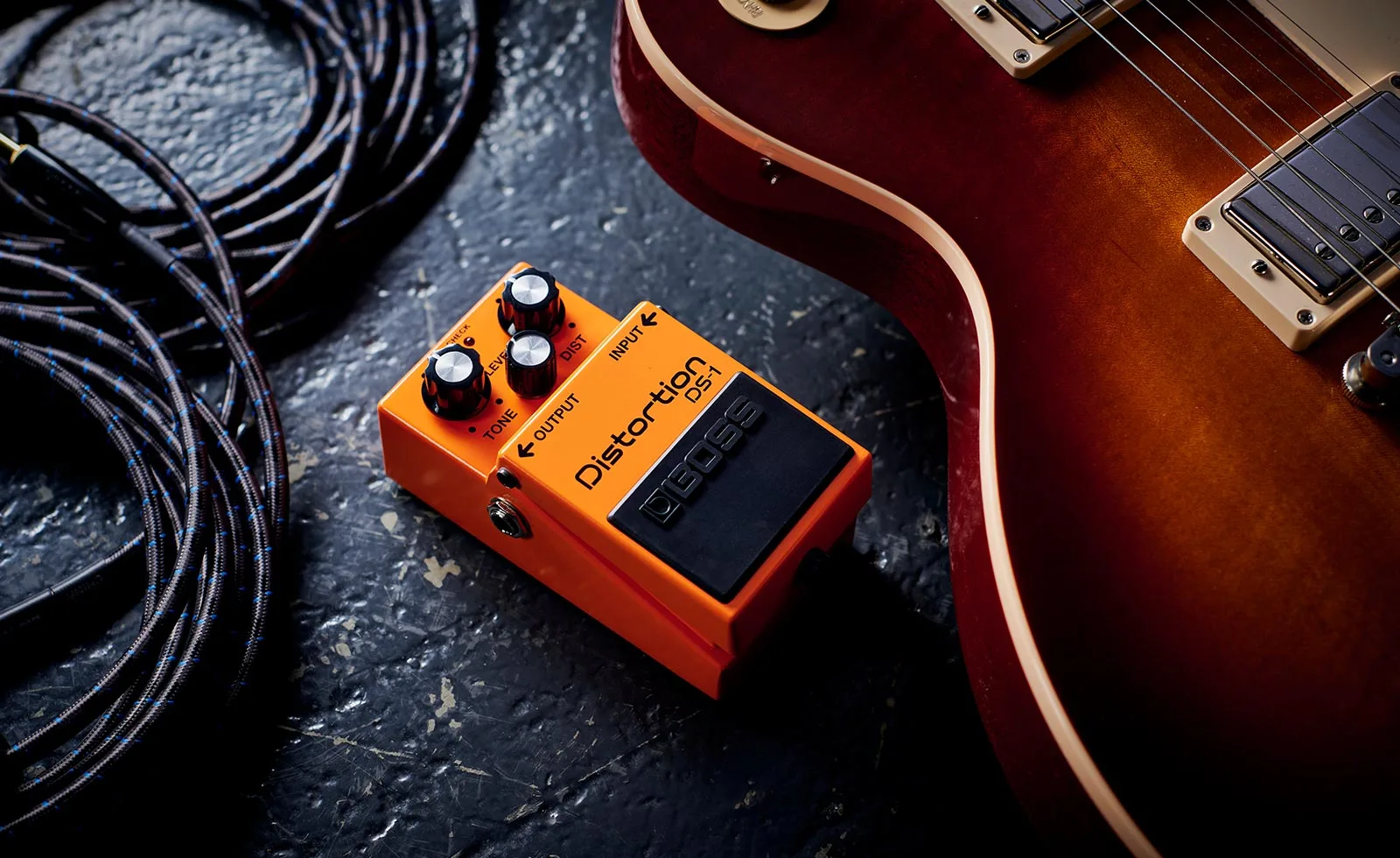
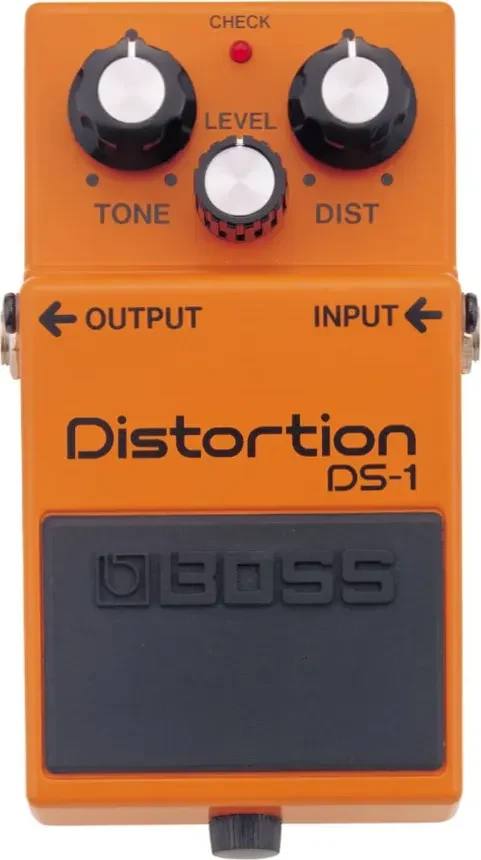
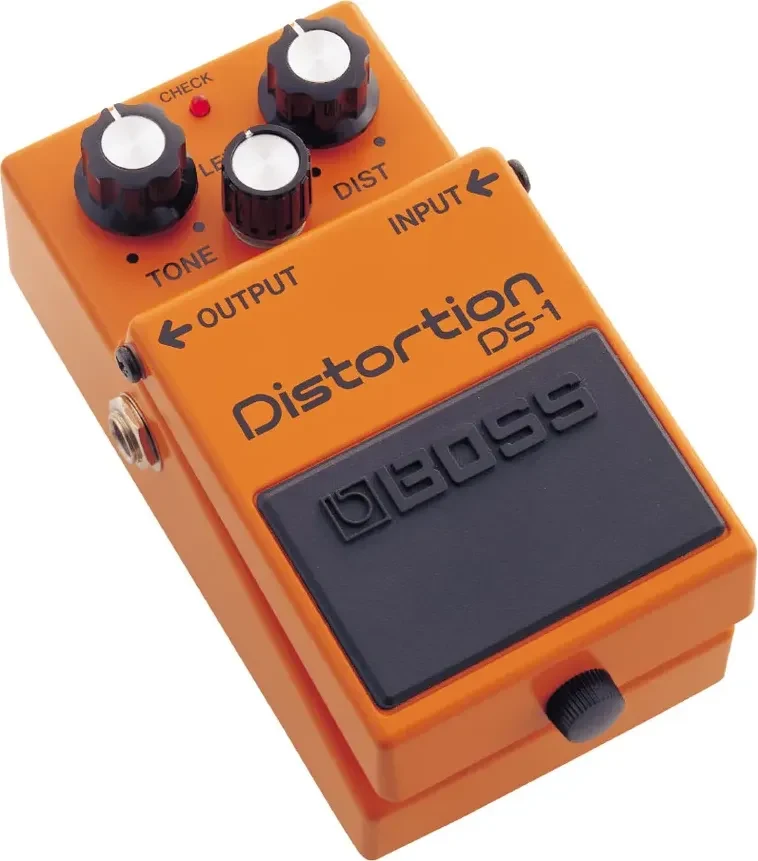
The Boss DS-1 has been in production since 1978, when it was Boss's first distortion, and Boss says it is its biggest-selling compact pedal. It gives the bright, aggressive distortion of classic hard rock and punk, set with three controls: Dist, Tone and Level. Both professional reviews recommend it, SoundGuys calling it tough and good value, and owners at Thomann mostly agree.
It also works as a boost. With the Dist knob low, it pushes an amp that is already breaking up, a use Boss itself points to and owners report. On a board it asks little: the standard Boss compact enclosure, a five-year warranty and a 10 mA draw, which Boss rates at around 80 hours from an alkaline battery.
The drawback is the Tone control. Owners warn that it turns harsh past halfway, and a few find the pedal thin or fizzy. SoundGuys found its output lower than other 9V distortions and the pedal less suited to modern high-gain metal than some rivals.
- Best for
- Beginners building a first board, and players who want classic hard rock or punk distortion, or a boost into an amp that is already breaking up.
- Skip it if
- You want a smooth, amp-like distortion, modern high-gain metal or more EQ than one tone control.
What people like
- Classic, recognisable rock and grunge distortion
- Tough Boss compact build that lasts
What to know before you buy
- Needs careful setting; the tone control turns harsh past halfway
- Not built for modern high-gain metal
Video reviews
- inthebluesDec 2021
- Jack Fossett GuitarAug 2022
Best for thick, sustaining fuzz
LegendarySince 2000Electro-Harmonix Big Muff Pi
The thick, long-sustaining fuzz for rock and doom; check your pedalboard has room for the big box.
Photos: Electro-Harmonix
Only 1 professional review so far, 1 recommending it30 owner reviews read
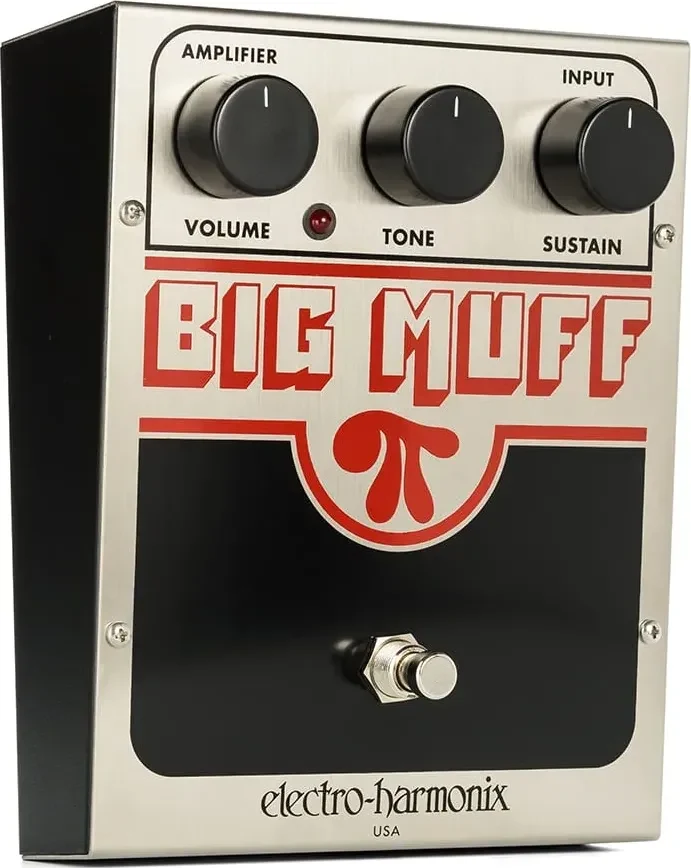
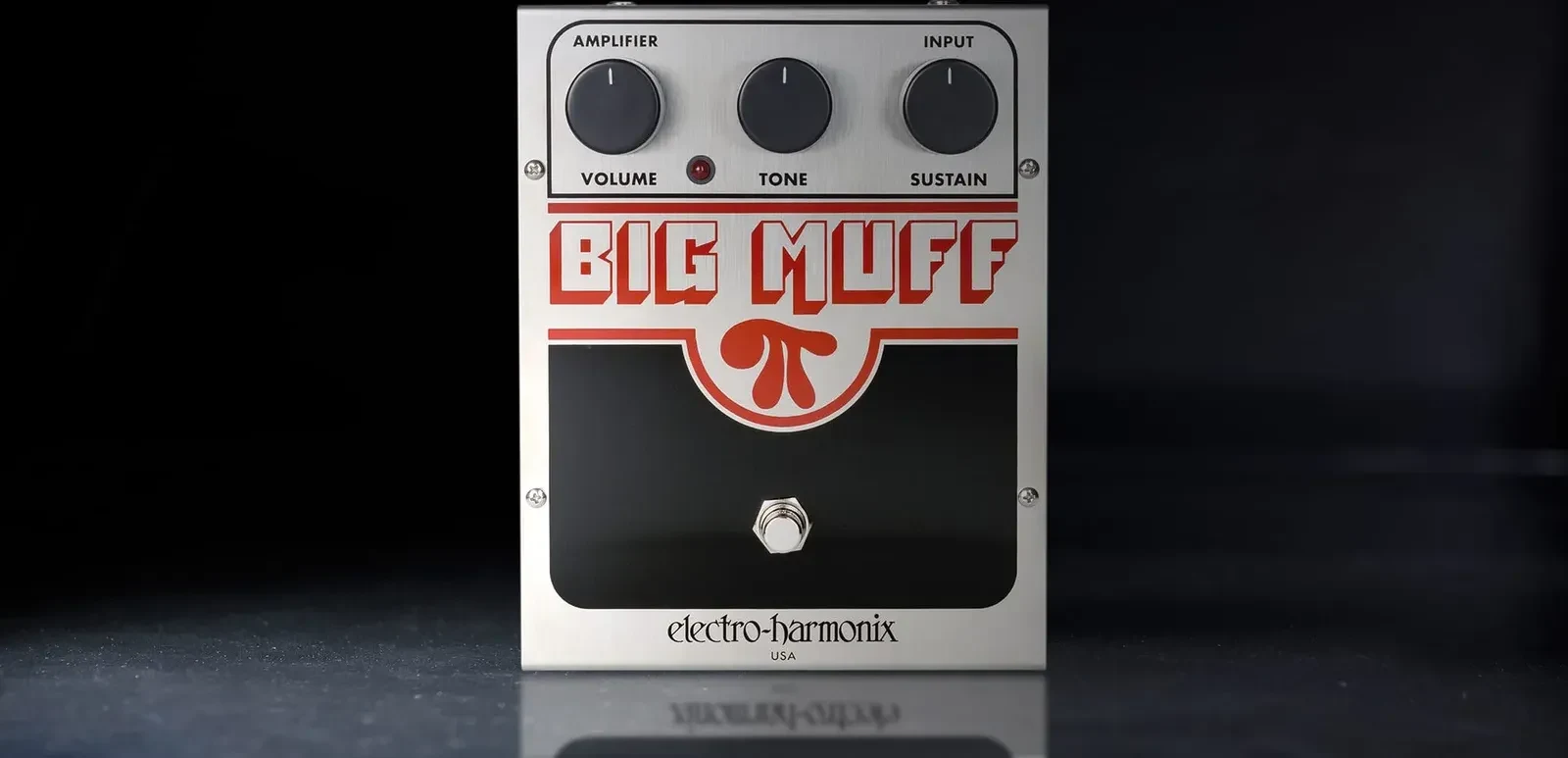
The Electro-Harmonix Big Muff Pi is a fuzz, not a distortion in the strict sense, though Electro-Harmonix itself bills it as a fuzz, distortion and sustainer, and it does the job of a heavy drive pedal: even at moderate settings it gives a dense, saturated sound with very long sustain. The Sustain knob sets both the amount of fuzz and how long notes hold, Tone sweeps from dark and woolly to bright and biting, and Volume sets the level.
Guitar World calls it a stone-cold classic with simple controls, and most owners at Thomann praise its huge, thick sound. It draws only 3 mA and the footswitch is true bypass.
It has two drawbacks. The first is size: at 5.5 by 6.88 inches it takes a lot of pedalboard space, the complaint reviewers and owners repeat most, though EHX also makes smaller versions. The second is its scooped midrange, which sounds enormous alone but can get lost with a bass player and drummer; some owners also find it muddy or hard to control.
- Best for
- Players who want long sustain and a thick, saturated fuzz for rock, alternative, doom or lead work.
- Skip it if
- You need a pedal that cuts through a dense band mix, or have little room on your board.
What people like
- Huge, thick fuzz with long sustain and a recognisable voice
- Simple controls that are quick to set
What to know before you buy
- Large enclosure takes a lot of pedalboard space
- Enclosure feels thin or cheap to some owners, with occasional faults
Video reviews
- The Gear CageOct 2020
- That Pedal ShowMay 2024
Best overdrive to stack or use instead
LegendarySince 1982Ibanez TS9 Tube Screamer
The boost rock and metal players use to tighten a driven amp; weaker as the only drive.
Photos: Sweetwater, Ibanez
Only 2 professional reviews so far, 2 recommending it30 owner reviews read
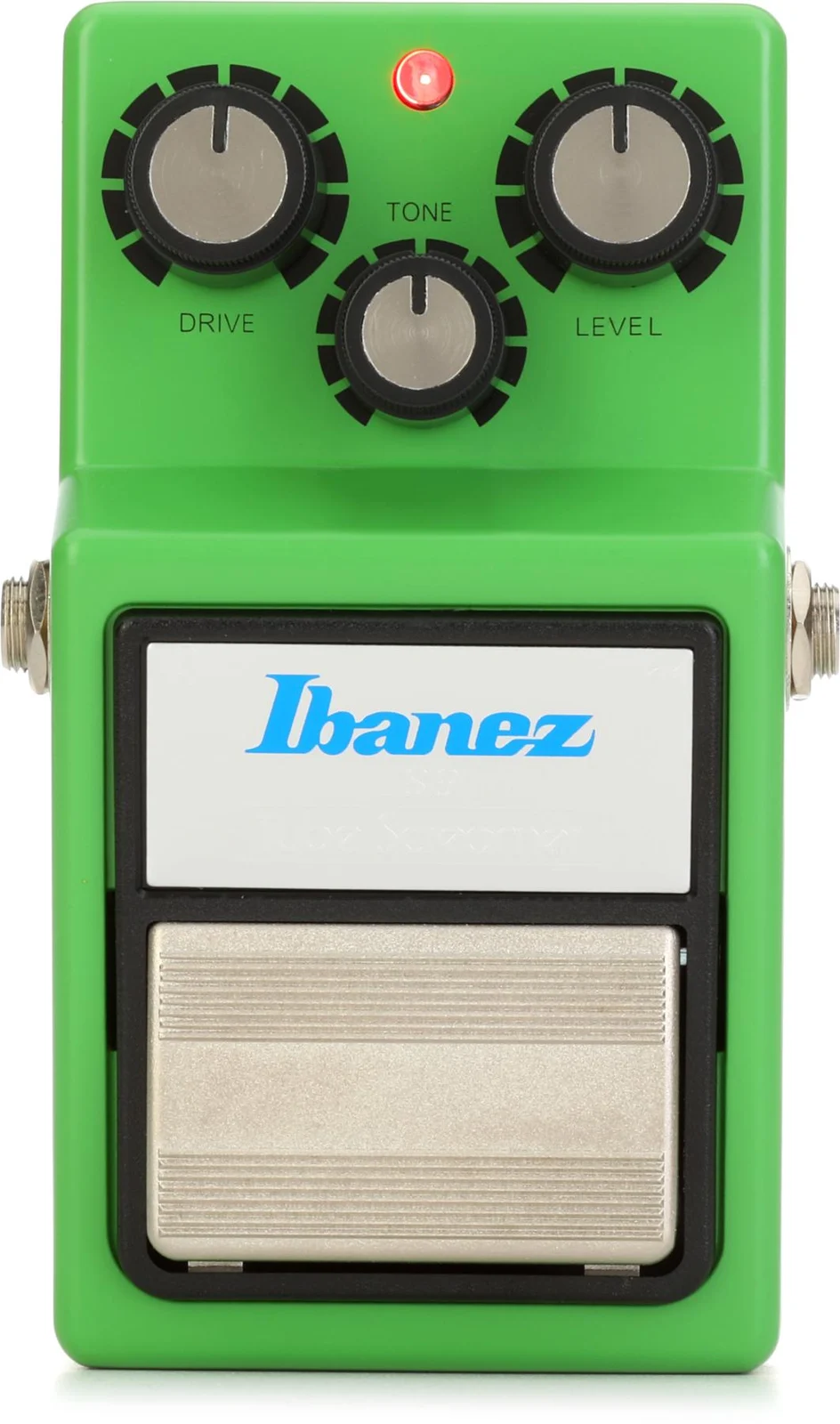
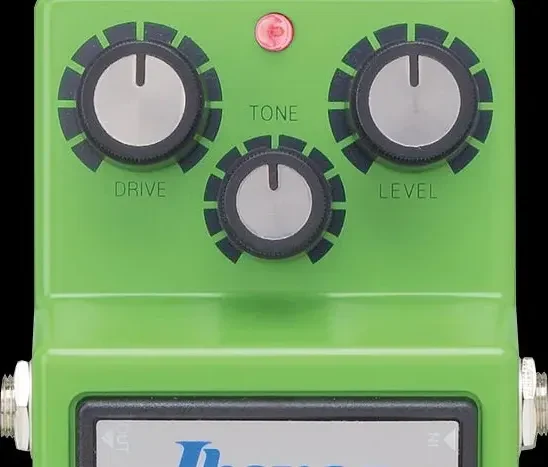
The Ibanez TS9 Tube Screamer is an overdrive, milder than either pedal above, and it is on this list as the overdrive alternative, used on its own or alongside a distortion. Its voice is centred in the midrange, so the guitar cuts through a mix, and it trims the bass.
Legendary Tones, Amazona and owners at Thomann rate it above all as a boost. Set with low gain and high level in front of a driven valve amp, it pushes the amp harder and keeps high-gain tones tight rather than muddy, which is why rock and metal players use it. On its own it gives a creamy, fairly mild drive suited to blues and classic rock.
That is also its limit. Legendary Tones found it less full as the only source of drive, a few owners agree, and some find it thin or dull next to rival pedals. If you have a clean amp and want heavy distortion from the pedal alone, it is the wrong choice.
- Best for
- Blues and rock players, and metal players who want to tighten a high-gain amp, using a valve amp or a good modeller.
- Skip it if
- You want a transparent overdrive that keeps your full low end, or heavy distortion from the pedal alone.
What people like
- Excellent boost for pushing and tightening a driven amp
- Classic mid-focused Tube Screamer voice that cuts through a mix
What to know before you buy
- Can sound thin or dull, with less low end than some rivals
- Less convincing as the only drive into a clean amp
Video reviews
- inthebluesDec 2023
- Reid's ReviewsJan 2019
Side by side
From each maker's specifications, as listed on the full reviews.
| Boss DS-1 | Electro-Harmonix Big Muff Pi | Ibanez TS9 Tube Screamer | |
|---|---|---|---|
| Type | Distortion | Fuzz, distortion and sustainer | Overdrive |
| Controls | Dist, Tone, Level | Volume, Tone, Sustain | Overdrive, Tone, Level |
| Power | 9V battery or Boss PSA adaptor | 9V battery (included) or 9.6V DC 100 mA adaptor | 9V battery (006P) or 9V DC centre-negative adaptor |
| Current draw | 10 mA | 3 mA | 8 mA |
How to choose
- Your first drive pedal, for rock, punk or grunge: the DS-1.
- Huge, sustaining fuzz for alternative, doom or held lead notes: the Big Muff Pi.
- Your amp already distorts and you want it tighter and louder: the TS9.
- Blues and classic rock with a lighter touch: the TS9 again, on its own.
Distortion, fuzz and overdrive
The three pedals sit at different points on one scale. The TS9 adds the least: a mild drive that leans on the amp to do the rest. The DS-1 adds more gain and a harder edge, enough to work into a clean amp. The Big Muff adds the most, with a saturated sound and very long sustain.
They also combine. Several Big Muff owners put an overdrive in front of it, and TS9 owners report it stacks well with other drive pedals. Owners also use the DS-1 at low gain as a boost in the same way.
Amps and pickups
All three suit a valve amp such as the Marshall DSL40CR. With a modelling amp, run the DS-1 or Big Muff into its clean channel: Guitar Interactive found the DS-1 at its best straight into a clean amp, and the Boss Katana 50 Gen 3 and Fender Mustang LT25 both have one. The best practice amps guide covers those amps and two more.
The guitar matters too. Hot humbuckers such as the Seymour Duncan JB push the DS-1 into heavier territory than vintage single coils, and fuzz responds strongly to the guitar's volume knob and pickups.