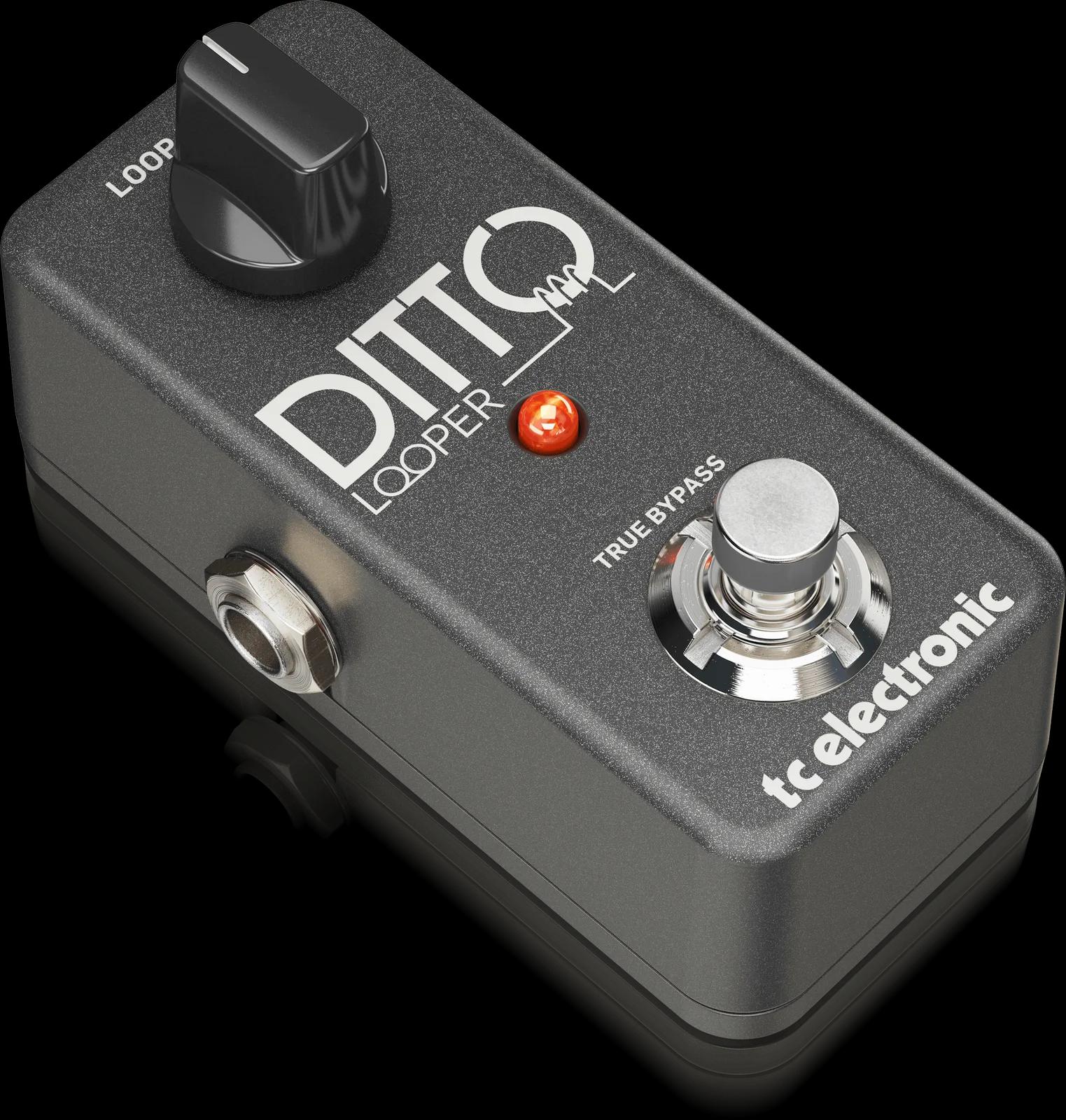
Loop a chord part and solo over it, with almost nothing to learn
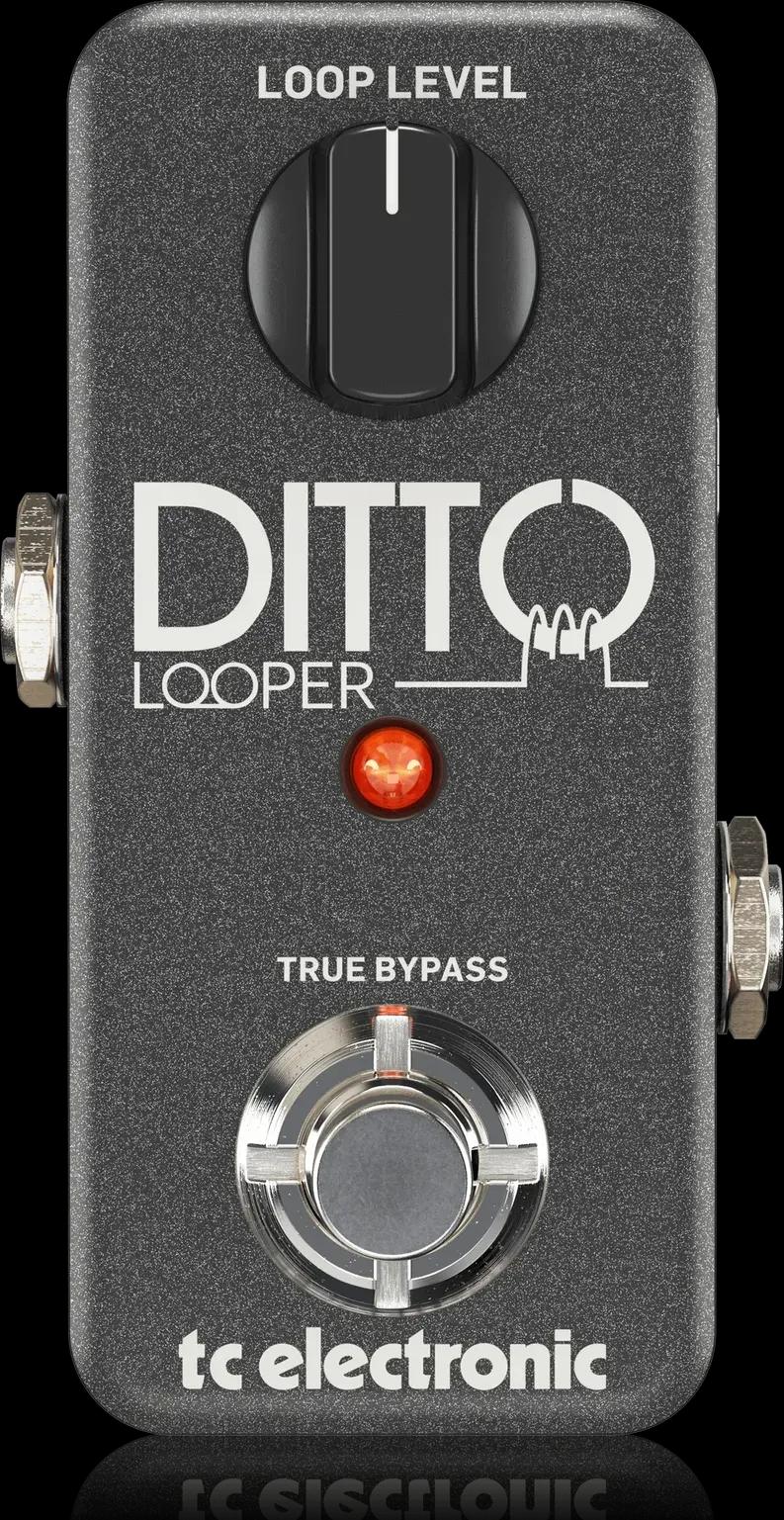
The Ditto records a part, plays it back and lets you solo or layer over it, using one footswitch and a loop level knob that sets the loop under or over your live playing. Reviewers consistently praise its sound: Premier Guitar found no noticeable tone loss or colouring. It is TC Electronic's simplest looper and for years the standard recommendation for a first one.
It records up to five minutes, allows unlimited overdubs, and has undo and redo, in a very small enclosure. It runs in true bypass once the loop is cleared, and it needs a 9V adaptor rated above 100 mA, which is not included.
One switch does everything
Learning it is mostly a matter of timing. Press once to record, again to play, again to overdub. Two quick presses stop the loop, and holding the switch undoes or redoes the last layer, or clears the loop when stopped.
That single-switch design is also its limit. In a live setting it is easy to lose track of where you are, and undo timing gets harder as layers stack up. MusicRadar calls it a good starting point with some compromises, and owners note that dense overdubs can get muddy.
Who it suits
The Ditto suits players who want to practise soloing over their own chord loops, songwriters sketching ideas, and anyone curious about looping who does not want to learn a complex pedal. It fits on the smallest pedalboard and works after drive pedals such as the Ibanez TS9 Tube Screamer, so you can loop driven parts. Practice amps such as the Yamaha THR10II or Boss Katana 50 Gen 3 pair well with it for home use.
What to compare it with
If you outgrow it, the Ditto 2 and Ditto+ are the natural steps up. The Ditto 2 keeps the original's looping mode and adds a larger footswitch, a second profile with extra features, and app control. The Ditto+ adds a much longer recording time and loop storage. The original remains in TC's range as the most basic option. For short loops inside a delay pedal, the Boss DD-8 includes a looper of up to 40 seconds alongside its delay modes, which suits occasional looping without another pedal on the board.