Best classic-style first bass
Squier Affinity Precision Bass PJ
A light first bass with the P Bass sound plus a brighter bridge voice; expect a setup.
Photos: Musician's Friend
30 owner reviews read
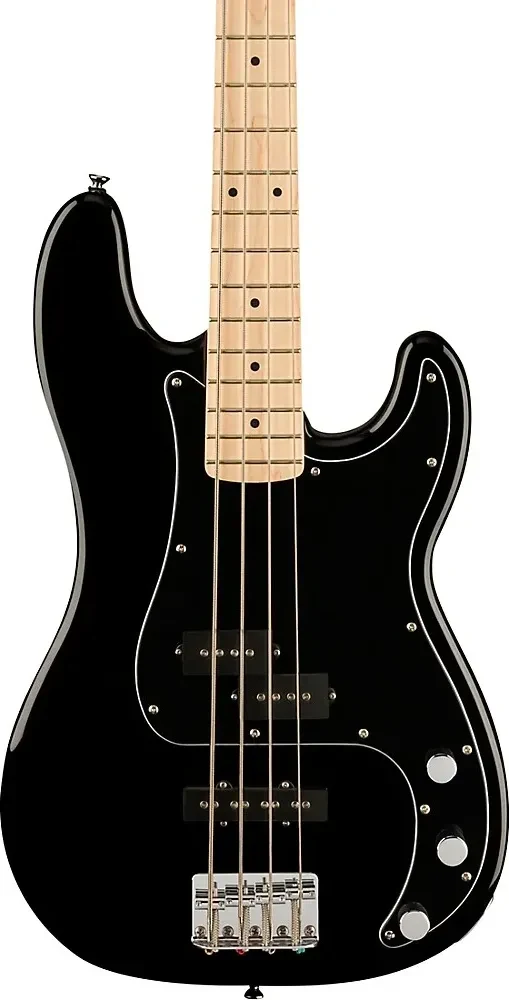
The Squier Affinity Precision Bass PJ gives a first bass two voices. The split-coil neck pickup is the one from Fender's Precision Bass, and a Jazz Bass single coil near the bridge adds a brighter second sound, with a volume for each and a master tone. Squier describes the poplar body as thin and lightweight, and the maple neck is a slim C shape with a satin finish and a 41.3 mm nut.
No magazine has reviewed the current model, so its case rests on 30 owner reviews at Thomann. Value and sound for the price are what they praise most; they find it comfortable, well built for the money and a sound first bass, and several single out the PJ layout.
The drawback is consistency out of the box. Owners most often report needing a setup, and some found sharp fret ends, a rough neck finish or crooked knobs. The bridge and pickups are what owners upgrade first, and a few find the stock pickups short on clarity.
- Best for
- Beginners who want a light, classic-looking bass that covers more than one sound.
- Skip it if
- You want active EQ or a narrower nut for small hands.
What people like
- Good value for the money
- Good sound for the price
What to know before you buy
- Often needs setup work out of the box
- Bridge and pickups are what owners upgrade first
Video reviews
- Keith A VarneyNov 2022
- Rockout VideographyAug 2023
Best for younger or smaller players
Ibanez GSR200
For a beginner who wants a light, compact bass with one simple knob for extra low end.
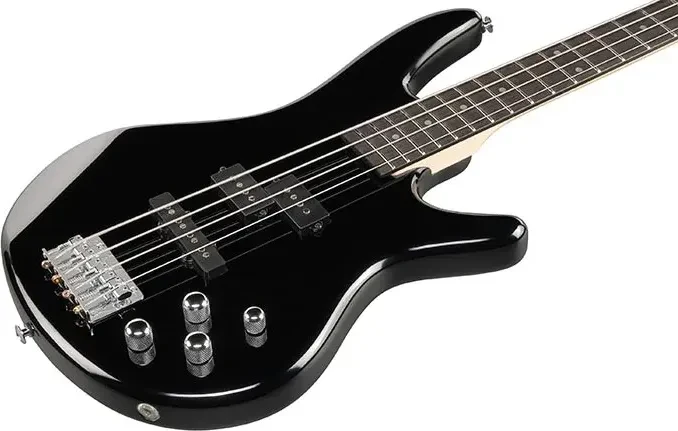
Photos: Ibanez
Only 1 professional review so far, 1 recommending it30 owner reviews read
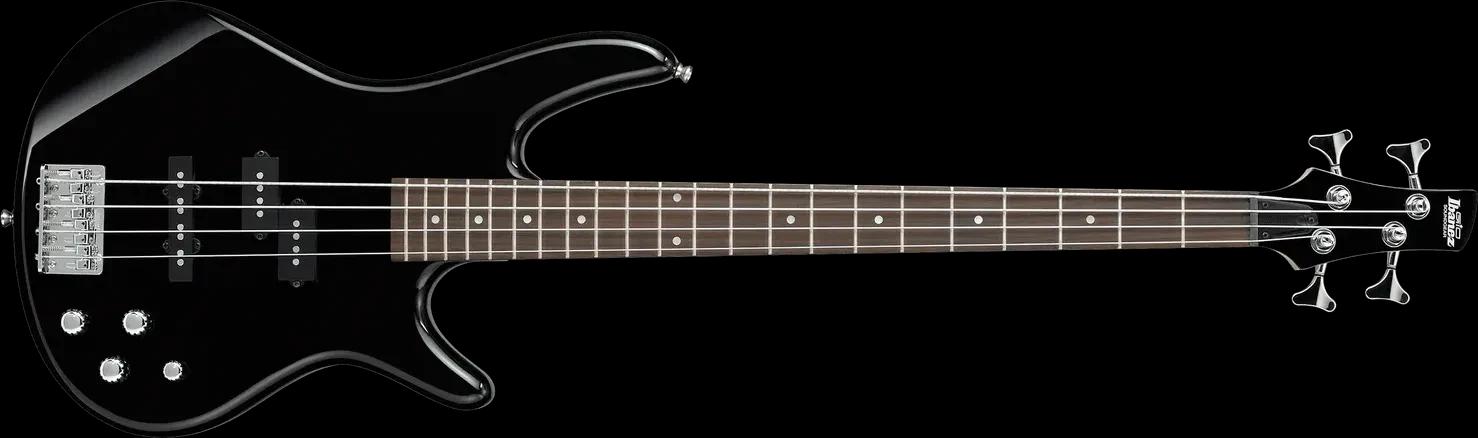
The Ibanez GSR200 has the same PJ pickup layout in a different shape: the body of Ibanez's long-running SR bass, smaller and more sculpted than a Fender-style one, which makes it easier for a younger or smaller player to manage. The nut is 41 mm and the controls are two volumes, a tone and a Phat II knob, a single active boost aimed at the low end.
Bonedo's test found it very well made for the price and liked the Phat II as a far simpler control for a beginner than a full active EQ. Owners at Thomann most often praise how light and easy to play it is, and many call it a sound first bass.
The limits are what you would expect at the price. Owners mention finish and hardware that feel budget, a setup needed out of the box and poor factory strings, and a few report electronics that developed faults or hum. Bonedo found the treble a little dull and heard a slight buzz high up the neck. Specifications also vary by region, so check the listing near you.
- Best for
- Beginners, especially younger or smaller players, who want a light, compact bass and a simple bass boost rather than a full EQ.
- Skip it if
- You want a traditional Fender look or a full active EQ.
What people like
- Light and comfortable to play
- Good value for the money
What to know before you buy
- Finish and hardware details feel budget
- Often needs a setup out of the box
Video reviews
- Mike McLeanSept 2021
- silverrenaissanceApr 2015
Best active bass for a little more
Yamaha TRBX304
For a player who wants many usable tones from a simple layout; the five-way EQ switch decides it.
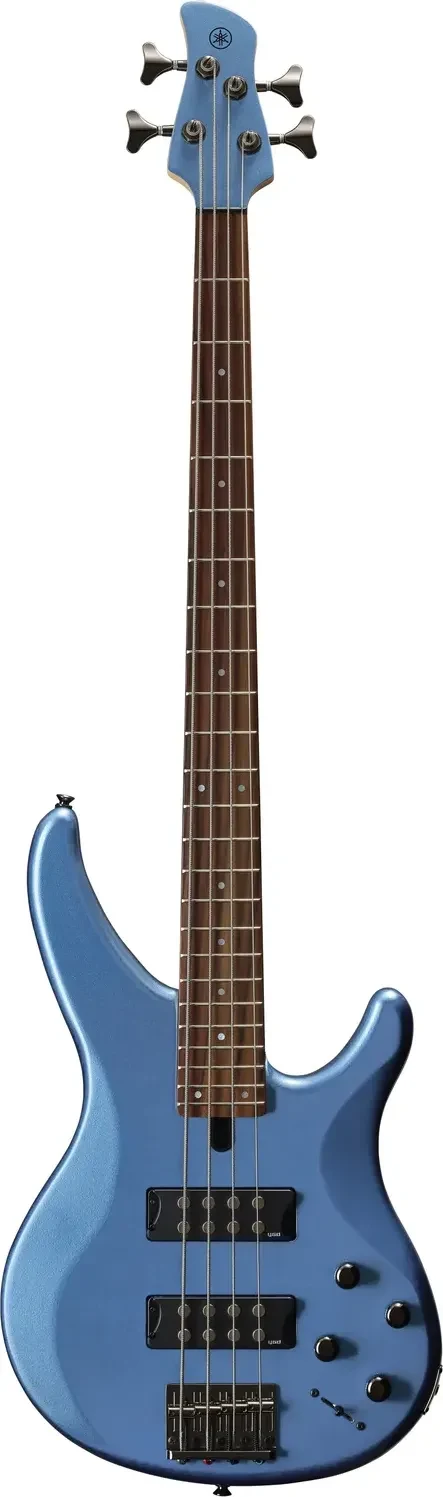
Photos: Yamaha
Only 1 professional review so far, 1 recommending it30 owner reviews read
The Yamaha TRBX304 is the pick for a beginner with more to spend who wants an active bass. Two ceramic humbuckers feed an active circuit with bass and treble controls and Yamaha's five-way Performance EQ switch, which calls up a different preset EQ curve in each position. The neck is slim, with a 38 mm nut and 24 frets, on a solid mahogany body.
Guitar Interactive recommends it, and owners at Thomann single out the range of tones and the comfortable neck. Many say it suits a beginner yet holds up on stage, and several found it played well straight out of the box.
The complaints are few: a handful of owners found finish or fretwork flaws, and a couple reported a buzz or rattle developing. As an active bass it needs a 9V battery, and it is not the bass for a vintage Fender sound.
- Best for
- Players who want a solid, comfortable active bass with quick access to usable preset tones.
- Skip it if
- You want a vintage Fender sound or a fully passive instrument.
What people like
- Wide range of tones from the active EQ and five-way Performance EQ switch
- Slim, comfortable neck that is easy to play
What to know before you buy
- Finish or fretwork flaws on some units
- Needs a 9V battery for the active electronics
Video reviews
- NICKOJul 2020
- Barteck OfficialMay 2021
Best for the Jazz Bass sound
Squier Classic Vibe ’60s Jazz Bass
The Jazz Bass sound and slim neck on a budget, for players who want vintage over active.
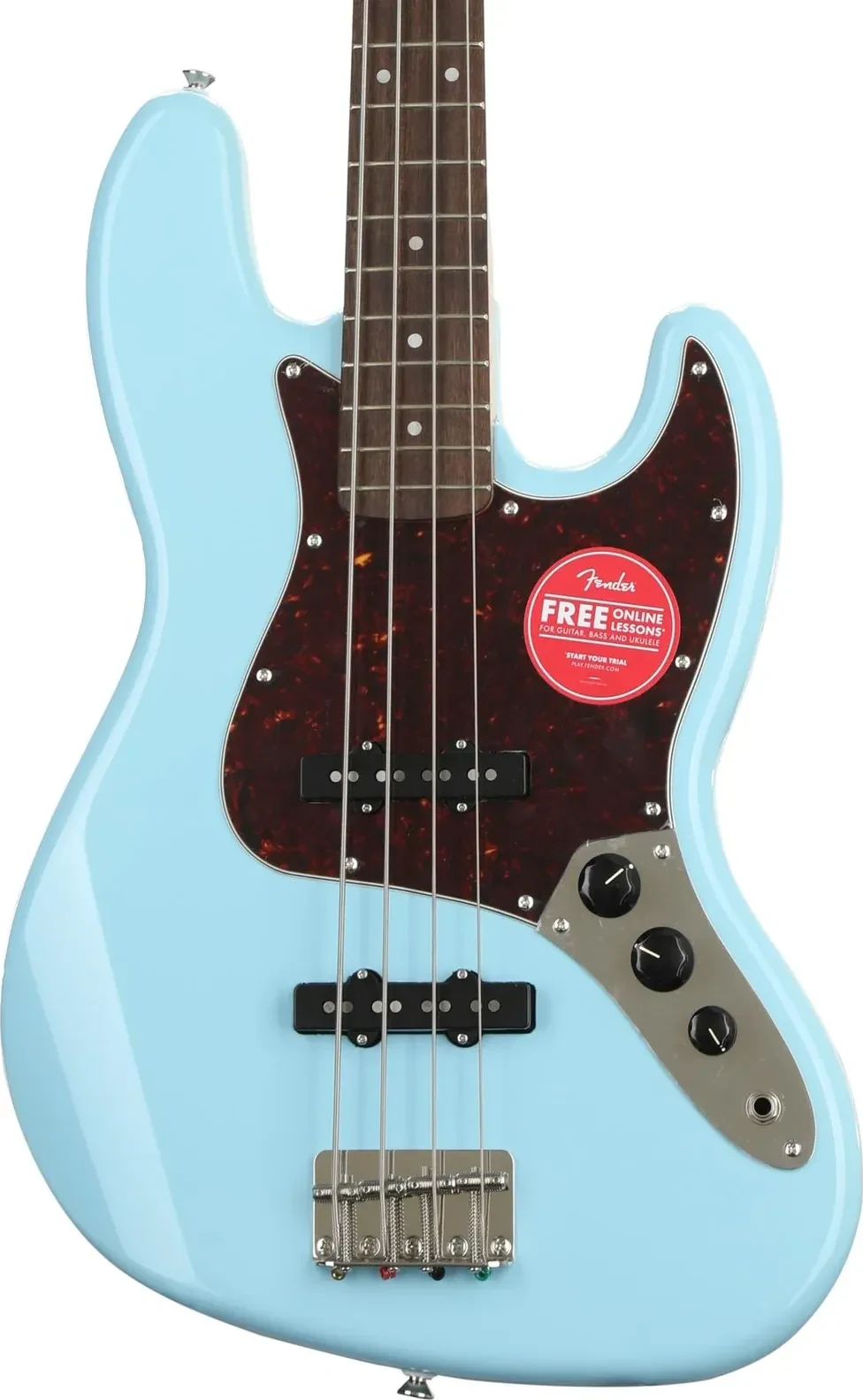
Photos: Sweetwater
Only 2 professional reviews so far, 2 recommending it7 owner reviews read
The Squier Classic Vibe ’60s Jazz Bass is for a beginner who already knows the sound they want is a Jazz Bass. Two Fender-designed alnico single coils run through the classic controls of two volumes and a master tone, and the slim C neck has the traditional Jazz Bass nut width of 38.1 mm, narrower than either PJ above.
Guitar World calls it a highly impressive Jazz and stunningly playable at its price, MusicRadar counts it one of the finest basses in recent years, and Guitar World's round-up names it the best Jazz Bass for all-round value. Reviewers describe a full, rounded neck pickup, a tighter bridge pickup and the familiar scooped growl with both up.
The criticisms are minor. One reviewer found the action a little high from the factory and some small finishing flaws on the fret edges, and some players prefer a satin neck to its gloss finish. Like any traditional Jazz Bass, either pickup hums when played on its own.
- Best for
- Players who want the classic Jazz Bass look, feel and sound without paying Fender prices.
- Skip it if
- You want active EQ, 24 frets or a modern satin neck.
What people like
- Strong value for the money
- Very playable, with a comfortable neck and low action
What to know before you buy
- Minor finishing flaws, such as rough fret edges
Video reviews
- kerodeanMay 2020
- Zach WirchakApr 2021
Side by side
From each maker's specifications, as listed on the full reviews.
| Squier Affinity Precision Bass PJ | Ibanez GSR200 | Yamaha TRBX304 | Squier Classic Vibe ’60s Jazz Bass | |
|---|---|---|---|---|
| Pickups | Ceramic split single coil (neck), ceramic single-coil Jazz Bass (bridge) | Ibanez Dynamix P (neck), Dynamix J (bridge), passive | Two Yamaha M3 ceramic humbuckers | Two Fender-designed alnico single-coil Jazz Bass pickups |
| Electronics | Passive; volume (neck), volume (bridge), master tone | Two volumes, tone, Phat II active bass boost | Active; master volume, pickup balance, 2-band EQ (bass, treble), 5-position Performance EQ switch | Passive; volume (neck), volume (bridge), master tone |
| Nut width | 1.625" (41.3 mm), synthetic bone | 41 mm | 38 mm | 1.5" (38.1 mm), bone |
| Scale length | 34" (864 mm) | 864 mm (34") | 34" (863.6 mm) | 34" (864 mm) |
| Frets | 20, medium jumbo | 22, medium | 24, medium | 20, narrow tall |
| Body | Poplar, thin and lightweight | Okoume | Mahogany | Poplar |
How to choose
- You want the classic Fender look and the P Bass sound: the Affinity Precision Bass PJ.
- A younger or smaller player, or you want the lightest, most compact bass here: the GSR200.
- You can spend more and want an active bass with preset tones: the TRBX304.
- You want a Jazz Bass from the start, passive and slim-necked: the Classic Vibe ’60s Jazz Bass.
Passive, active or in between
The two budget picks differ most in their electronics. The Affinity PJ is fully passive: a volume for each pickup and a tone control, nothing that needs a battery. The GSR200 adds one active knob for extra low end, which Bonedo found easier for a beginner than a full EQ, though a few owners find the boost limited or muddy.
The TRBX304 is fully active, with bass and treble controls and the five preset curves. That gives more sounds from the same bass, at the cost of a 9V battery. The bass pickups explained guide covers how P, J and humbucking pickups differ, and active vs passive pickups explains what an onboard preamp adds.
Whichever you choose, the complaint owners of both budget picks share is the factory setup. A setup at a guitar shop when the bass arrives is worth planning for.
Also considered
The Ibanez SR300E has an even slimmer neck, with a 38 mm nut, plus a three-band active EQ and a switch that changes how the pickups are wired. No Treble and Bonedo both recommend it, but both find its voice bright and aggressive, and its EQ takes time to set. It makes more sense as a second bass than a first.
The Fender Player II Jazz Bass is the step up into a Fender, with an alder body, a satin neck back and rolled fingerboard edges. It is a sound choice for a beginner with a bigger budget, but few in-depth reviews of this exact model exist yet, and the Classic Vibe ’60s Jazz Bass is the budget alternative, with a more vintage feel.