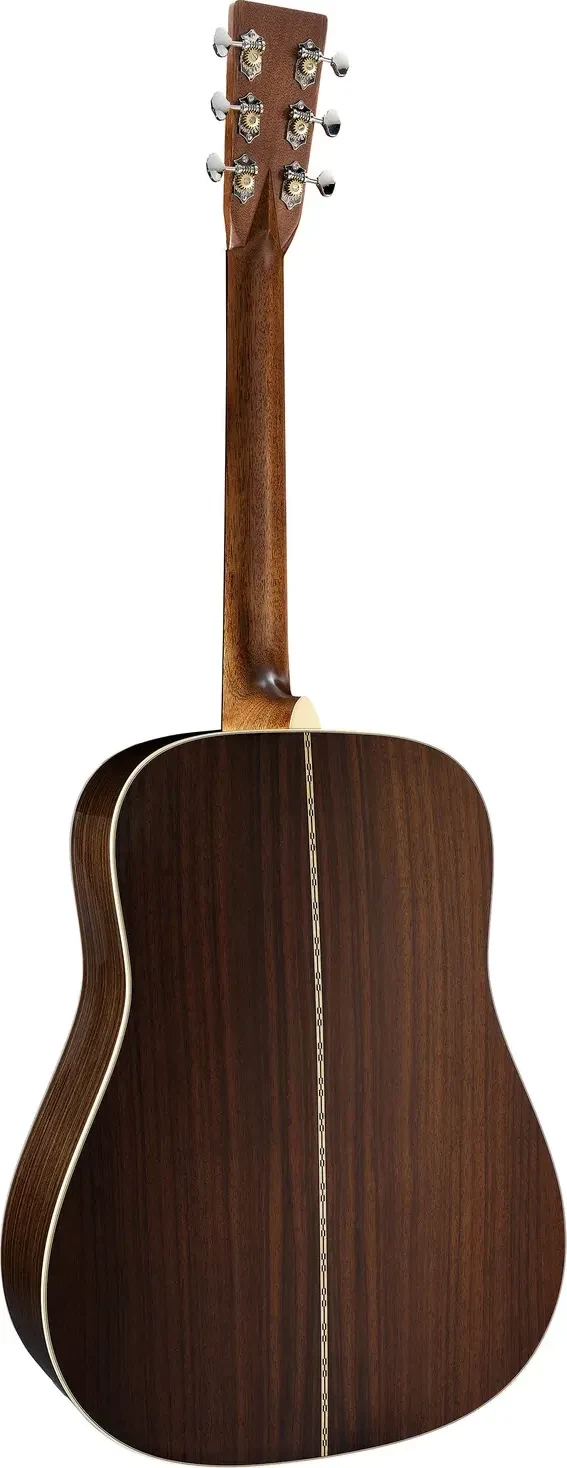
The dreadnought others are measured against, now with scalloped braces
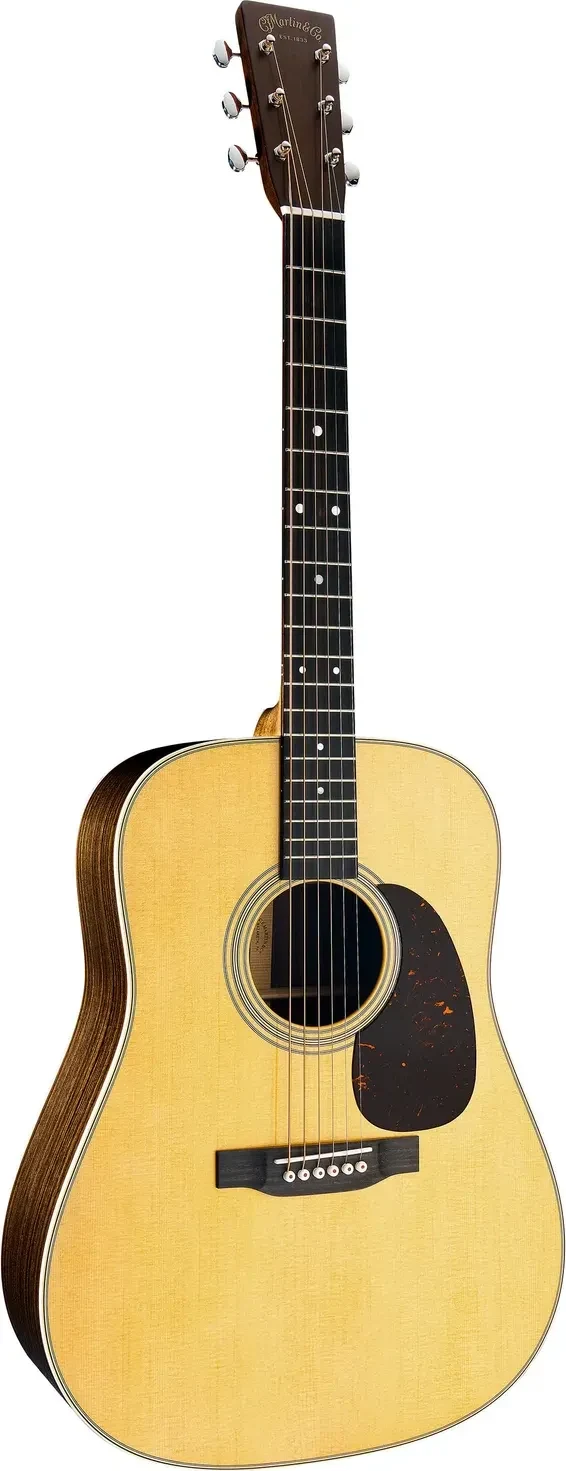
For a player who strums, flatpicks or backs a voice, the D-28 is the reference sound: a solid spruce top over East Indian rosewood back and sides, in Martin's 14-fret dreadnought body with a 25.4-inch scale. The 2025 refresh changed what sits under that top. Martin now fits forward-shifted X-bracing with scalloped Golden Era braces, 5/16 inch thick, where the 2017 to 2024 Standard had straight, non-scalloped braces. Scalloping shaves the braces thinner in places so the top can move more freely, and it is the change every reviewer of the new guitar points to first.
The rest of the update is about feel. Martin lists a Golden Era modified low oval neck with a High-Performance taper, a thinner ebony fingerboard, a 1-3/4-inch nut and a reworked heel and bridge. The nut, compensated saddle and bridge pins are bone, the tuners nickel open-gear, the body gloss and the neck satin. There are no electronics, and the guitar ships in a moulded hardshell case.
The model itself is old. Vintage Guitar dates the first D-28 to 1931, when Martin's records show a single one made; early examples had a 12-fret neck, and the 14-fret body followed in 1934.
How the 2025 D-28 sounds, by the published consensus
American Songwriter, Vintage Guitar and Peghead Nation each reviewed the refreshed guitar, and all three recommend it. They agree on a big sound with a strong low end. Vintage Guitar says the bracing punches hard in the lower registers, and Peghead Nation hears the punch, volume and rich bass expected of a D-28, with a wide dynamic range it credits to the lighter, scalloped braces. American Songwriter singles out the sustain and single notes that ring like a bell.
The neck is the other common thread. All three find it comfortable, with more of a vintage feel than earlier Standard necks, and Vintage Guitar says the thinner fingerboard makes the guitar feel broken in from new. American Songwriter's only quibbles were small: the volute means a cradle capo has to be opened further to pass the nut, and it was unsure about the aged-toner look.
Owner evidence is thin. Thomann lists two written owner reviews of the current model. One praises the sound outright; the other found a thin, muted tone with dead spots on the A string and sent the guitar back. Both owners question how much of the cost pays for the name, and two reviews are too few to say how consistent the guitars are.
Who it suits
The D-28 suits strummers, bluegrass and country flatpickers, and singer-songwriters who want the classic rosewood dreadnought sound with plenty of bass and volume, and who do not need a pickup. The 1-3/4-inch nut leaves room for fingerstyle, but the body is large and voiced for power.
Skip it if you play mostly seated or fingerpick quietly, where a smaller body is easier to live with, or if you play live and need electronics fitted from the factory.
How it compares with the J-45 and the D-10E
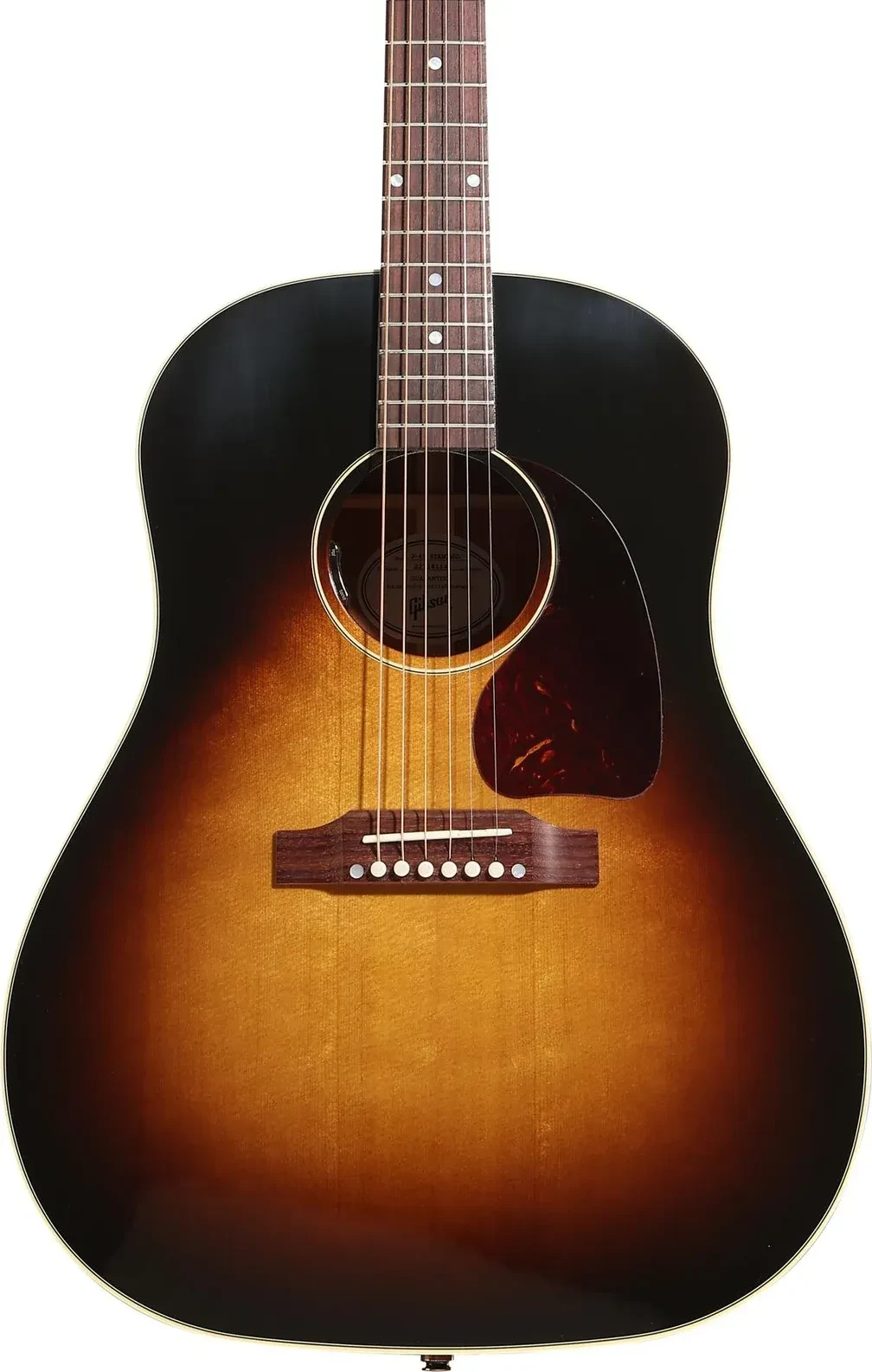
The Gibson J-45 Standard is the classic alternative: a round-shouldered mahogany dreadnought with a shorter 24.75-inch scale and a pickup fitted, which reviewers describe as warm and midrange-led, against the D-28's bass-heavy rosewood voice.
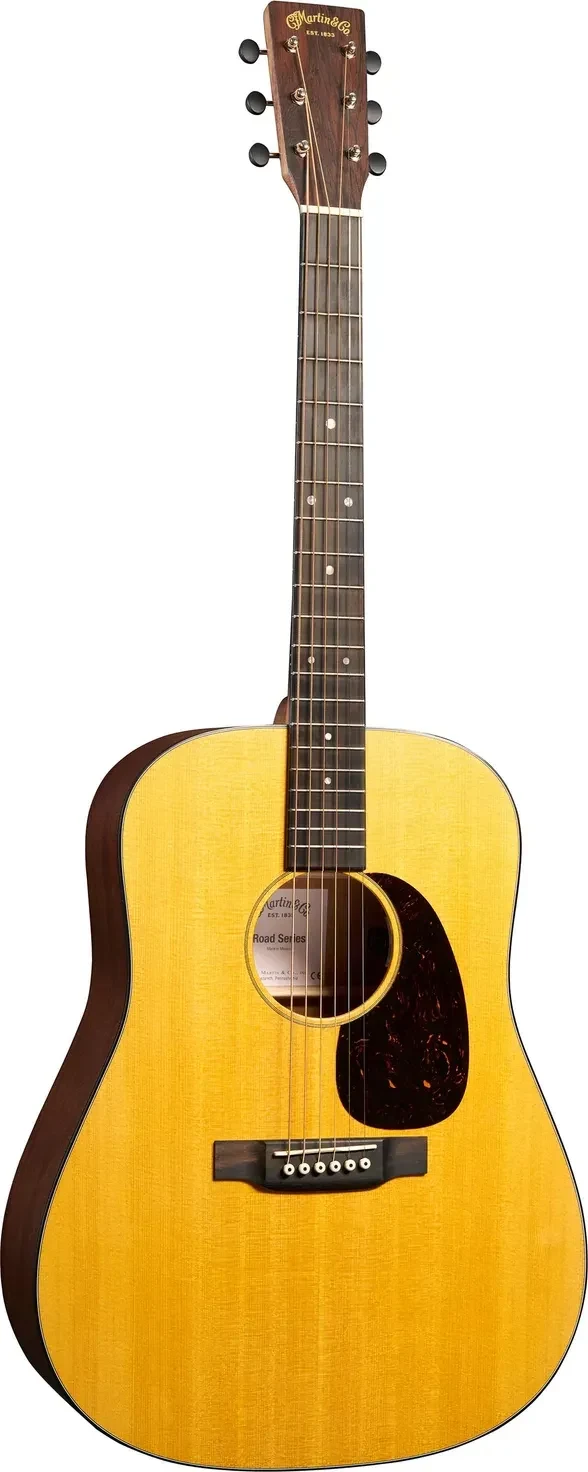
Within Martin's range, the D-10E is the Mexican-built Road Series dreadnought, with solid sapele back and sides and Martin's E1 electronics, and the usual way into the shape at a much lower price. Coming up from a budget dreadnought such as the Yamaha FG800, the D-28 keeps the same body shape and adds solid rosewood, scalloped bracing and bone parts.