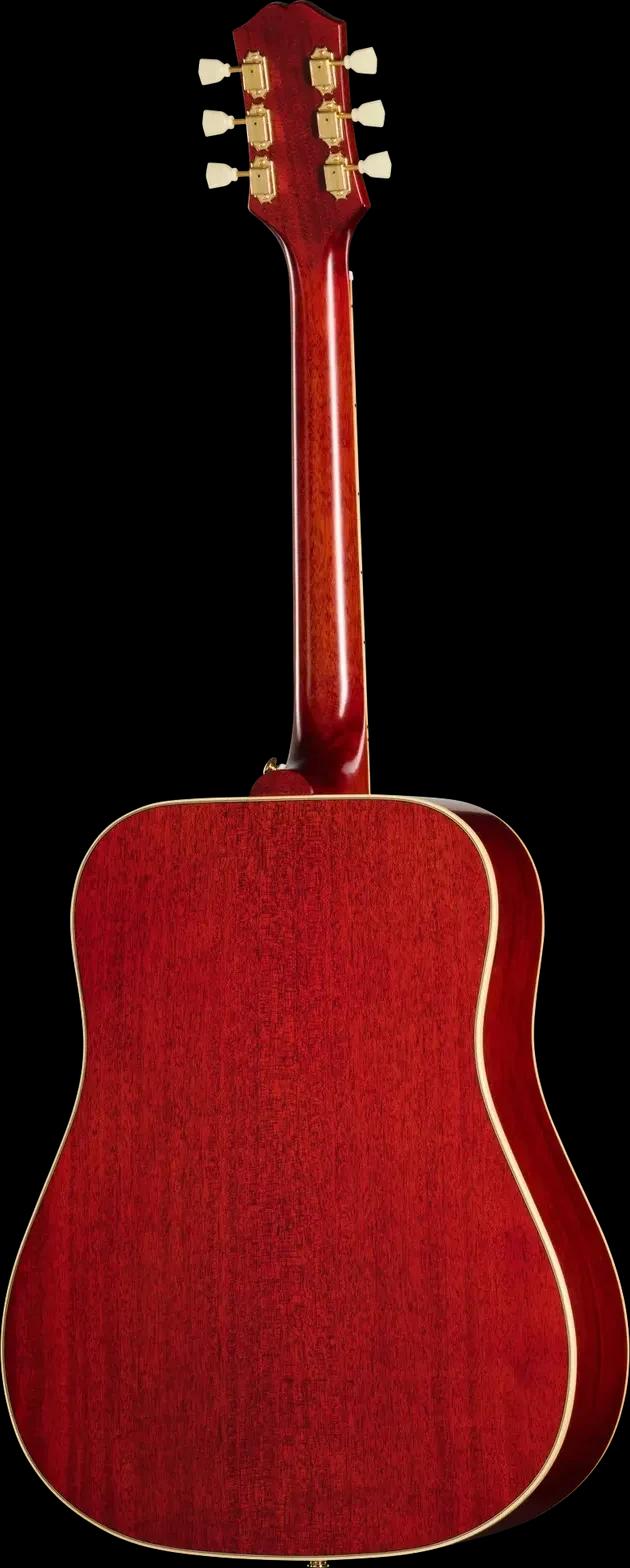
The Hummingbird look on an all-solid guitar, now with a rosewood board
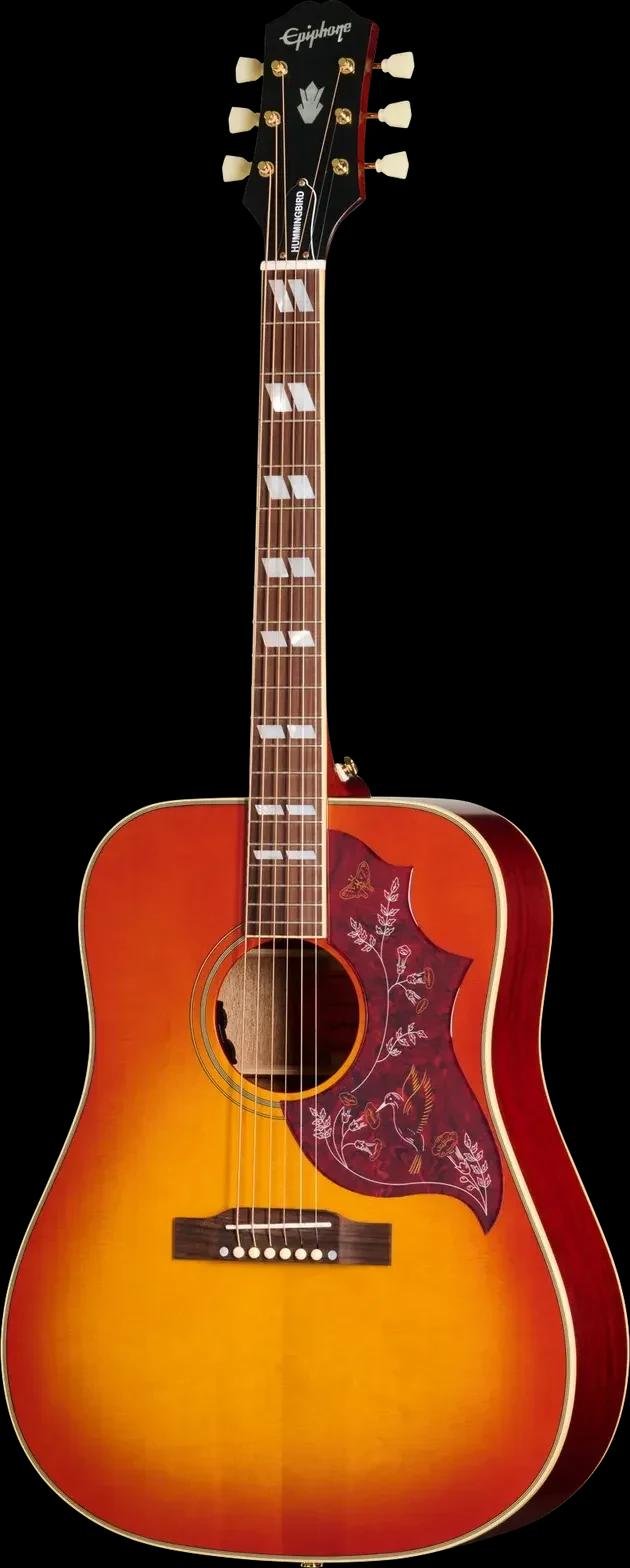
Few acoustics are as recognisable. The square-shouldered dreadnought body, cherry sunburst top and pickguard engraved with a hummingbird and flowers have been on stage across folk, rock and pop for decades. Epiphone's Hummingbird Standard, updated in March 2026, puts that look on a solid spruce top with solid mahogany back and sides, so the woods match the looks.
The neck is mahogany with a bound rosewood fingerboard on a 12-inch radius, with split parallelogram inlays and 20 frets. The scale is 24.75 inches (629 mm), the shorter Gibson length rather than the 25.4 inches of a Martin dreadnought, which means lower string tension at the same tuning. The nut is 1.69 inches (42.9 mm) wide, and the nut and saddle are bone. A Fishman undersaddle pickup with a Presys VT preamp comes as standard, with its volume and tone controls just inside the soundhole, and the guitar ships in a gig bag.
What changed from the 2020 model
The guitar it replaces, the all-solid Hummingbird from Epiphone's Inspired by Gibson range, was also solid spruce and solid mahogany, but with an Indian laurel fingerboard and a Fishman Sonicore pickup run through Fishman's Sonitone soundhole controls. The 2026 Standard swaps the laurel for rosewood, the Sonitone for the Presys VT, and the Aged Cherry Sunburst finish for a plain Cherry Sunburst. Both put volume and tone just inside the soundhole.
Epiphone also makes a cutaway Hummingbird Standard EC alongside it, in Cherry Sunburst or Natural. That version has a side-mounted Fishman preamp with EQ and a built-in tuner, and Grover Rotomatic tuners in place of the Standard's gold Epiphone Deluxe tuners with keystone buttons.
What reviewers and owners say so far
MusicRadar and Mixdown covered the launch in March 2026 as news, without playing the guitar. No magazine has published a review of the 2026 Standard, and Thomann has a single owner rating with no comment on sound or playability. Reviews of the 2020 guitar and of the cutaway EC are left out here: the fingerboard, pickup system and finish differ, and those reviews do not tell you how this guitar sounds.
This page will be updated when published reviews and owner reports appear. Until then, the case for it rests on the specification, and on the fact that it is the same Hummingbird design in the same solid woods as before.
Who it suits
On paper it suits singer-songwriters and strummers who want the vintage Hummingbird look and an all-solid guitar with a pickup, and players stepping up from a first acoustic who want solid woods. The soundhole controls keep the amplified side simple: there is volume and tone, but no EQ or tuner, so anyone who plays through a PA most nights may prefer the EC or a rival with more on board.
How it compares with the D-10E, 214ce and FG800
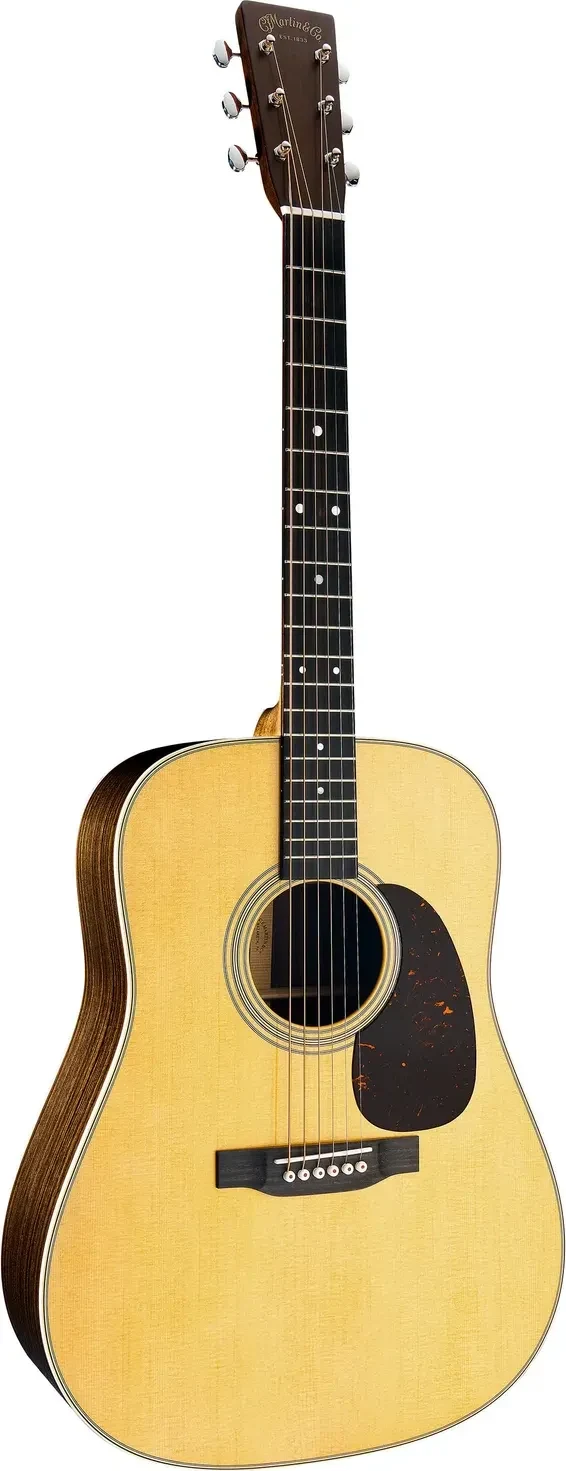
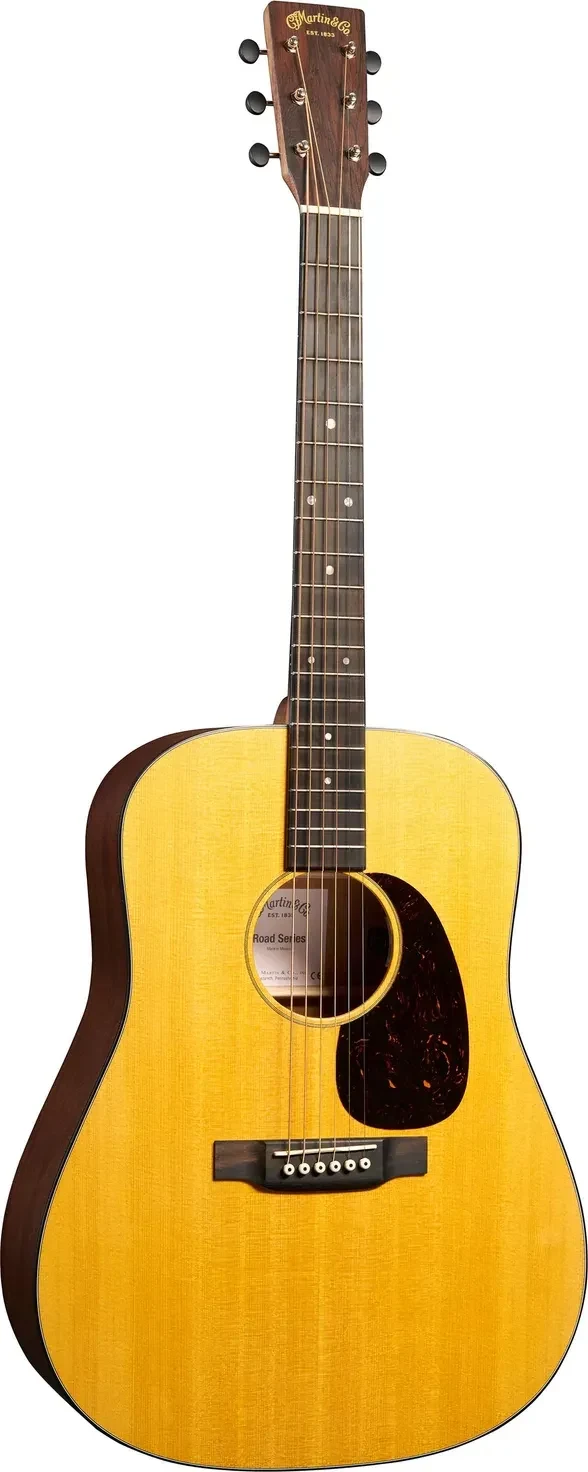
The Martin D-10E is the other all-solid dreadnought at this level: spruce and sapele, an ebony fingerboard, a longer 25.4-inch scale and Martin's E1 electronics with a built-in tuner. The Taylor 214ce has layered back and sides but a cutaway, Taylor's ES2 electronics and owner reviews to go on.
For a first guitar on a tight budget, the Yamaha FG800 gives a solid top and a full-size dreadnought for much less, without the looks or the pickup.