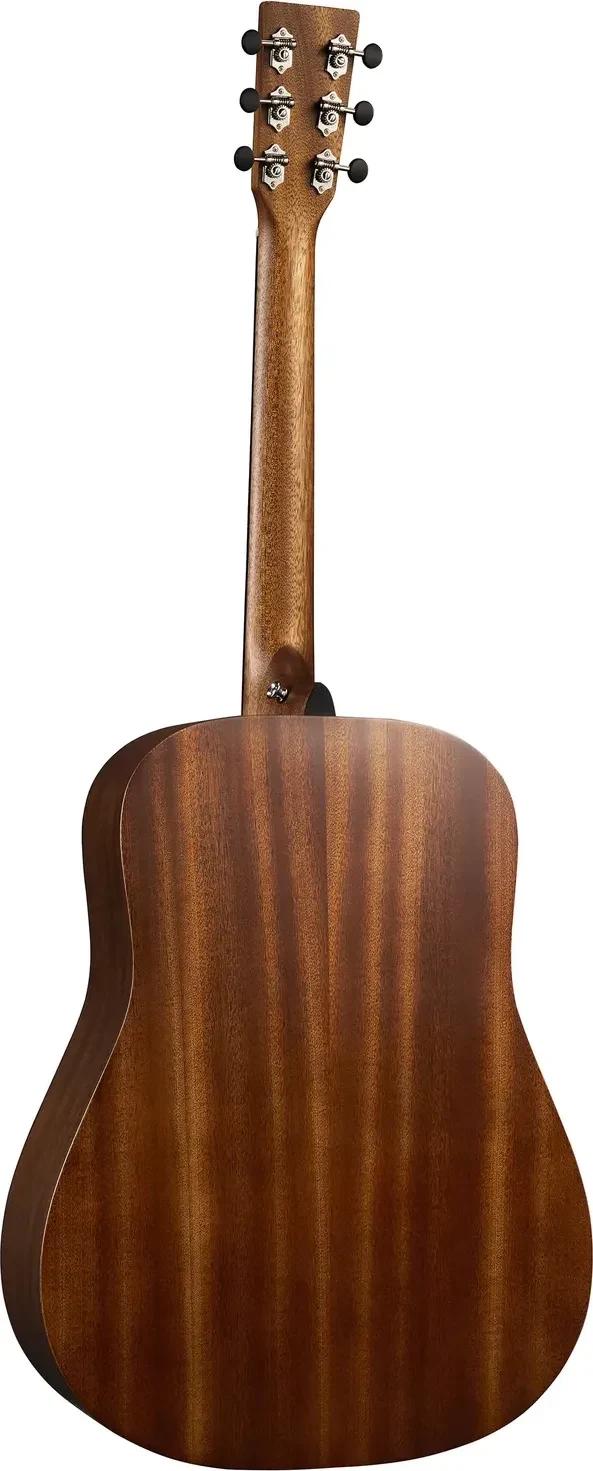
The first solid-wood Martin for many players, with a pickup for the stage
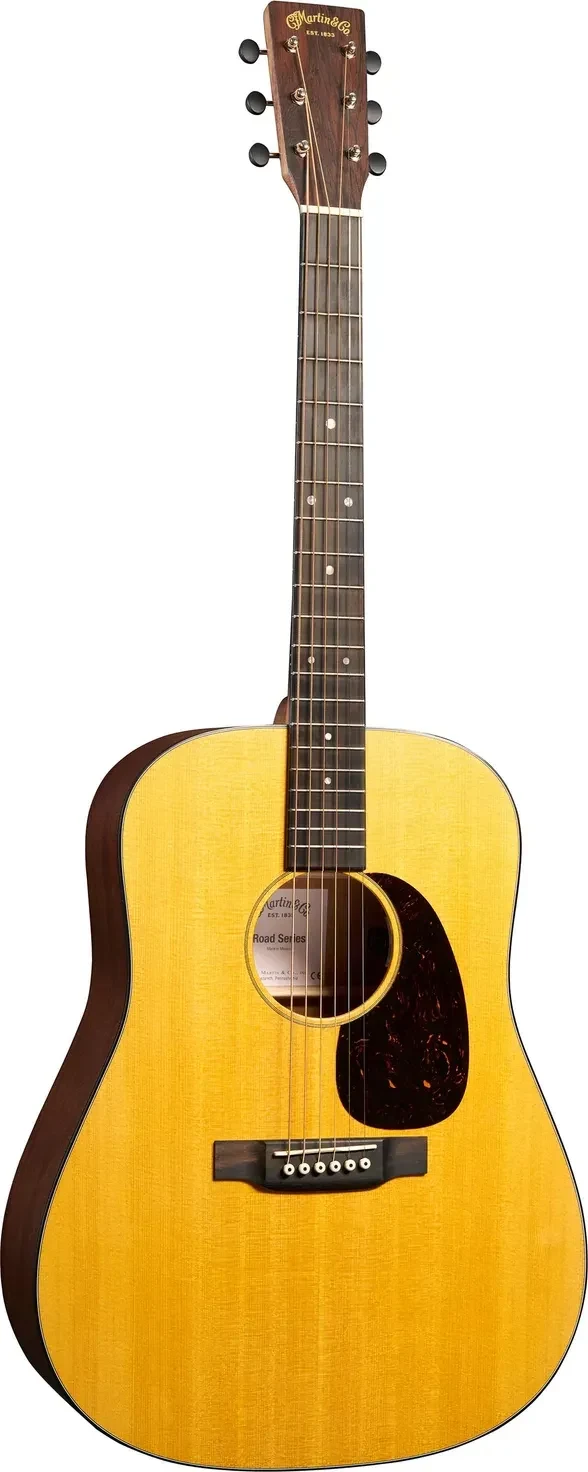
For a player moving up from a first acoustic, the D-10E pairs a solid spruce top, finished with an aged toner, and solid sapele back and sides with Martin's E1 electronics and a built-in tuner. Everything else points at the classic Martin dreadnought: a 14-fret body, a 25.4-inch scale and scalloped X-bracing, which lets the top move more freely and gives the bass its weight.
The neck uses Martin's Performing Artist profile with a High-Performance taper, a slim, modern shape, on a 1-3/4-inch nut that leaves room for fingerstyle. The fingerboard and bridge are ebony, the tuners open-gear and the body satin, and Martin lists the current model as Plek-set at the factory. It ships in a padded softshell case with backpack straps.
The D-10E is the dreadnought in Martin's Road Series, the Mexican-built range that sits below the company's Standard Series. It has been updated several times, and the current version, sold as the D-10E Retro, is new for 2026. The previous D-10E, which Martin has now retired, used a Richlite fingerboard and bridge; you will still find it in shops. There is also an all-sapele version of the Retro with a sapele top. This review covers the spruce-top model; reviews of the all-sapele Retro and the earlier D-10E describe different guitars and are not used here.
How it sounds, by the published consensus
There is no published consensus yet. No magazine has reviewed the spruce-top D-10E Retro, and Thomann lists only two owner reviews. Both owners praise a full, authentic Martin sound and a neck that makes fretting easy, but two reviews are too few to say how the guitar is generally received.
Martin itself describes the pairing of spruce, sapele and scalloped bracing as giving strong bass and clear projection, and lists the guitar as Plek-set. The E1 system adds a tuner built in. How the amplified sound and the factory setup hold up across many guitars is something only more reviews will show.
Who it suits
The D-10E suits a player moving up from a first acoustic who wants a solid-wood guitar with a recognisable Martin sound, and anyone who plays live and needs a pickup fitted. As a dreadnought, it is built above all for strumming and singing.
Players who mostly fingerpick or play sitting down may prefer a smaller body. A dreadnought's size and bass can feel like too much for delicate playing.
How it compares with the Taylor 214ce and the FG800
The Taylor 214ce is its natural rival on stage. The Taylor's Grand Auditorium body has a cutaway, a slightly narrower nut and Taylor's ES2 pickup, while the Martin is all solid wood, in the bigger dreadnought body that Martin voices for strong bass and projection.
Coming from the Yamaha FG800, the D-10E is the obvious step up in the same body shape, adding solid back and sides and electronics. For a Martin that travels, the LX1 Little Martin is the small, tough option.