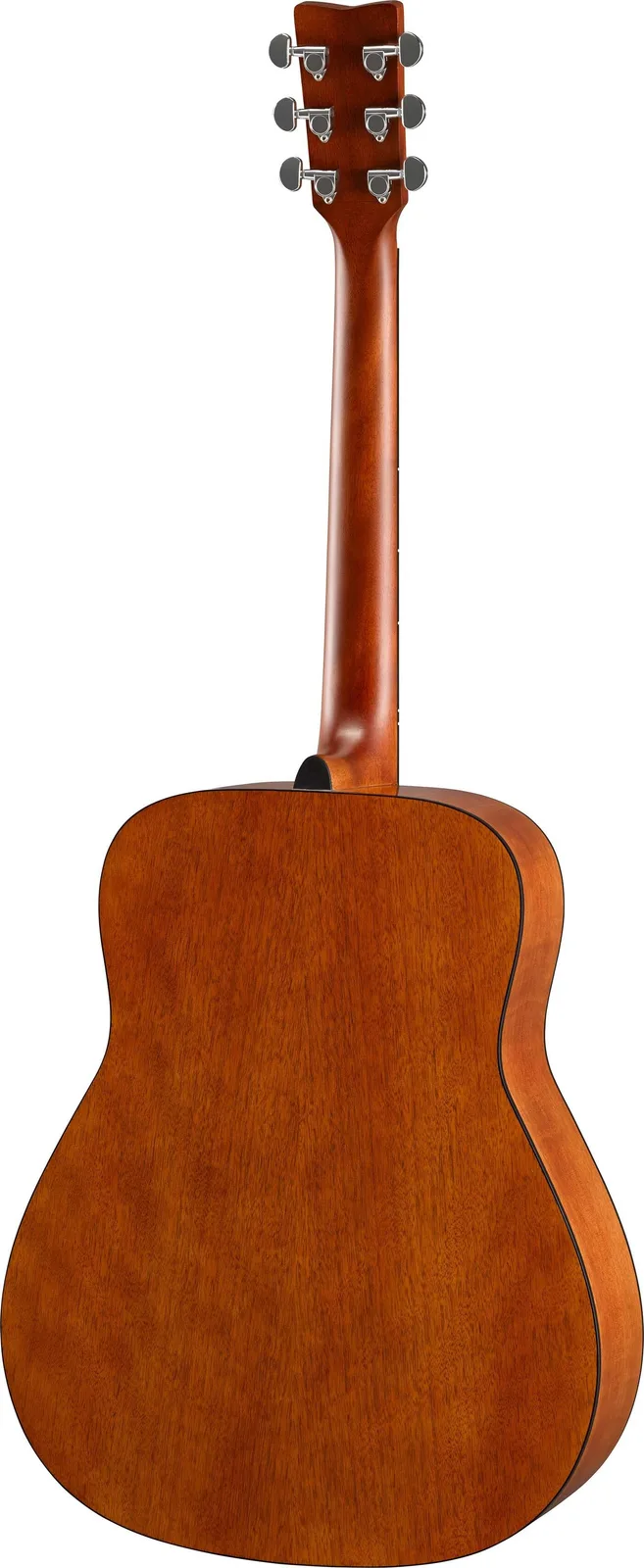
A solid top and a full dreadnought sound on a first-guitar budget
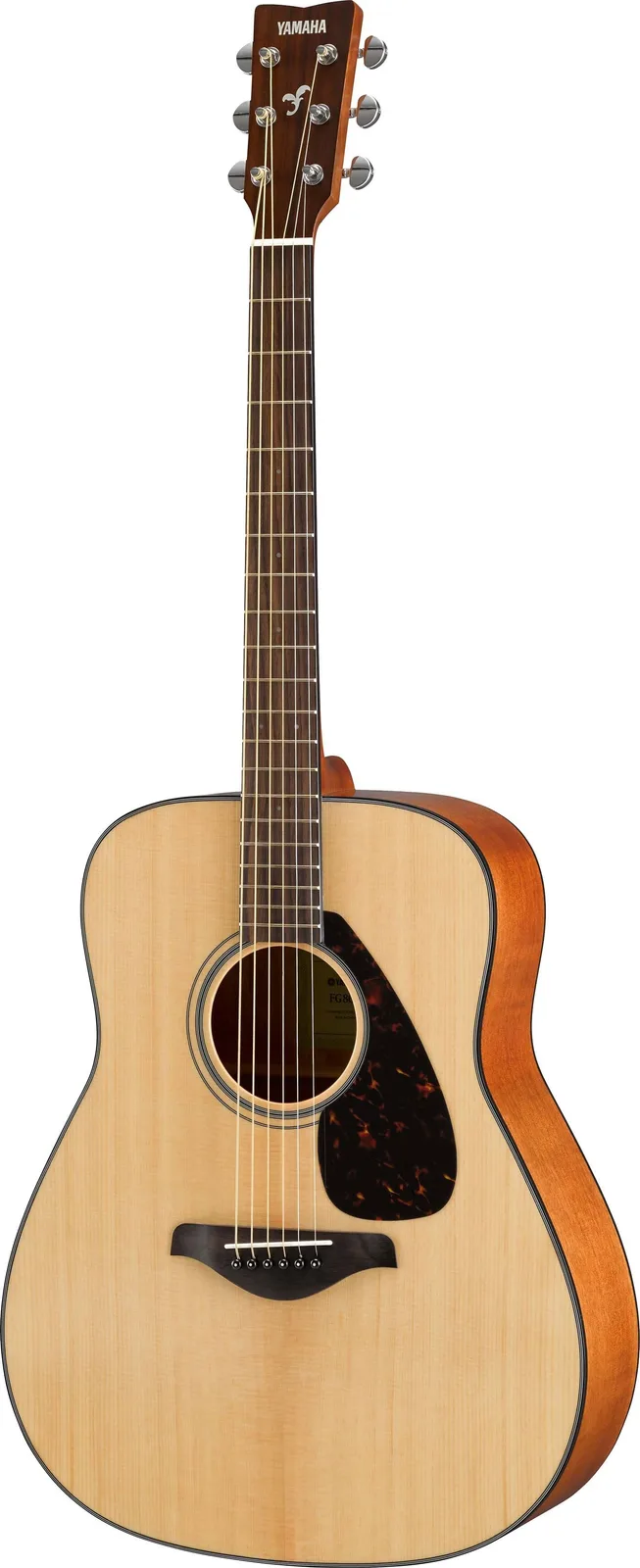
Most guitars at this level have laminated tops, and Guitar World singles out the FG800's solid spruce one as the reason its tone is a step above them. Scalloped bracing, where the braces are shaved thinner in places, lets the top move more freely; Yamaha says its version gives a louder, stronger sound in the low and middle range, and Guitar World credits it with the guitar's bass.
Around that top is a conventional full-size dreadnought (Yamaha calls the shape Traditional Western): a 650 mm scale, a 43 mm nut, a body 100 to 118 mm deep, nato and okume laminate back and sides and a nato neck. The build is plain but well made. The fingerboard and bridge are rosewood or walnut depending on the market, the hardware is simple die-cast chrome, the body is gloss and the neck matt, and there is a matte FG800M version too.
The FG800 is the entry point to Yamaha's FG series, the long-running line of steel-string acoustics the company has made since the 1960s, and its scalloped bracing pattern came from acoustic analysis when Yamaha updated the series. In the UK the current production is sold as the FG800II, which retailers list with the same core specification.
How it sounds, by the published consensus
Guitar World, MusicRadar and owners at Thomann describe a full, powerful sound for the price: warm and rounded, with the deep lows a dreadnought should have and projection that Guitar World found puts some dearer guitars to shame. Both magazines find the treble a little short of sparkle. Reviewers and owners rate the build above its price, and both find it easy to play.
The common complaint among owners is setup. Some guitars arrive with the strings set high above the frets, which makes chords harder work for a beginner; a setup at a guitar shop, or lowering the saddle, fixes it. Some owners also found rough fret or finish details, and a couple found the neck chunky for small hands.
Who it suits
The FG800 suits a first-time player of any age who can manage a full-size body, a returning player who wants something decent without spending much, and experienced players who want a spare guitar they will not worry about. Guitar World counts it among the best beginner acoustics ever made.
It is less suited to playing live, since this model has no pickup. Yamaha's FGX800C adds a cutaway and electronics. Smaller players may also find the dreadnought body awkward.
How it compares with the step-up and travel options
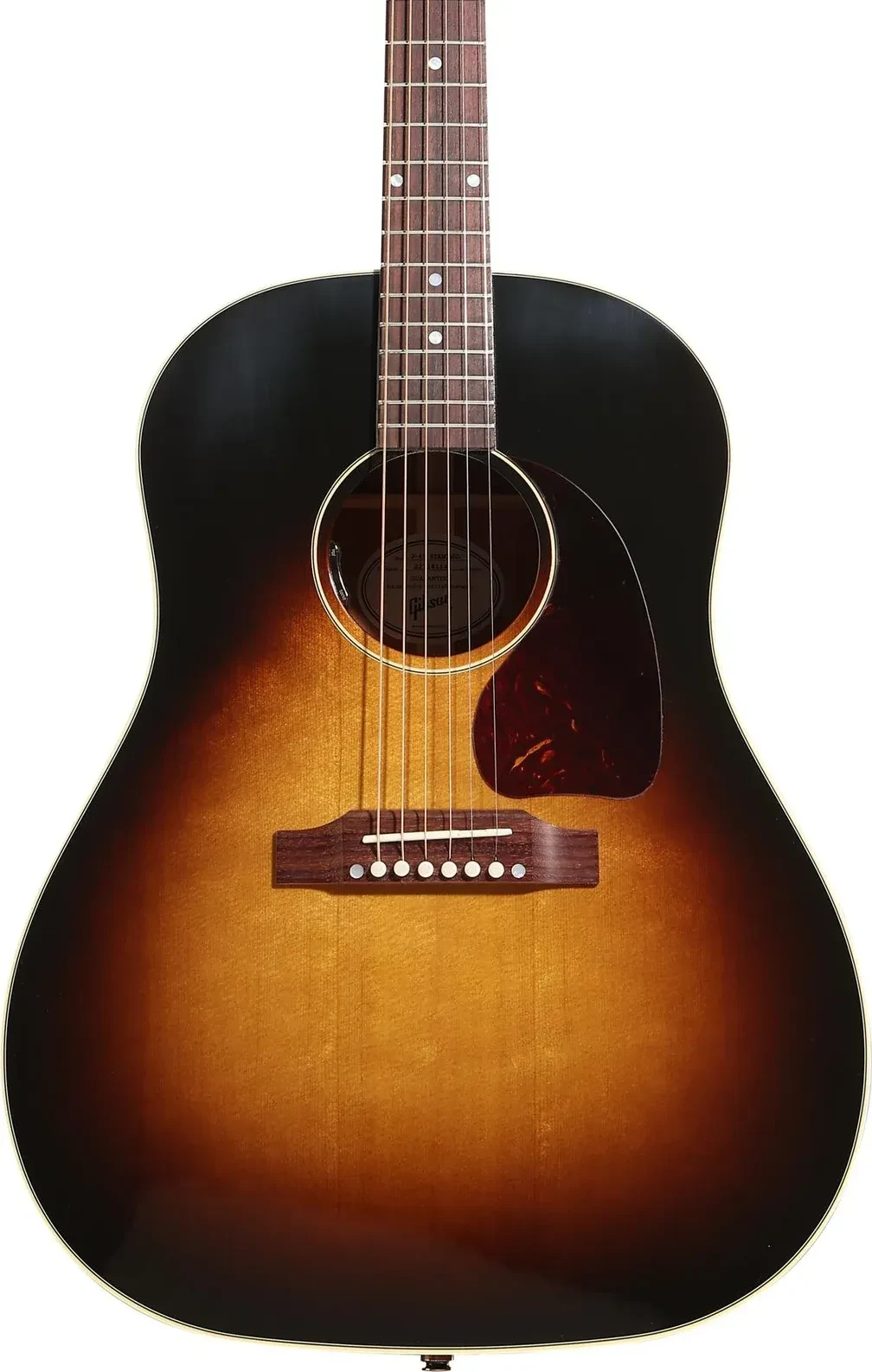
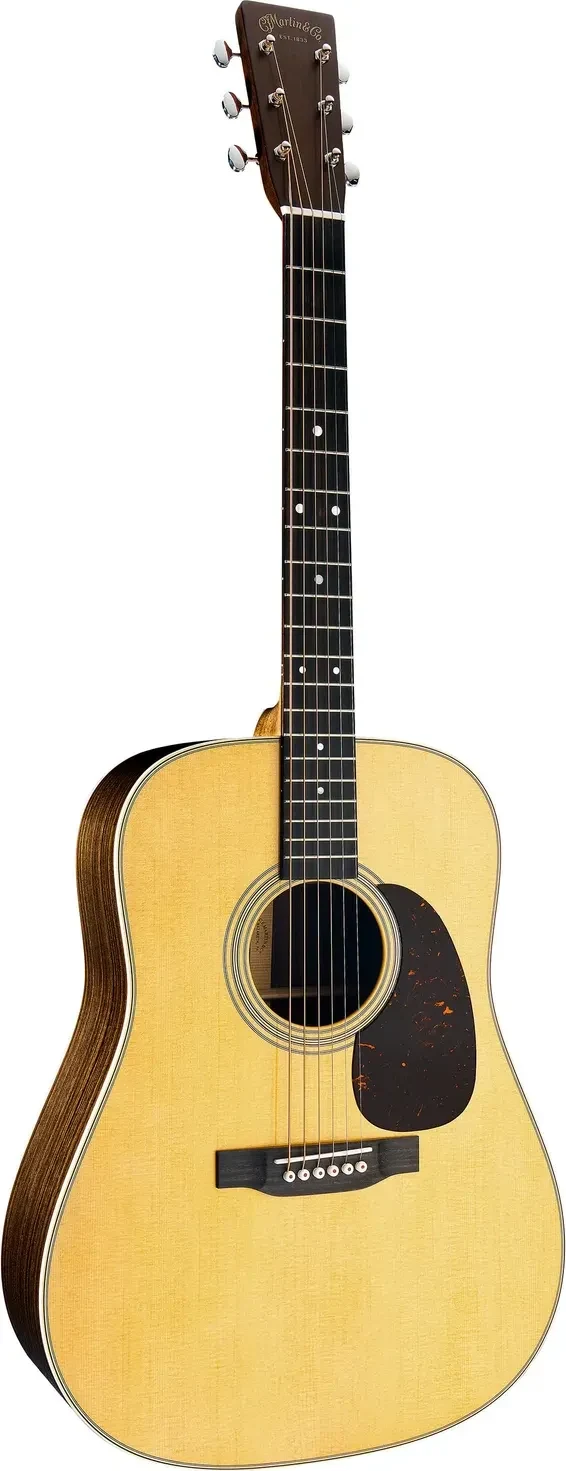
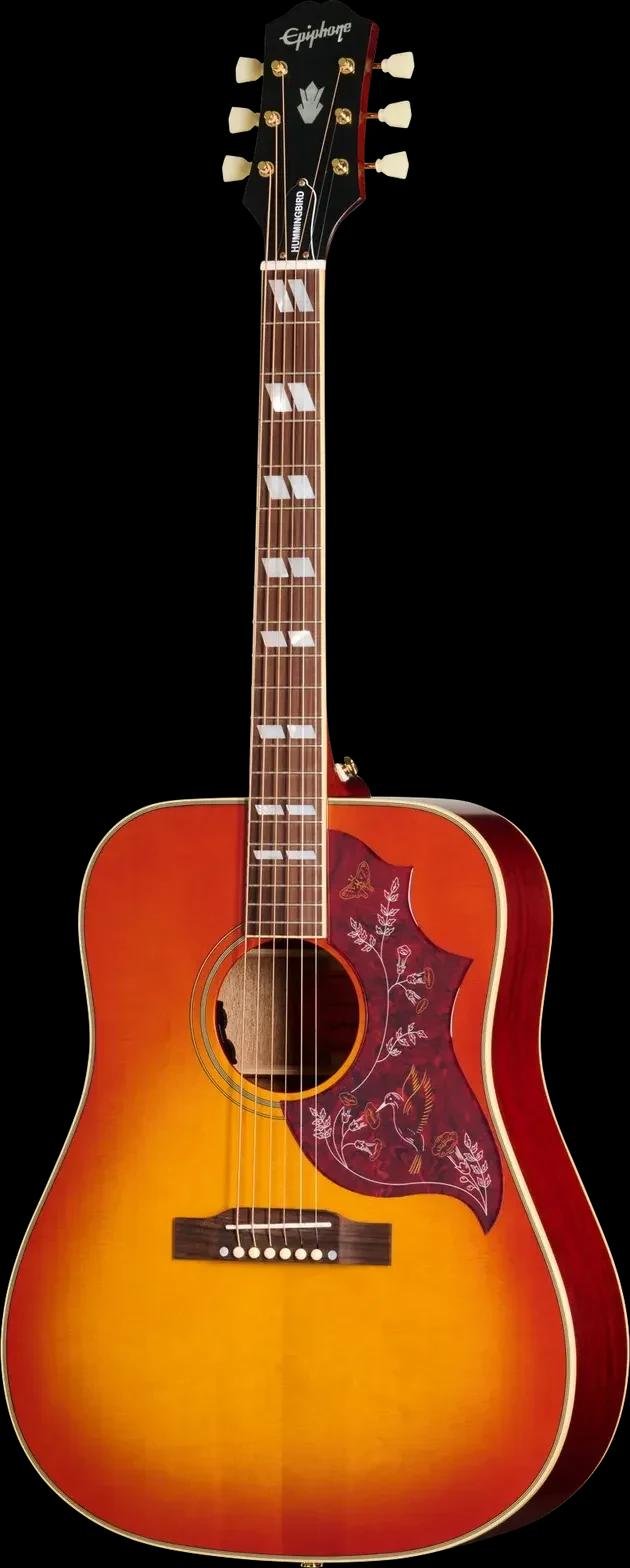
For more money, the Martin D-10E is the natural step up in the same body shape, with solid back and sides and electronics. The Epiphone Hummingbird offers solid woods and a pickup with a vintage look.
If size matters more than volume, the Taylor GS Mini and Martin LX1 Little Martin are smaller and easier to hold, though both cost more than the FG800.