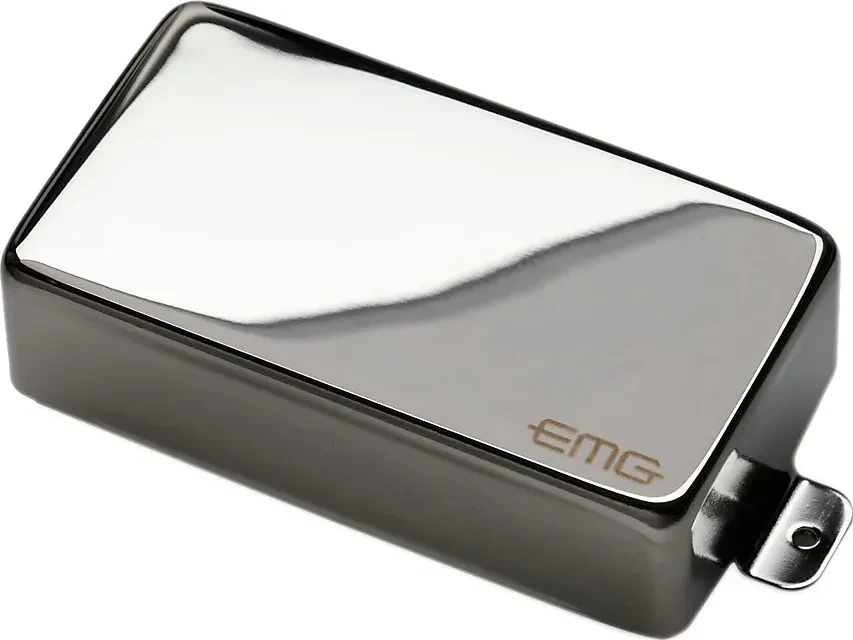
Changing a guitar pickup is one of the most useful jobs a guitarist can learn. It needs a soldering iron and an hour or two, and the steps are the same whether you are replacing a Strat single coil or a Les Paul humbucker. The only real differences are how you reach the wiring and how many wires the new pickup has.
This guide covers passive pickups. Active pickups such as the EMG 81 follow the same mechanical steps but usually connect with plugs, and come with their own pots and instructions.
Tools and parts
| Item | Why you need it |
|---|---|
| Electronics soldering iron with a stand (temperature-controlled is easiest) | Melts the old joints and makes the new ones |
| Rosin-core electronics solder | Never acid-core plumbing solder |
| Desoldering braid or a solder sucker | Clears old solder from lugs |
| Wire strippers and side cutters | Prepares the new pickup's leads |
| Screwdrivers to fit your guitar | Pickguard, pickup ring and height screws |
| Multimeter | Checks the pickup and finds the wires on an unknown pickup |
| Heat-shrink sleeving or insulating tape | Covers any lead you do not use |
| Phone camera | Records the wiring before you touch it |
| The new pickup's wiring sheet | Each maker uses its own colour code |
Safety and soldering
Work in a ventilated room and keep the iron in its stand whenever it is not in your hand. Solder fumes are mostly flux smoke, but they are still worth keeping out of your face, and lead-based solder means washing your hands afterwards. Protect the guitar's finish with a towel and keep the hot tip away from the body and pickguard.
A good joint is quick: heat the lug and the wire together, feed in solder until it flows, and take the iron away. Holding the iron on a pot casing for a long time can damage the pot. If you have never soldered, practise on scrap wire first.
Before you start
- Photograph everything. Take clear pictures of the switch, the pots and every wire, from more than one angle. This is the single most useful step.
- Read the new pickup's sheet. Find which lead is hot and which is ground, and on a humbucker which leads are joined.
- Slacken or remove the strings. You need to lift the pickguard (Strat) or remove the pickup and ring (Les Paul) without scratching anything.
Removing the old pickup
On a Strat or other pickguard-mounted guitar:
- Unscrew the pickguard and lift it carefully, turning it over onto a towel. The pickups, switch and pots come up with it.
- Find the old pickup's two leads. The hot goes to a lug on the five-way switch; the ground goes to the back of the volume pot or a ground bus.
- Desolder both, and note exactly which lug the hot came from.
- Remove the two height screws and springs, and lift the pickup out.
On a Les Paul or other top-routed guitar:
- Unscrew the pickup mounting ring from the top of the guitar and lift the pickup and ring out together.
- Open the control cavity on the back. The pickup's lead runs through a channel to the volume pot.
- Desolder the lead at the volume pot: the hot from the outer lug, the braid or bare wire from the pot casing.
- Before pulling the old lead out, tie a length of string to it. Pull it through and you have a guide string to draw the new lead back in.
- Move the height screws and springs from the old pickup to the new one, or use the new ones supplied.
Wire colours by maker
A single coil has two leads: hot and ground. There is no common colour standard, so read the sheet: on a pickup with braided shielded cable the inner conductor is hot and the braid is ground.
A four-conductor humbucker has four coloured leads plus a bare shield wire. For a standard humbucker sound you join two leads together, take one as hot and ground the other with the bare wire. The colour codes below are as Seymour Duncan describes its own and as Bare Knuckle's cross-reference chart gives the others; confirm against the sheet that comes with your pickup.
| Maker | Hot | Join together and insulate | Ground (with bare) |
|---|---|---|---|
| Seymour Duncan | Black | Red and white | Green |
| DiMarzio | Red | Black and white | Green |
| Gibson | Red | Green and white | Black |
| Fender | Green | Black and white | Red |
Solder the joined pair together, insulate it with heat-shrink and tuck it away. It is the connection you will use later if you add a coil split or series and parallel switching, so do not cut it short.
Fitting and soldering the replacement pickup
- Fit the new pickup to the pickguard or mounting ring with its height screws and springs.
- On a Les Paul, pull the new lead through the channel with your guide string.
- Trim the leads to length, leaving some slack, and strip a few millimetres from the end of each.
- Solder the hot to the same lug the old hot came from, and the ground to the same point as the old ground.
- Insulate any unused leads.
Test before you close it up
- Plug the guitar into an amp at low volume with the pickguard or cavity still open.
- Select the new pickup and tap its pole pieces gently with a steel screwdriver. You should hear a clear tap through the amp.
- Try every switch position. If the in-between positions sound thin and hollow, the new pickup is out of phase with its neighbour: swap its hot and ground (on a humbucker, follow the maker's reverse-phase instructions).
- If there is no sound, check the joint, then measure the pickup's resistance with a multimeter across hot and ground. A reading close to the maker's published DC resistance means the pickup is fine and the fault is in the wiring.
Once it works, refit the pickguard or cover, restring and tune.
Set the height last
A new pickup straight from the box is rarely at the right height. The pickup height guide gives Fender's and Seymour Duncan's published starting points and how to measure them.
If you are still choosing a pickup, see the best Stratocaster pickups and best humbuckers for a Les Paul guides, and the Wiring hub for full wiring diagrams.