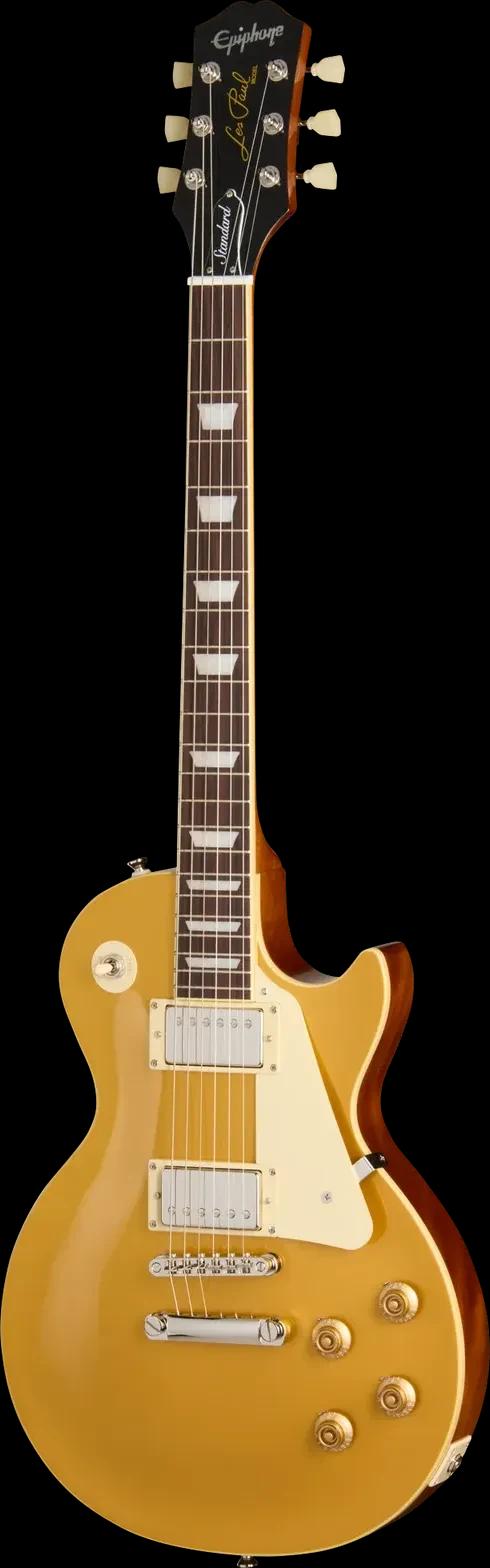
A Les Paul has a volume and a tone control for each pickup and a three-way toggle switch. There are two common ways to connect each tone control to its volume control, known as ’50s wiring and modern wiring. The parts are identical; only one connection moves.
That one connection changes how the guitar behaves as you turn the volume down. It is a cheap, reversible change, and it is one of the most discussed mods for the Les Paul and its copies. This guide gives a Les Paul wiring diagram with the two versions side by side, and every connection of the full circuit in lists and tables.
What changes and why it matters
In modern wiring, the tone control connects to the volume pot's input lug, where the pickup's hot lead arrives. The tone circuit sits directly across the pickup, before the volume control.
In ’50s wiring, the tone capacitor connects to the volume pot's centre lug, its output. The volume control now sits between the pickup and the tone circuit.
The practical results, as Seymour Duncan and Premier Guitar describe them:
| Modern | ’50s | |
|---|---|---|
| Turning the volume down | Keeps the level up better but loses treble | Keeps more treble as you turn down |
| Turning the tone down | Behaves independently of the volume | Interacts with the volume setting, and can drop the level a little |
| Volume and tone on full | Same as ’50s | Same as modern |
Players who ride the volume control, turning down for clean parts and up for leads, tend to prefer ’50s wiring because the sound stays clearer at lower settings. Players who leave the volume on full will hear little difference. Epiphone fits ’50s-style wiring to its Les Paul Standard ’50s, per Gibson's listing.
Parts list
| Part | Value or type | Note |
|---|---|---|
| Humbuckers | 2 | Two-conductor or four-conductor |
| Three-way toggle switch | Les Paul type | Rhythm (neck), both, treble (bridge) |
| Volume pots | 2 × 500k | 500k is the usual value for passive humbuckers |
| Tone pots | 2 × 500k | |
| Tone capacitors | 2 × 0.022 µF | Seymour Duncan gives 0.022 µF as the stock Les Paul value |
| Output jack | Mono | |
| Shielded or braided hook-up wire | For the runs to the switch and jack |
Seymour Duncan suggests 0.047 µF for a darker roll-off with bright pickups, or 0.015 µF for finer control of the top end. The 250k vs 500k pots guide explains the pot value.
Wire colours by maker
Many Gibson-style pickups have a single braided lead: the inner conductor is hot and the braid is ground. Four-conductor humbuckers have four coloured leads plus a bare wire, and makers use different colours. For a standard humbucker connection, as Seymour Duncan gives its own code and Bare Knuckle's chart gives the others:
| Maker | Hot (to volume input lug) | Join and insulate | Ground (with bare) |
|---|---|---|---|
| Seymour Duncan | Black | Red and white | Green |
| DiMarzio | Red | Black and white | Green |
| Gibson | Red | Green and white | Black |
| Fender | Green | Black and white | Red |
Check against the sheet that comes with your pickup before soldering.
Safety and soldering
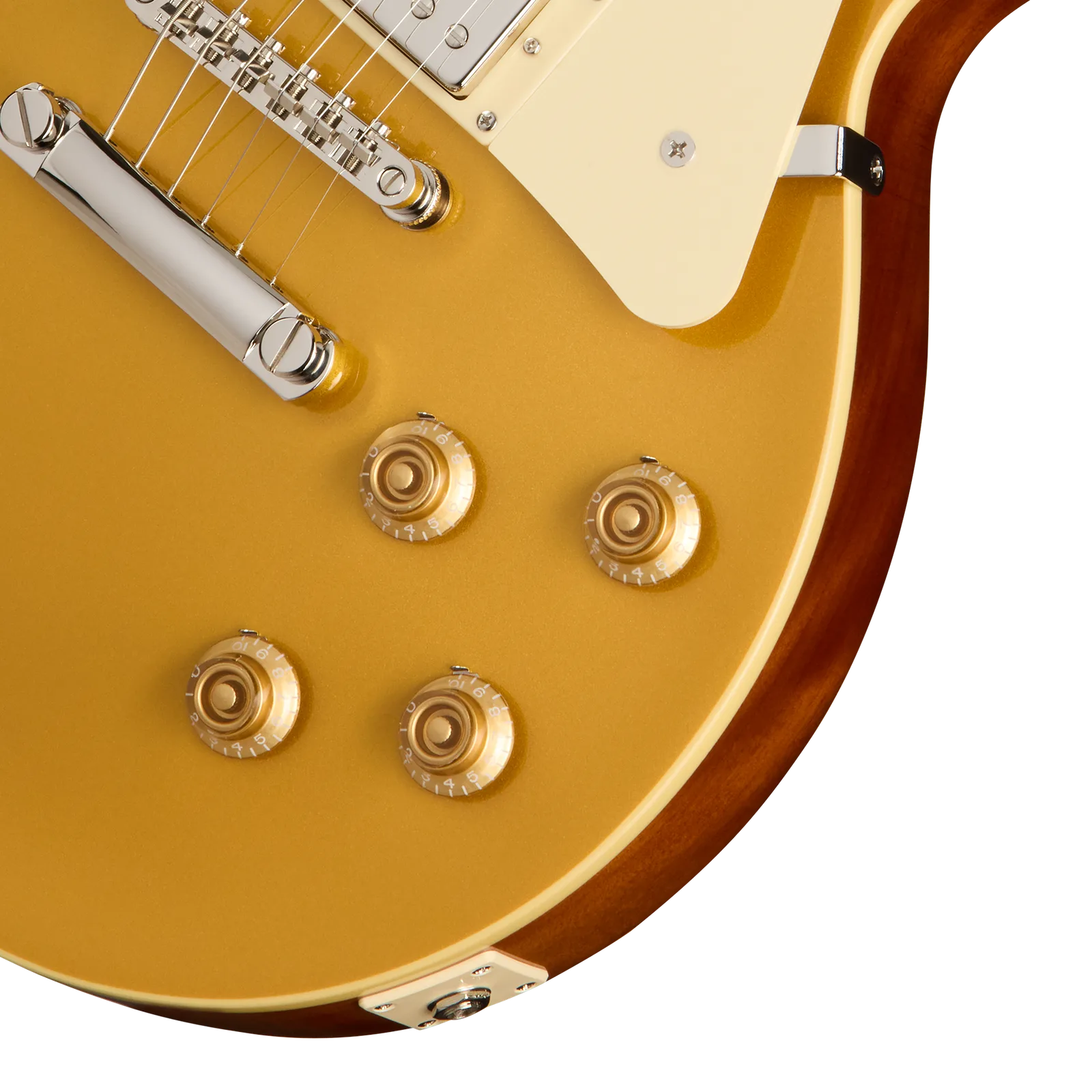
Work in a ventilated room, keep the iron in its stand when not in use, and wash your hands after handling lead-based solder. Les Paul pots are mounted close together under the body; protect the finish around the cavity and avoid holding the iron on a pot casing for long, which can damage the pot.
Connections common to both wirings
Do these for each pickup, with its own volume and tone pot:
- Pickup hot to the volume pot's input outer lug.
- Pickup ground (braid or bare wire) to the volume pot casing.
- Volume pot's other outer lug to the volume pot casing (ground).
- Volume pot's centre lug to that pickup's lug on the toggle switch (neck volume to the rhythm lug, bridge volume to the treble lug), using shielded wire.
Then, once:
- Toggle switch output to the output jack tip.
- Toggle switch ground to ground (a pot casing).
- Output jack sleeve to ground.
- A ground wire linking all four pot casings, and the bridge or tailpiece ground wire to a pot casing.
Modern tone connections
For each pickup:
| From | To | Note |
|---|---|---|
| Volume pot, input outer lug (with the pickup hot) | Tone pot, outer lug | Wire |
| Tone pot, centre lug | Capacitor, one leg | |
| Capacitor, other leg | Tone pot casing | Ground |
The tone pot's remaining outer lug is left unconnected.
’50s tone connections
For each pickup:
| From | To | Note |
|---|---|---|
| Volume pot, centre lug | Capacitor, one leg | The capacitor itself is the link |
| Capacitor, other leg | Tone pot, outer lug | |
| Tone pot, centre lug | Tone pot casing | Ground |
The tone pot's remaining outer lug is left unconnected.
Converting one to the other
To go from modern to ’50s, desolder the wire between the volume pot's input lug and the tone pot, and the capacitor from the tone pot. Fit the capacitor between the volume pot's centre lug and the tone pot's outer lug, and ground the tone pot's centre lug. Reverse the steps to go back.
If your guitar has a treble bleed network on the volume pots, Premier Guitar notes that one tuned for modern wiring will usually be too strong in ’50s mode. Remove or retune it after converting.
Test before you close it up
With the cavity open, plug in at low volume and tap each pickup's pole pieces in all three switch positions. Turn each volume and tone through its range and listen for crackle or dead spots. Then compare: with ’50s wiring, rolling the volume back halfway should leave noticeably more top end than before.
Where to go next
- Four-conductor pickups: add a push-pull coil split or series and parallel switching to the same pots.
- New pickups first: see best humbuckers for a Les Paul and how to change a pickup.
- More circuits: the Wiring hub.