A Jazz Bass that plays and sounds the part on a budget
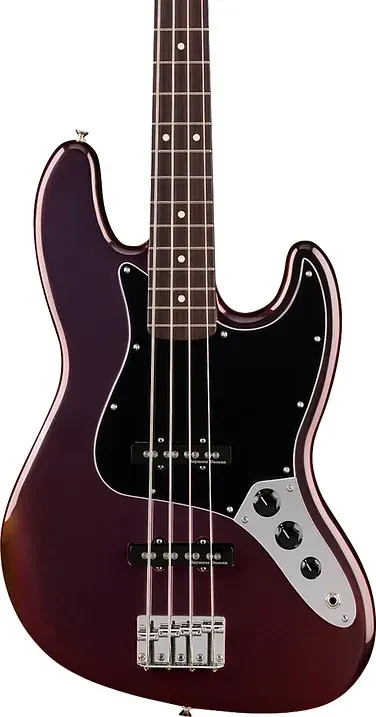
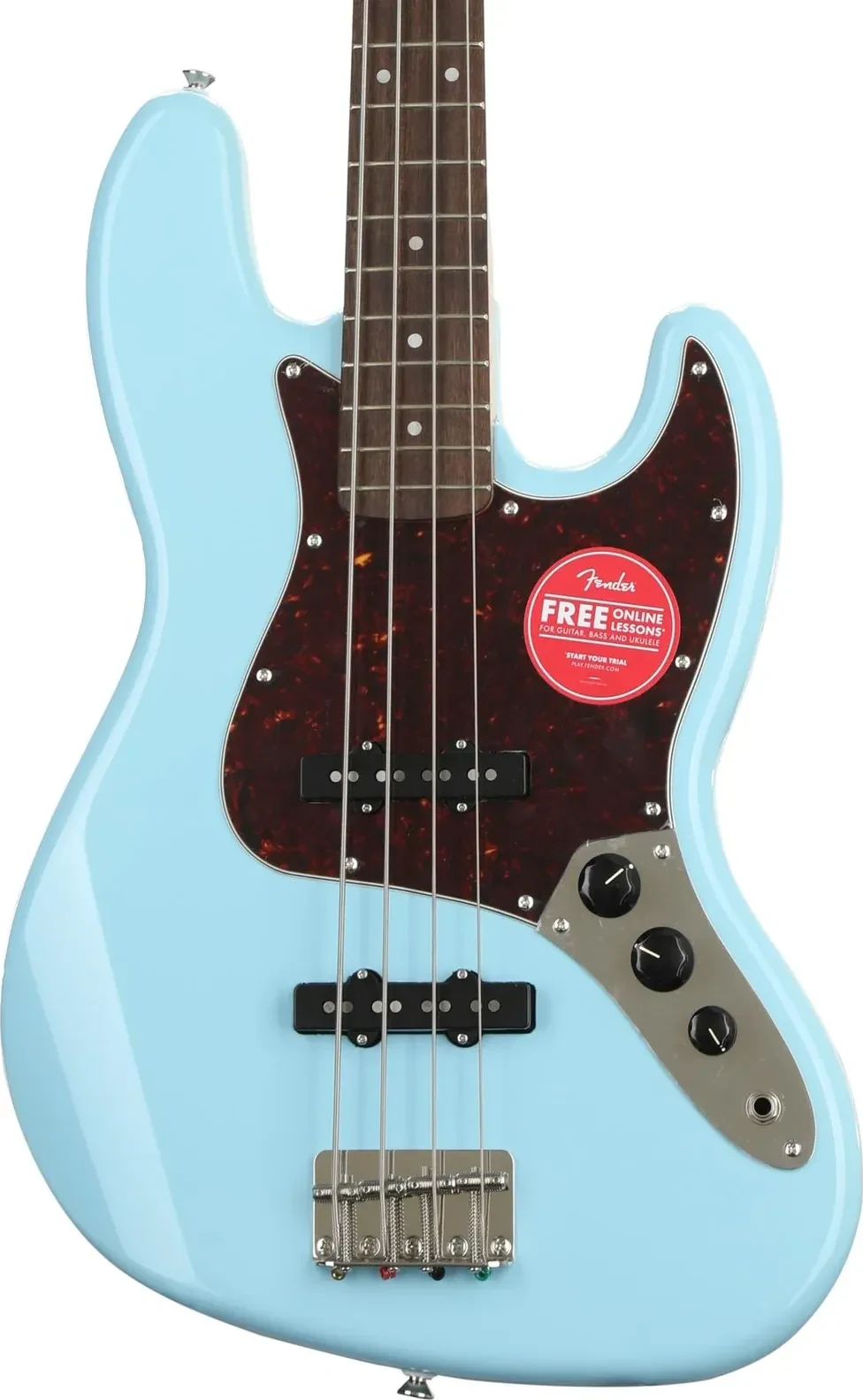
The '60s Jazz Bass keeps the parts that give the design its sound and feel. Two Fender-designed alnico single coils run through the classic Jazz Bass controls: a volume for each pickup and a master tone. The maple neck is carved to a slim C profile and finished in tinted gloss, with the traditional Jazz Bass nut width of 38.1 mm, a 9.5-inch radius and 20 narrow-tall frets on an Indian laurel fingerboard with pearloid dot inlays. The bridge is a vintage-style four-saddle design with threaded steel saddles.
The body is poplar, and some finishes come with a tortoiseshell scratchplate. The Classic Vibe series is where Squier builds its period-styled instruments, and the '60s Jazz Bass looks back to the decade when Fender's second bass design became a studio and stage staple. It sits above Squier's Affinity basses and below Fender's own Player II and Vintera models.
What reviewers and owners report
Reviews are consistently enthusiastic. Writers praise the playability, with the slim neck making it easy to move around, and several note that the bass sounds lively even before it is plugged in. Guitar World has named it the best Jazz Bass for all-round value.
The pickups are where the bass earns most of its praise. Reviewers describe a convincing Jazz Bass voice: a full, rounded tone from the neck pickup, a tighter and more nasal bark from the bridge, and the familiar scooped growl with both up full, the sound most associated with the design. One review singled out the clarity in the lower register.
The criticisms are minor and typical of the price. One reviewer found the action set a little high from the factory, though it was simple to adjust, and noted some small finishing flaws on the fret edges. Some players prefer a satin neck to the gloss finish. With both pickups at equal volume the hum cancels, but soloing either pickup brings it back, as on any traditional Jazz Bass.
Who it suits
It suits players who want a traditional passive Jazz Bass for rock, funk, soul, pop or indie, and who value feel and authenticity over modern features. It is a sound step up from a first bass and a capable gigging instrument.
It is less suited to players who want active EQ or the very slim, flat necks of modern designs. The guide to bass pickups explained covers why two J pickups behave the way they do.
What to compare it with
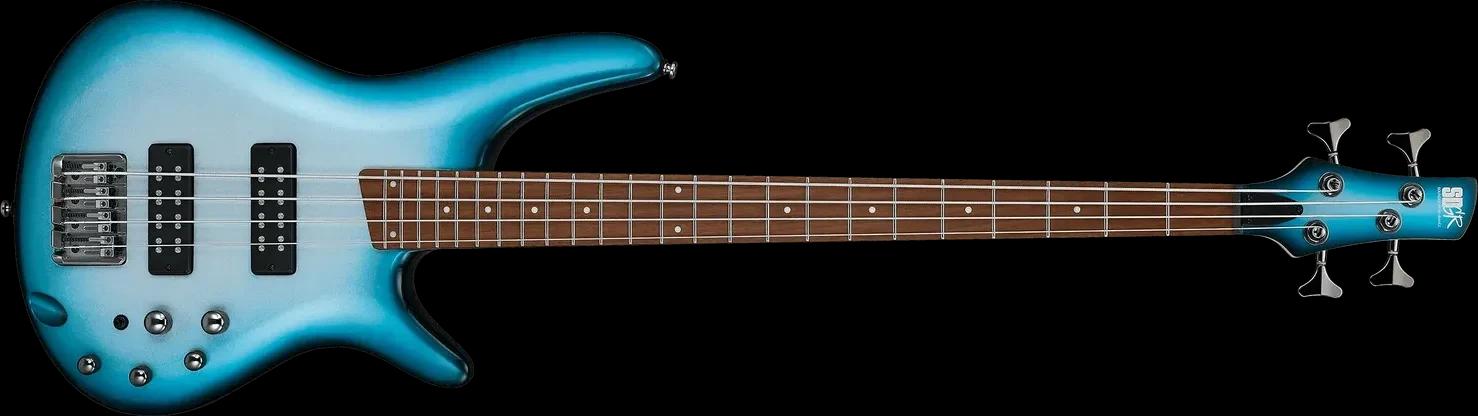
The Fender Player II Jazz Bass is the step up into a Fender, with an alder body, satin neck back and rolled fingerboard edges. If you prefer an active bass at a similar level, the Yamaha TRBX304 and Ibanez SR300E are the obvious alternatives. For a cheaper Fender-style bass, see the Squier Affinity Precision Bass PJ.