Boss DS-1 review

A first distortion that lasts: classic hard-edged rock and punk crunch, provided the Tone knob stays below halfway.

Updated 23 November 2026 by Rory Tassell
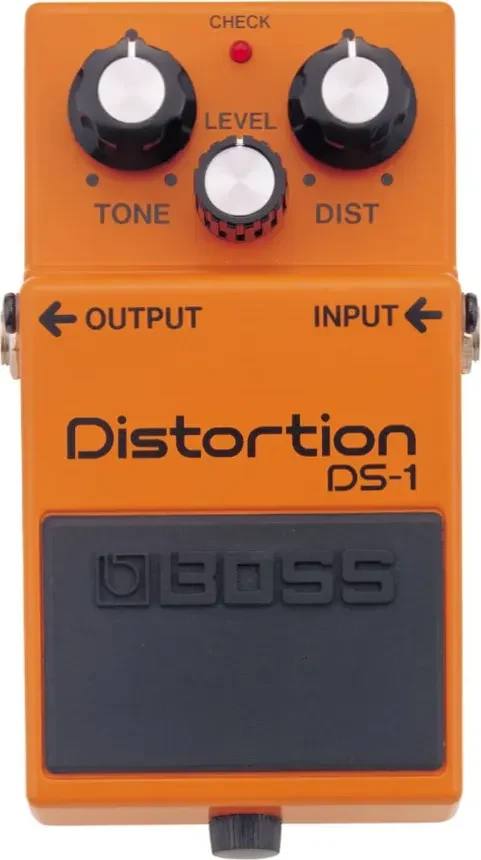
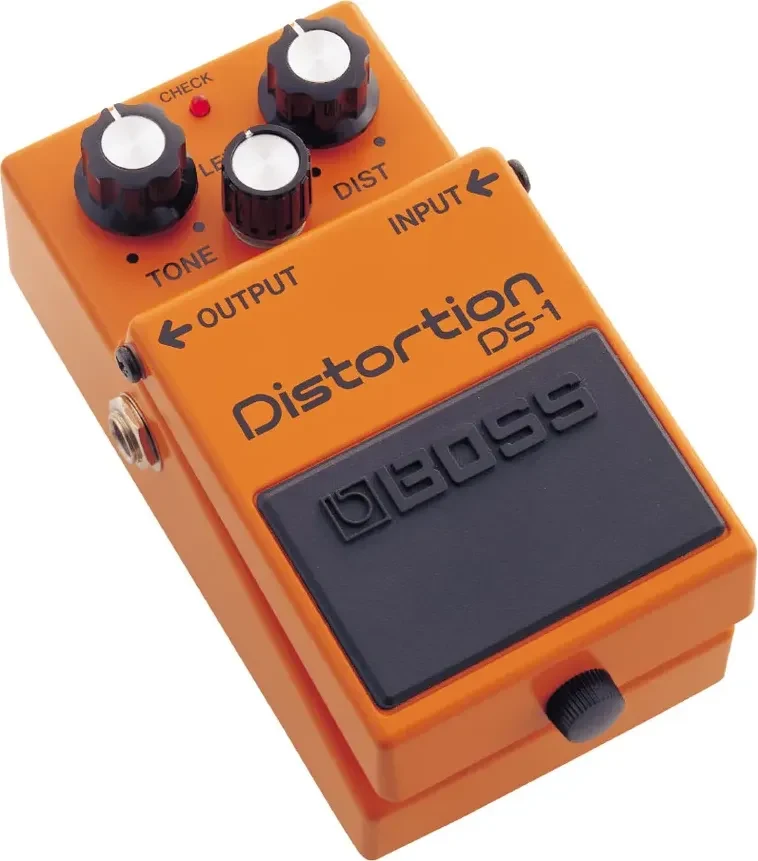
Boss DS-1 Distortion pedal seen from above

Photos: Boss

The internet’s opinion

From 2 professional reviews and 30 owner reviews: a fair amount of evidence.

Both professional reviews recommend it as a classic, simple distortion, SoundGuys calling it tough and good value, and owners mostly agree, often using it for grunge and classic rock or as a boost into a driven amp. The repeated reservations are a tone control that turns harsh without careful setting and too little weight for modern metal.

2 recommend

What people like

  • Classic, recognisable rock and grunge distortion
  • Tough Boss compact build that lasts
  • Simple three-knob layout that is quick to set
Show 3 more
  • Good value and a sensible first distortion
  • Covers more styles than its reputation suggests, from blues to punk
  • Works well as a boost into an already driven amp

What to know before you buy

  • Needs careful setting; the tone control turns harsh past halfway
  • Not built for modern high-gain metal
  • Can sound thin or fizzy, with little low end
Show 2 more
  • Output level is modest next to other distortions
  • Some noise at high gain, so owners add a noise gate
See the 2 reviews this is based on

2 professional reviews (2 recommend, 0 mixed, 0 avoid); 30 owner reviews read at ThomannCompiled 19 November 2026How this is compiled

Video reviews

  • inthebluesDec 2021

    The Boss DS-1 Distortion Pedal Review | How Good is it?

    The Boss DS-1 Distortion Pedal Review | How Good is it?

    inthebluesDec 2021
  • Jack Fossett GuitarAug 2022

    The Boss DS1 is AWESOME!

    The Boss DS1 is AWESOME!

    Jack Fossett GuitarAug 2022

Independent reviewers, not the maker’s or a retailer’s channel. Nothing loads from YouTube until you press play.

Hard-edged rock distortion that also works as a boost

The DS-1 gives the bright, aggressive distortion of classic hard rock and punk, and with the Dist knob low it doubles as a boost that pushes an amp already breaking up, a role Boss itself points to. Reviewers describe plenty of sustain across a range that runs from a mild boost to heavy gain, and Boss says the attack stays clear even at full distortion. Three knobs set it: Dist, Tone and Level.

It asks little of a pedalboard. It sits in the standard Boss compact enclosure, 73 by 129 mm, with a five-year warranty, and at 10 mA it is easy on power: Boss quotes around 80 hours from an alkaline 9V battery, and it also runs from a Boss PSA adaptor. The circuit uses a transistor stage followed by an op-amp stage, which Boss credits for its full low end.

Bright, aggressive and very responsive to the tone knob

The Tone control works in both directions, adding treble and thinning the bass one way, or the reverse, so it covers tight rhythm and smoother leads.

The usual criticism, from Thomann owners, is that it turns harsh past halfway on the Tone control, and a few find it thin or fizzy. SoundGuys found its output notably lower than other 9V distortions and the pedal less suited to modern high-gain metal than some rivals. Guitar Interactive found it sounds best straight into an amp's clean channel. Owners also use it at low gain as a boost into an amp that is already breaking up.

Boss's first distortion, still in production

Boss introduced the DS-1 in 1978 as its first distortion pedal, and the design has stayed essentially the same since. Boss says it is its biggest-selling compact pedal, and it remains one of the cheapest ways into a branded distortion.

Who it suits

The DS-1 suits beginners building a first board, players who want the classic hard rock, punk and metal distortion sound, and anyone who wants a dependable backup pedal. It pairs well with a modelling amp's clean channel, such as the Boss Katana 50 Gen 3 or Fender Mustang LT25, and it pushes a valve amp like the Marshall DSL40CR harder when used as a boost.

Players who want a smoother, more amp-like distortion, or more control over EQ, will find it basic.

What to compare it with

For a milder, mid-focused overdrive, the Ibanez TS9 Tube Screamer is the classic alternative and is often used the same way as a boost. For thick, sustaining fuzz, look at the Electro-Harmonix Big Muff Pi. The DS-1 also responds to the pickups in front of it: hot humbuckers such as the Seymour Duncan JB push it into heavier territory than vintage single coils.
Spec sheet

Type
Distortion
Controls
Dist, Tone, Level
Power
9V battery or Boss PSA adaptor
Current draw
10 mA
Dimensions
73 x 129 x 59 mm
Weight
360 g with battery
All 8 specifications
Battery life
About 80 hours (alkaline)
Input impedance
1 MΩ

From the manufacturer; sources not yet recorded

Sources

Guitar & Pickup doesn’t test gear: this page gathers the maker’s specs and what published reviews and owners say, and every fact on it comes from one of these.

  1. Boss: DS-1 Distortion
  2. Boss: DS-1 specifications
  3. SoundGuys: Boss DS-1 review
  4. Guitar Interactive: Boss DS-1 40th Anniversary review
  5. Thomann: Boss DS-1 Distortion customer reviews
  6. Boss: All about the DS-1 (history)