More gain, sustain and cut from the bridge, without a battery
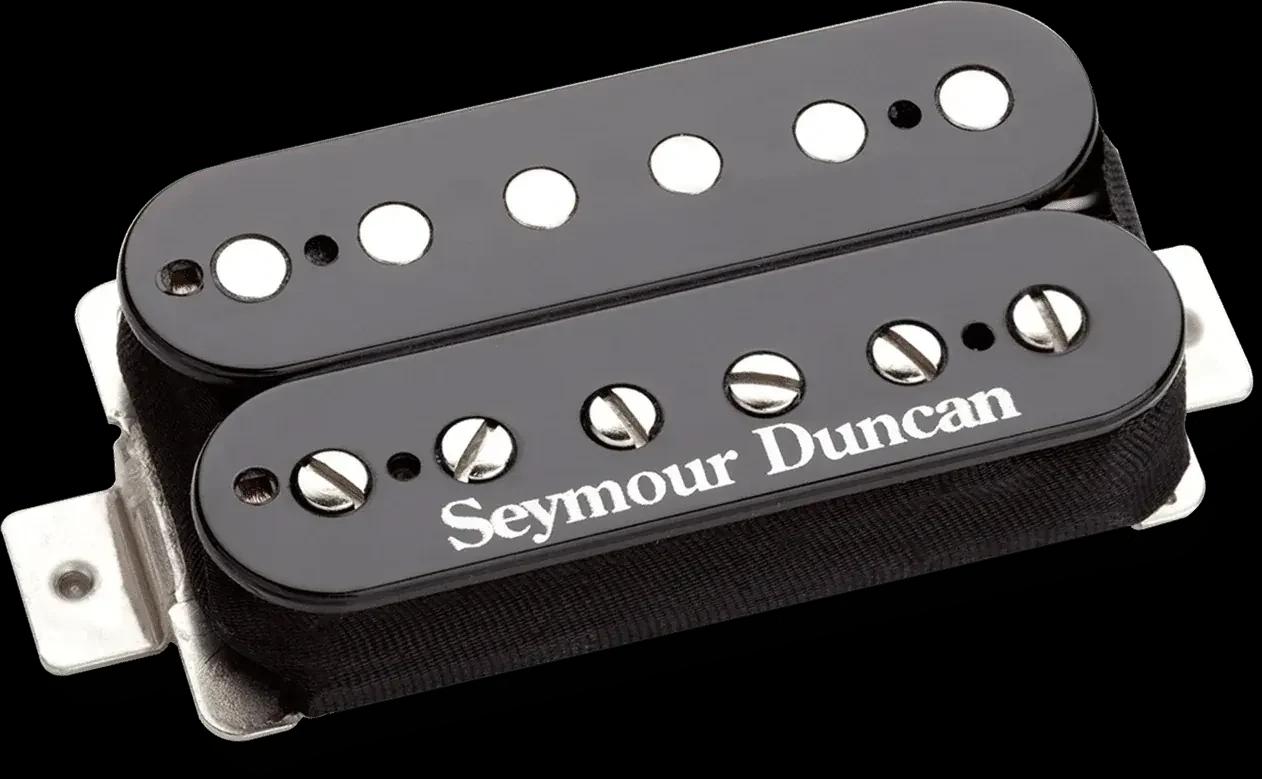
Put a JB in the bridge of a humbucker guitar and it hits the amp harder: more output, longer sustain, and an upper-mid push that helps both riffs and solos cut through a driven amp. It stays clear enough under gain that reviewers and owners use it for everything from blues to metal. The figures behind that are a DC resistance of 16.6k, roughly double that of a vintage PAF-style pickup such as the Seymour Duncan ’59, and an Alnico 5 bar magnet; Seymour Duncan describes the output simply as hot.
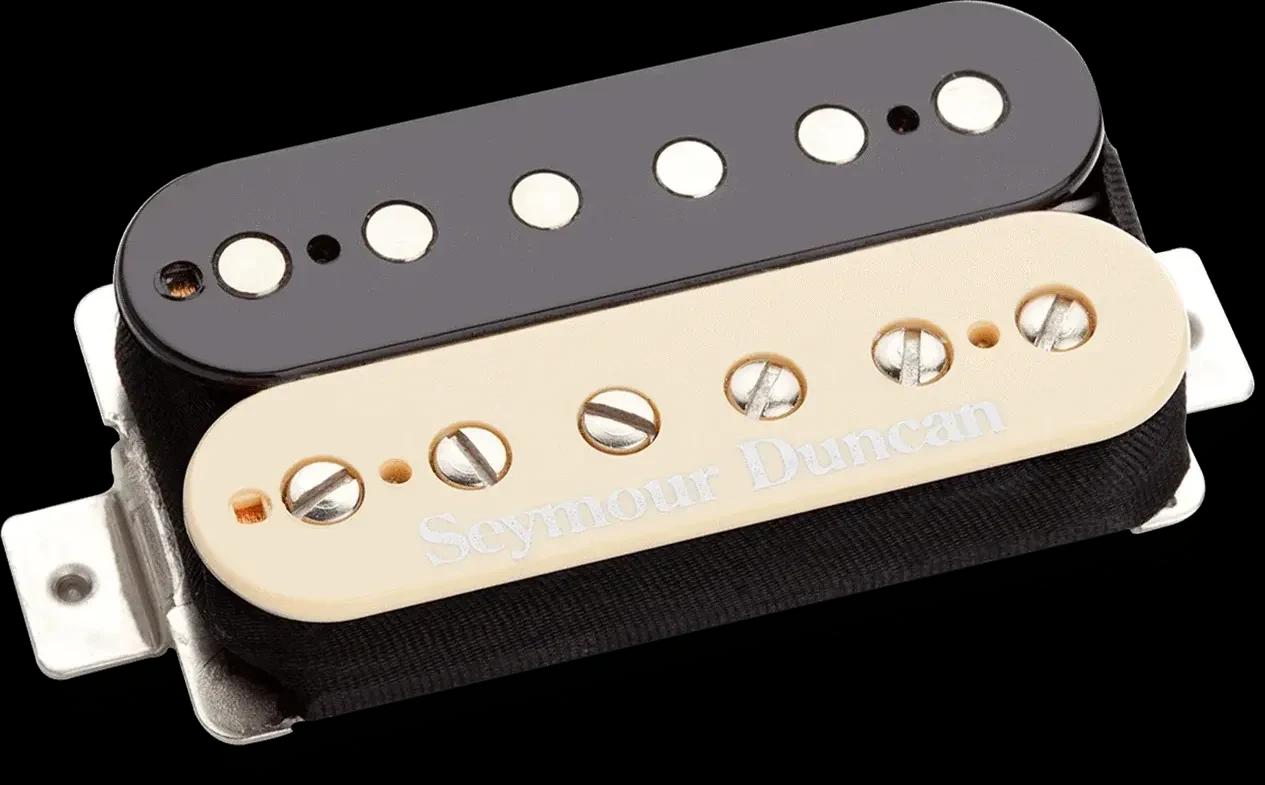
It is passive, so there is no battery to fit, and Seymour Duncan calls the JB its most popular pickup; it has been the first name in bridge humbucker upgrades for decades. It comes in standard humbucker spacing and as a Trembucker for guitars with wider string spacing at the bridge, such as many tremolo-equipped models. The lead is 4-conductor, so it can be split to a single coil or switched between series and parallel.
A hot, mid-forward voice with a bright top
Guitar World describes a big low end, a crisp treble and, above all, a lift in the upper mids. That lift is what makes power chords crunch and single-note lines sing through a driven amp, and it is why reviewers and owners rate the JB for everything from blues to metal; Bonedo singles out its sustain and tight, defined low end under high gain. Guitar World does call it more a rock pickup than a metal one, with less low end than heavier designs.
The same lift is also the main complaint. Among owners at Thomann, the unhappy ones mostly found the top end sharp or the mids too strong in their guitar, which suggests matching it to a warmer-sounding instrument rather than a very bright one. Seymour Duncan offers a fix on the wiring side: a 500k volume pot for more high-end cut, or 250k to soften the tone. The guide to 250k vs 500k pots explains the difference.
Guitars it suits
The JB is a natural fit for the bridge of an Epiphone Les Paul Standard ’50s, where it adds gain and bite to a warm-sounding guitar, and for a PRS SE Custom 24. It drops into any standard humbucker route without modification. Seymour Duncan pairs it with its Jazz or ’59 neck pickups, and Guitar World and owners rate the JB and Jazz together in particular; either balances the JB's output with a clearer neck voice.
Swapping one in is a straightforward solder job: see how to change a pickup. If the 4-conductor options appeal, the push-pull coil split wiring guide shows how to use them.
What to compare it with
The JB's oldest rival is the DiMarzio Super Distortion, a ceramic pickup that Guitar World describes as leaning more to the bass, with a rolled-off top; the JB vs Super Distortion comparison sets them side by side. For tighter, quieter high-gain tones the active EMG 81 is the usual alternative. If the numbers on spec sheets are unfamiliar, pickup specifications explained covers what DC resistance and magnet type do and do not tell you.