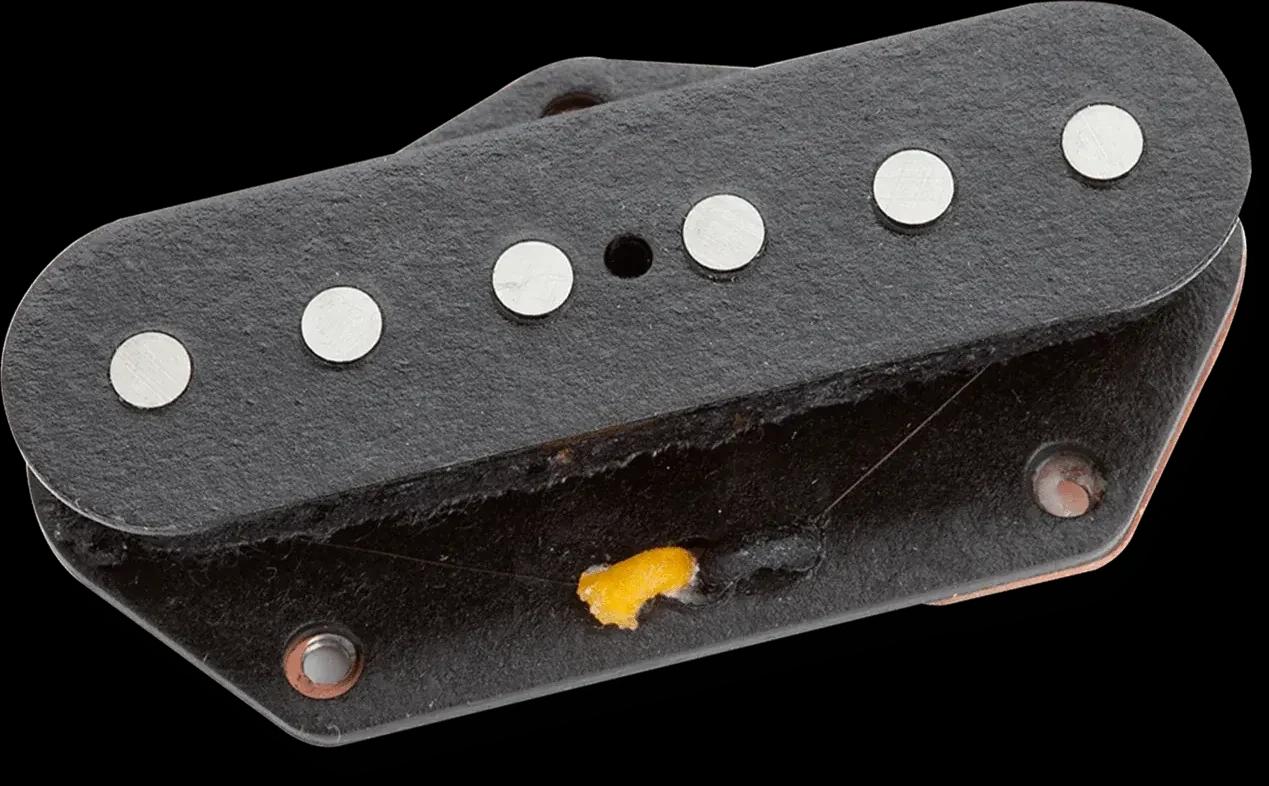
The early Tele bridge sound, with a little extra bite
Owners who fit the STL-1b mostly describe one thing: the Tele bridge sound they were after, with snap, twang and clarity that cuts through a band. Several hear a little more grit than a strictly 1950s-spec pickup, calling it beefier and more snarling. The figures back that up. Seymour Duncan lists 8k DC resistance over Alnico 5 rods with a slightly larger diameter (0.197 in), which it credits with higher output, biting treble and snarly mids; Fender's Pure Vintage ’52 bridge pickup, by comparison, is listed at 6.6k.
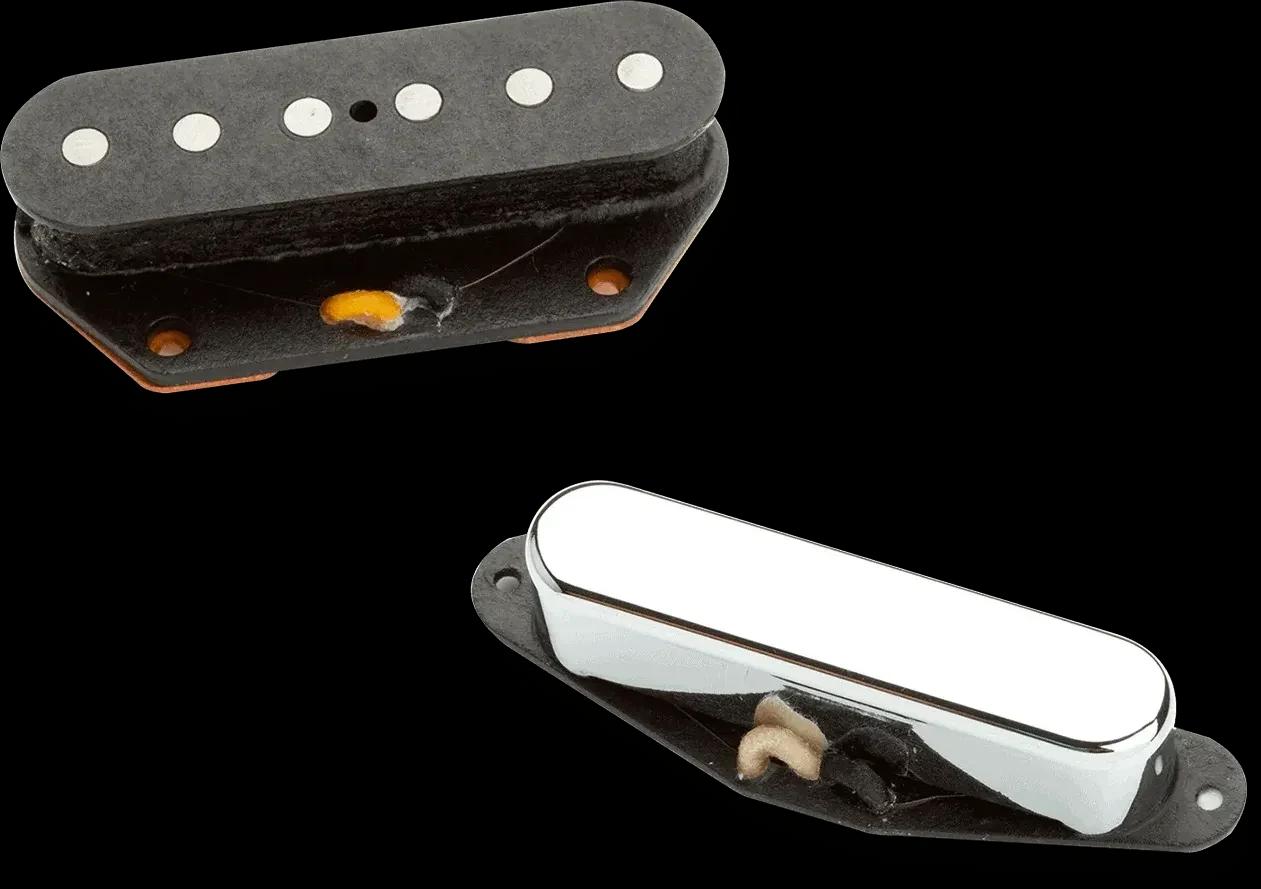
Seymour Duncan describes it as a tribute to the 1950 original and the hottest of its vintage-output Tele pickups. It is built the old way: hand-ground magnets, Forbon bobbins dipped in lacquer before winding, a black cotton yarn wrap, waxed cloth push-back leads, and wax potting with a copper-plated steel base plate. It is sold on its own or as a set with Seymour Duncan's Vintage Tele Rhythm neck pickup (listed at 7.63k), and the maker recommends the set.
What owners report
No magazine review or buying-guide entry for this pickup was found, so this rests on the 16 owner reviews of 20 words or more that Thomann lists. Most of them say it delivers an authentic Tele bridge sound, bright but with enough midrange not to turn shrill; a couple describe it as warmer than the pickup it replaced. Owners who swapped out stock pickups, Fender's Texas Special and Tex-Mex sets, or a budget guitar's original call it a clear step up, and several praise how well it is made.
Opinion splits on how hot and how twangy it is. Some hear a pickup with more push than a vintage Tele, while one notes that the 8k figure does not sound hot at all. A few say the twang is there but restrained, and one owner, who fitted it to a Squier Classic Vibe ’50s Telecaster, found it shrill with little twang. Another calls it harsh but biting, which is the same character heard as a strength.
Guitars it suits
It fits a standard Tele bridge route without routing, and owners have used it in Esquire builds as well as Fender, Squier and Harley Benton Teles. On a Squier Classic Vibe ’50s Telecaster it is a drop-in bridge upgrade, though that one owner's experience suggests it suits a guitar that is not already bright. Owners pair it with Seymour Duncan's vintage neck pickups or, in one case, a neck humbucker.
The bridge pickup mounts to the bridge plate and is soldered to the switch; see how to change a pickup, the Telecaster wiring diagram and how to set pickup height.
What to compare it with
Fender's Pure Vintage ’52 set is the lower-output, more strictly vintage alternative. The Fender Custom Shop Twisted Tele set has a hotter bridge at 10.16k and a Strat-like neck, and Seymour Duncan's own Quarter-Pound Tele, at 17k, is for players who want humbucker-level output. The best Telecaster pickups guide compares them, and single coil pickups explained covers the background.