The early Tele's twang and feel, on a budget
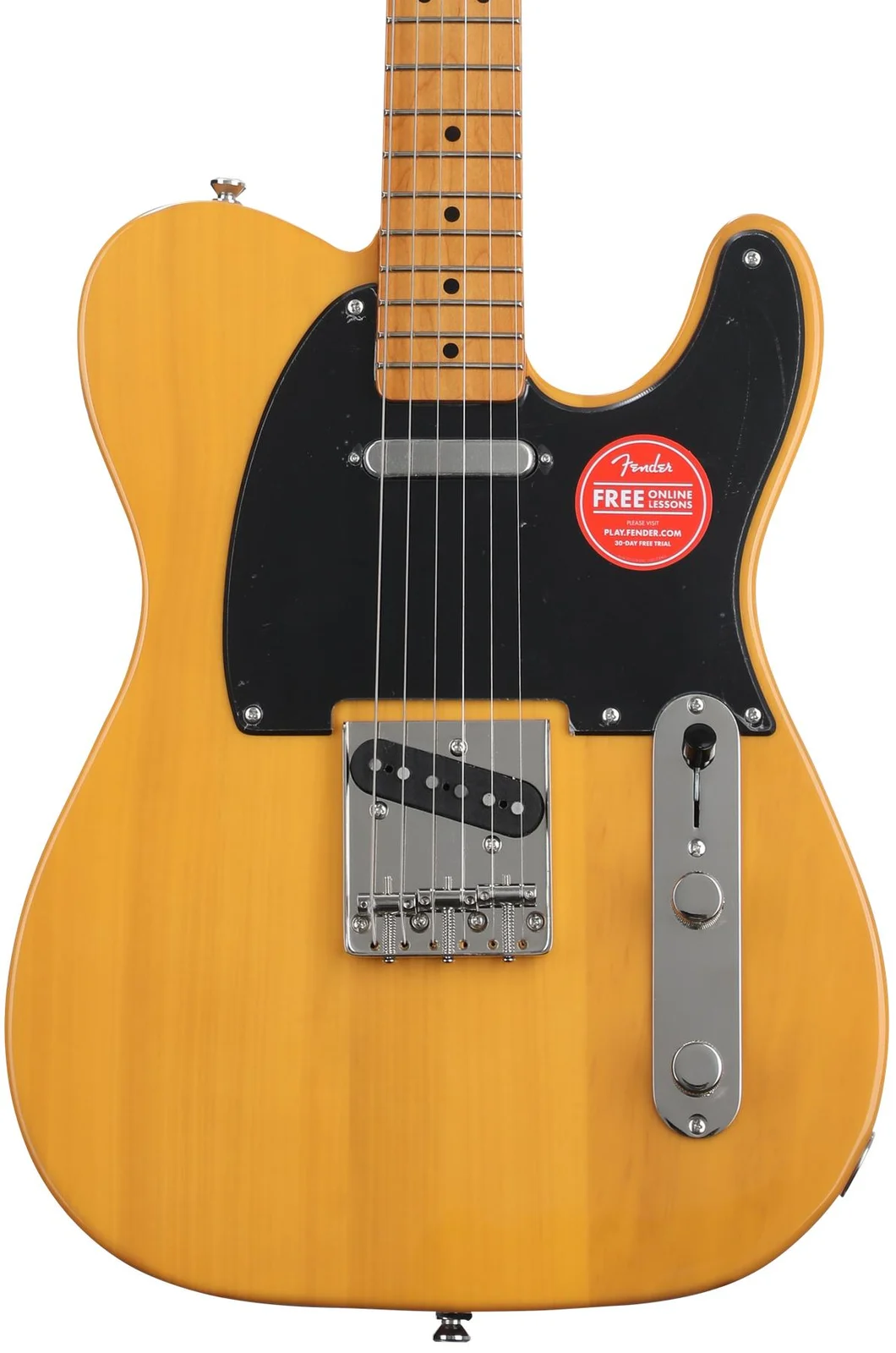
It keeps the parts that give a Tele its sound and feel. The bridge pickup is mounted in the bridge plate, the strings load through the body into a three-saddle bridge with chrome barrel saddles, and the neck pickup has a nickel cover. Both are Fender-designed alnico single coils, run through a three-way switch with master volume and tone. The maple neck has a slim C profile, a 9.5-inch radius, 21 narrow-tall frets and a tinted gloss finish.
The body is pine or poplar depending on the finish; the butterscotch version uses pine, a nod to some of the very earliest Fender Teles. The Classic Vibe '50s Telecaster is Squier's take on the guitar that started Fender's solid-body line. It shares the Classic Vibe series' approach: designed by Fender, period details throughout, and a price well below the company's own vintage-style models.
What reviewers and owners report
No magazine has reviewed the current (2019 onward) model on its own, so this rests on owners and on Guitar Player's Telecaster guide. Owners agree it gets the Tele basics right: the bridge pickup is bright and cutting, with the twang and bite that suit country, indie and rock rhythm parts, while the neck pickup gives a rounder, warmer voice for blues. The things they would change first are the tuners, the pickups and the small pots, and a few needed the truss rod and action adjusted on arrival.
The neck draws steady praise for its comfortable carve and well-finished frets, and owners frequently say it feels more expensive than it is. The main reservation is the gloss neck finish, which Guitar Player found can feel a little sticky when the guitar is new.
As with any Tele-style guitar with single coils, the pickups hum under gain.
Why the pickups might be worth changing
The Tele is a different upgrade case from the Strat. Its routing takes Tele-specific pickups: a small neck pickup under a cover and a larger bridge pickup that mounts in the bridge plate. Strat pickups will not drop in, so the swap has to be a Tele set. The Fender Pure Vintage '52 Telecaster set is the vintage-voiced choice. Fender's Custom Shop Twisted Tele set swaps both pickups for a punchier bridge and a clearer neck. For the bridge alone, Seymour Duncan's Vintage Broadcaster keeps the classic sound with a little more grit, and its Quarter-Pound Tele gives much more output for overdriven rock. Fender also makes Noiseless sets for the Tele; the review of the Fender Vintage Noiseless Strat set covers how the Noiseless design cancels hum, which works the same way in the Tele versions. The usual reasons to change are a hotter, fuller bridge pickup, or removing the hum. The steps are covered in how to change a pickup, and single coil pickups explained covers the background.
Who it suits, and what to compare it with
It suits players who want a simple, direct guitar with a classic sound: country, indie, garage rock, blues and plenty of pop. It is a good first Tele and a capable gigging guitar for players on a budget.
The Squier Classic Vibe '50s Stratocaster is its closest relative, trading the Tele's snap for three pickups and a tremolo. For one guitar that also covers heavier styles, look at the Yamaha Pacifica 112V, and for humbucker tones, the Epiphone Les Paul Standard '50s.