The single coil is the oldest and simplest kind of magnetic guitar pickup: one coil of wire, one set of magnets, one signal. It is the sound of the Stratocaster and Telecaster, and of the Gibson P-90, and players choose it for clarity, attack and sparkle that two-coil pickups do not quite match. Its weakness is noise.
One coil gives a narrow, bright window on the string
A single coil senses only a narrow slice of each string. With no second coil to widen that window, and with a relatively small coil that has modest inductance, it keeps a lot of high-frequency detail; Seymour Duncan's rule of thumb is that less wire gives a clearer sound with more highs. The result is the familiar single-coil character: a crisp attack, clear note separation in chords and a bright top end, with less bass and output than a humbucker.
How that plays out depends on where the pickup sits. The string swings most widely near the neck, so on a Strat the neck pickup sounds the fullest; near the bridge the upper harmonics dominate, so the bridge pickup sounds the brightest and thinnest, and the middle pickup falls between the two. The in-between switch positions, which combine two pickups, give the sounds Jimi Hendrix popularised and that many players think of as the Strat's signature.
A Fender-style single coil is wound straight around its magnets
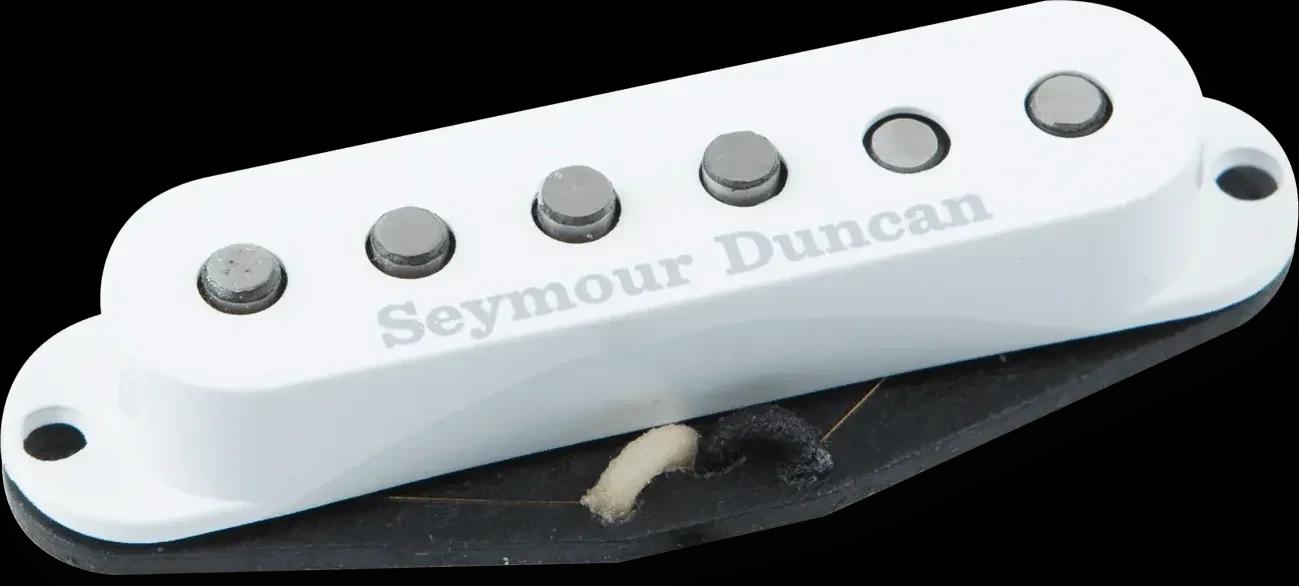
The Fender design, used on the Telecaster and then on the Stratocaster from its launch in 1954, is unusually direct. Six rod magnets form the pole pieces, one per string, held between a top and bottom flatwork plate, and the wire is wound straight around the magnets. There is no separate bar magnet or steel pole piece.
On vintage-style pickups the magnets are staggered, set at different heights to balance the volume across the strings. Seymour Duncan's SSL-1 is a typical example of the vintage recipe: hand-ground alnico 5 rods with a period-correct stagger, heavy Formvar wire, cloth push-back leads and wax potting, with a listed DC resistance of 6.5k. Fender's Custom Shop '69 set follows the same pattern, with alnico 5 magnets, staggered poles and enamel-coated wire on grey fibre bobbins.
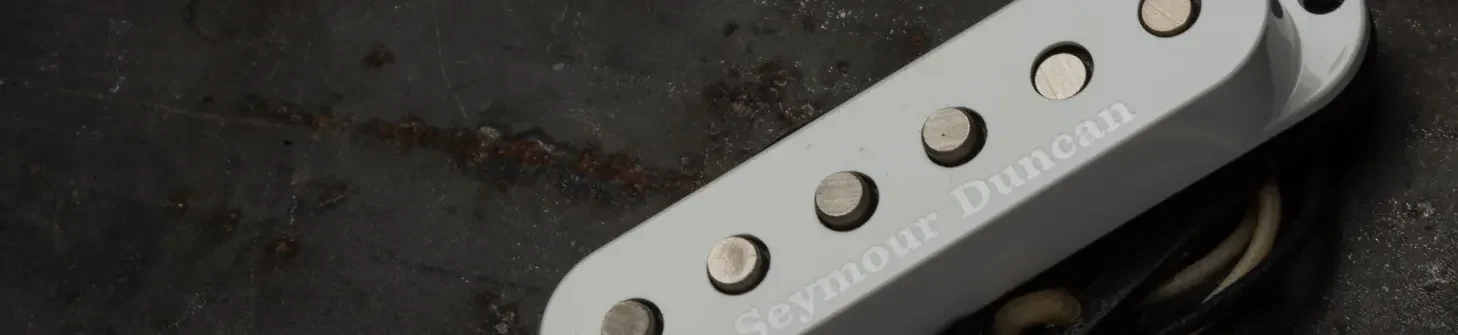
The magnet grade changes the voice. Seymour Duncan describes alnico V as bright and glassy with tight bass, and alnico II as fuller in the lows with a sweeter top end. The pickup specifications guide explains magnets, wire and resistance in more detail.
Single coils come in several distinct types
- Stratocaster. Three identical-looking pickups under plastic covers, usually with the middle wired for hum cancelling in combination (see below). The most widely copied pickup layout there is.
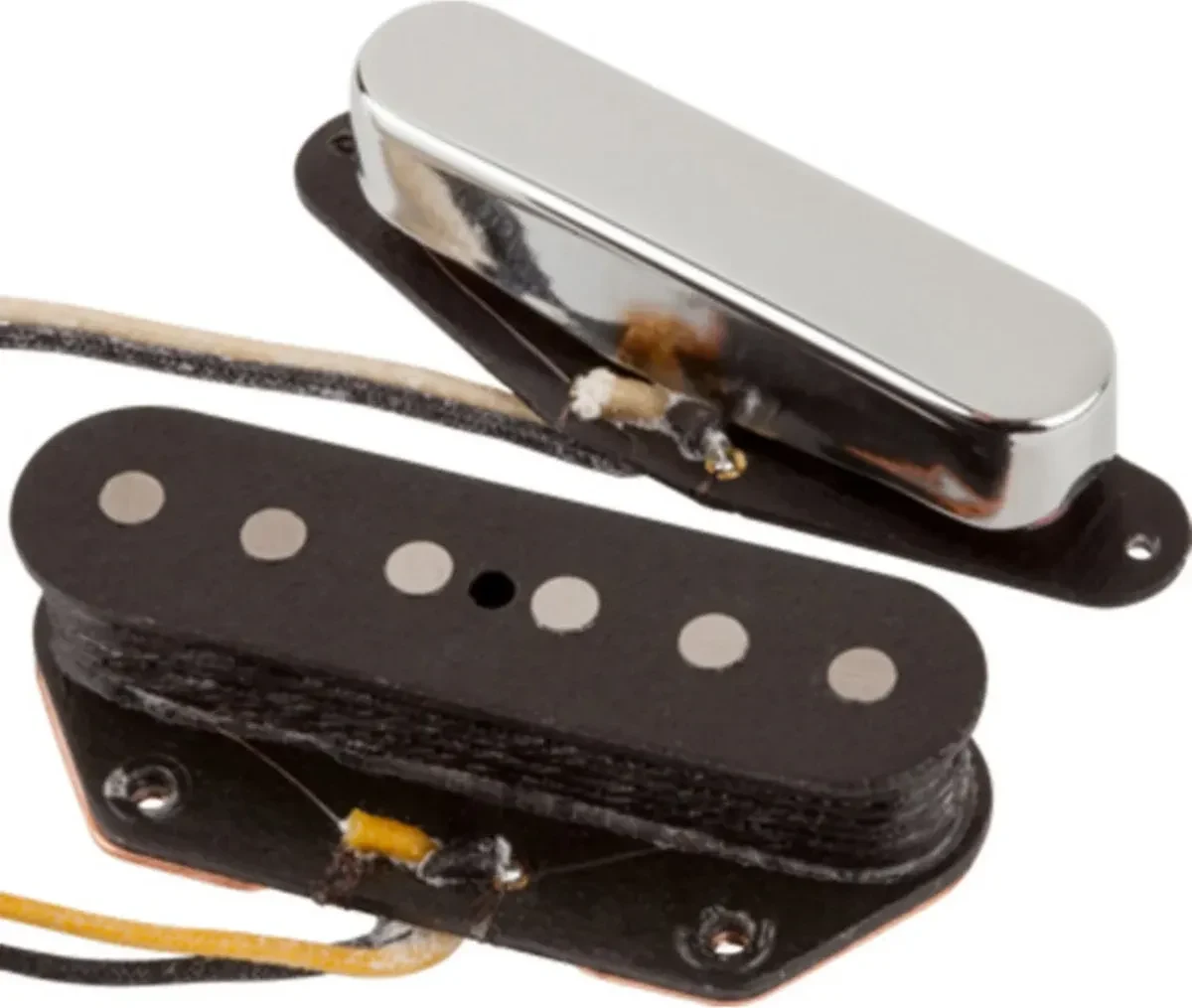
- Telecaster bridge. Mounted in the bridge plate, and on vintage-style sets such as the Fender Pure Vintage '52 Telecaster set fitted with a copper-plated steel base plate. It is the source of the Tele's bright, twangy bridge tone.
- Telecaster neck. Noticeably warmer and mellower than the bridge.
- P-90. Gibson's single coil, which dates from 1946. Its coil is shorter and wider than a Fender coil and is wound around adjustable steel screw pole pieces, with two alnico bar magnets underneath. The wider window gives it more bass and low midrange than a Fender single coil, and hotter-wound P-90s thicken further and drive an amp harder. The eared "dog-ear" and the rectangular "soapbar" versions differ mainly in how they mount.
- Others. Many makers build single coils of their own.
Single coils hum
A coil cannot tell a vibrating string from any other changing magnetic field. Mains wiring, transformers, lighting dimmers and appliances all radiate one, and a single coil picks it up as hum. With high gain or a lot of compression the noise becomes very obvious.
Fender's answer on the Strat is the reverse-wound, reverse-polarity (RWRP) middle pickup. Its coil is wound the other way and its magnets are flipped. On its own it hums as much as any single coil, but in positions 2 and 4, combined with the neck or bridge pickup, the pair works like a humbucker and cancels most of the hum. Seymour Duncan sells a dedicated RwRp middle version of the SSL-1 for this reason, and owners of Fender's Custom Shop '69 set note that its middle pickup is not reverse wound. When you replace a Strat set, check that the middle pickup in it is RWRP if you want that quiet in-between position.
There are several ways to quieten a single coil
If you love the sound but not the noise, these are the options.
- Stacked pickups. Two coils, one above the other, in a single-coil-sized housing. The lower coil cancels hum. Fender's Noiseless pickups, which the company has refined over more than two decades, are the best-known example; see the Fender Noiseless Strat pickups review.
- Side-by-side "single-coil-sized" humbuckers. Two narrow coils or rails in a Strat-sized cover. These usually sound hotter and thicker than a true single coil; Seymour Duncan's Hot Rails, for example, is voiced like a high-output humbucker.
- Shielding. Lining the control cavity and pickguard with conductive foil or paint and connecting it to ground cuts the buzz single coils pick up from lights, screens and appliances. StewMac recommends shielding the whole cavity rather than only the pickup.
- Active single coils. A battery-powered design with a low-impedance coil, such as Fishman's Fluence designs, which run on a battery and use stacked printed-circuit coils in place of wound wire to cancel hum. See active vs passive pickups.
Owners of stacked sets report that the hum goes even with plenty of gain, and Fender's own pickup designer acknowledges that a stacked design tends to cost some top end and feel. That is why many players still prefer a true single coil.
Single coils usually pair with 250k pots
A pair of 250k volume and tone pots is the normal choice, taming treble that a 500k pot can make sharp and shrill. Seymour Duncan calls this a guideline rather than a rule: a 500k pot will brighten a single coil if your guitar sounds dull. The 250k vs 500k pots guide explains the effect.
For the standard Strat circuit, see the Stratocaster wiring diagram (5-way switch); the 5-way switch became standard on Fender Strats in 1977. The seven-sound Strat mod adds the neck-and-bridge and all-three combinations that the standard switch leaves out. Fitting new pickups is covered in how to change a pickup, and height, which matters more with Fender-style single coils because their rod magnets pull harder on the strings, in how to set pickup height.
Single coils suit clarity more than gain
Choose single coils for clean and edge-of-break-up tones, funk, country, blues and anything where note definition matters more than sustain and output. For heavy distortion, or if hum is a deal-breaker, a humbucker or mini humbucker may suit you better; the single coil vs humbucker comparison sets out the trade-offs. If you have already decided, the best Stratocaster pickups guide and the comparison of the Fender Custom Shop '69 and Seymour Duncan SSL-1 are the next places to look.