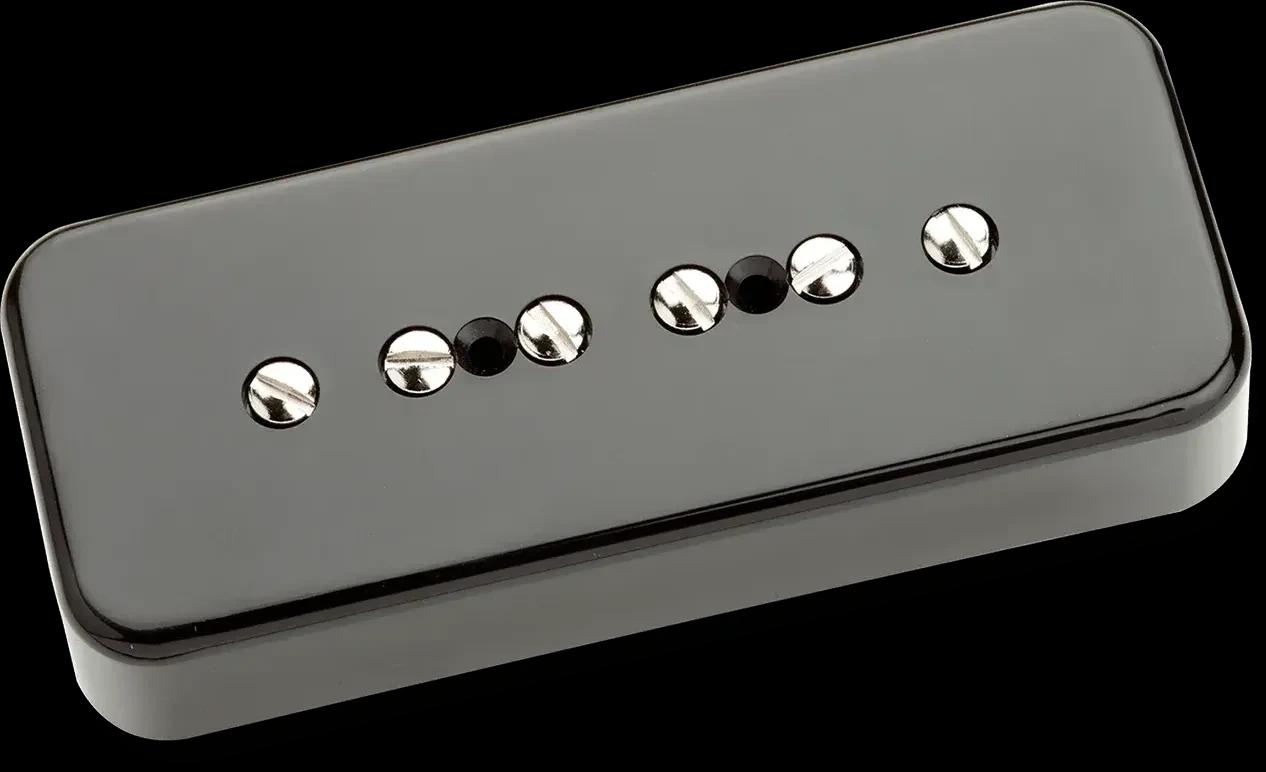
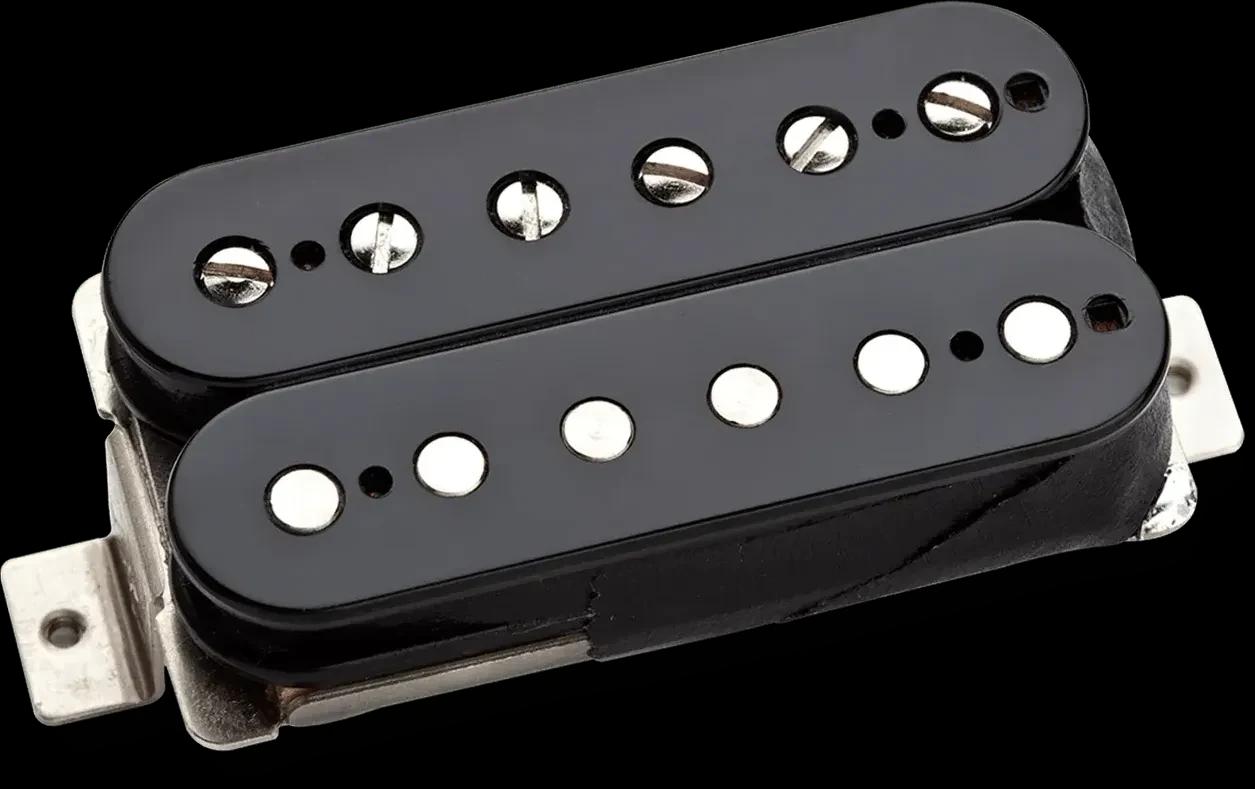
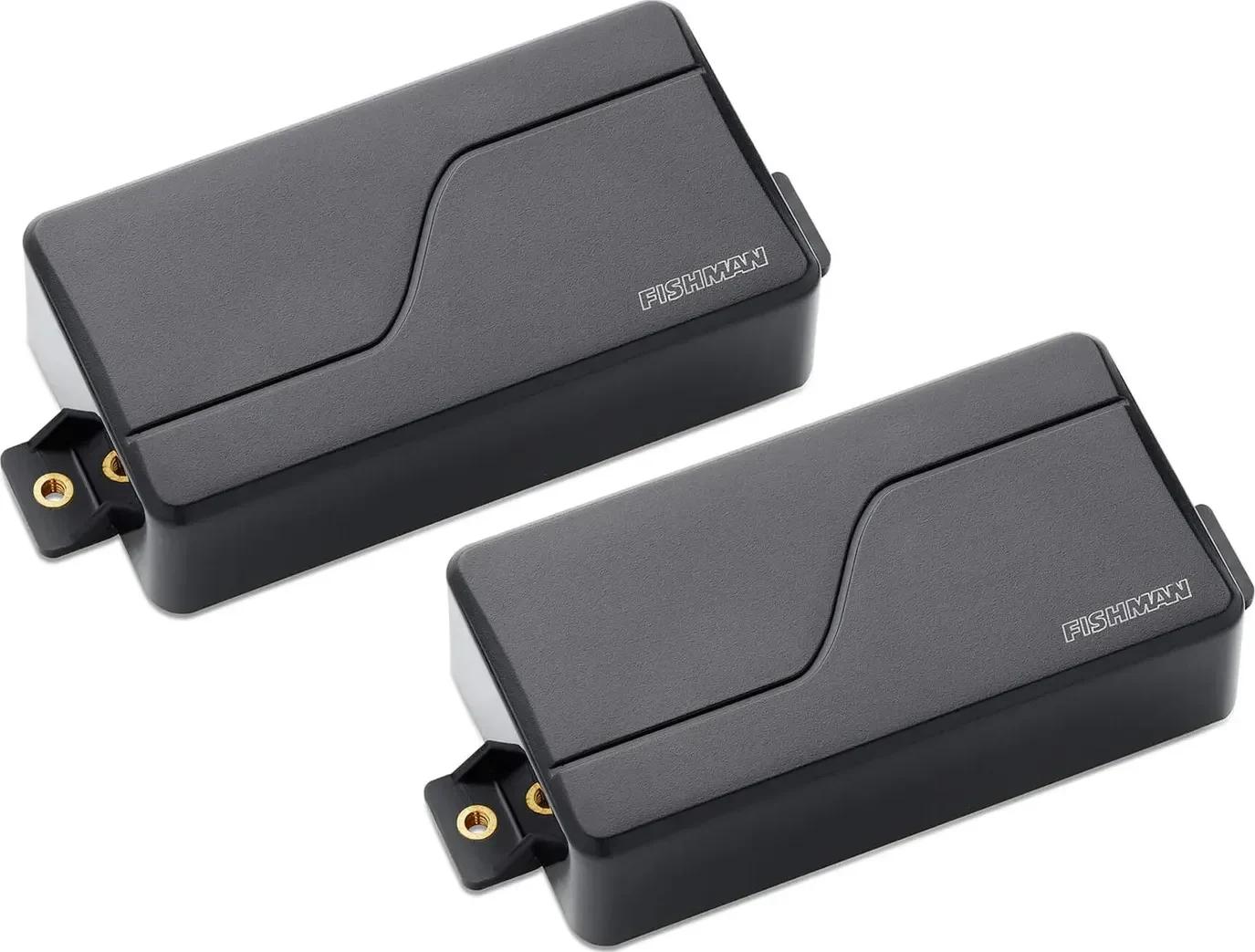
Most guitar pickups are passive: the vibrating string creates the whole signal, and the pickup needs no power. An active pickup adds a small preamp, powered by a battery, that raises and shapes the signal before it leaves the guitar. That one difference changes the sound, the noise, the wiring and the upkeep. The short version: passive pickups give the widest choice of traditional tones; active pickups give consistency, quiet and a strong signal, at the price of a battery.
What active pickups are
Seymour Duncan's definition is short: a smaller coil of wire, with a preamp built into the pickup to boost its signal. Every active pickup runs that preamp from a battery. Because the preamp sets the output and EQ, the maker can shape the sound in the circuit as well as with the coil and magnet.
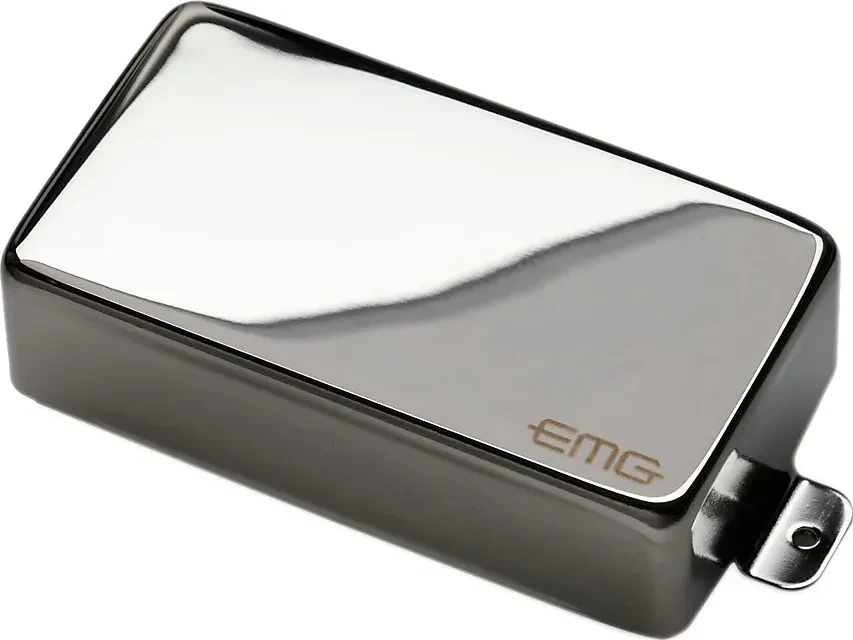
From the outside, an active humbucker such as the EMG 81 or EMG 85 looks much like a passive one. What gives it away is inside the guitar: a 9-volt battery, a stereo output jack that switches the battery on, and 25k pots in place of the usual 250k or 500k. EMG and Fishman's Fluence range are the best-known active guitar pickups.
A preamp is the whole difference
A passive pickup relies on a large coil, often thousands of turns of fine wire, to produce a usable signal from the moving string. Seymour Duncan describes the passive approach as a magnet plus relatively large coils of wire. The bigger the coil, the more output, but also the more treble is lost to the coil's own inductance and to the pots and cable that load it. The guide to how guitar pickups work covers this in more detail.
An active pickup uses a smaller, lower-output coil and lets the preamp do the work. Seymour Duncan notes that the smaller coils make active pickups much less susceptible to outside interference, which is why they are known for being very quiet. The preamp also gives the pickup a low output impedance (Fishman gives 2k ohms for the Fluence's output, and Thomann's listing of the EMG 81 gives 10k), which means the pots, cable and amp input have much less effect on its tone.
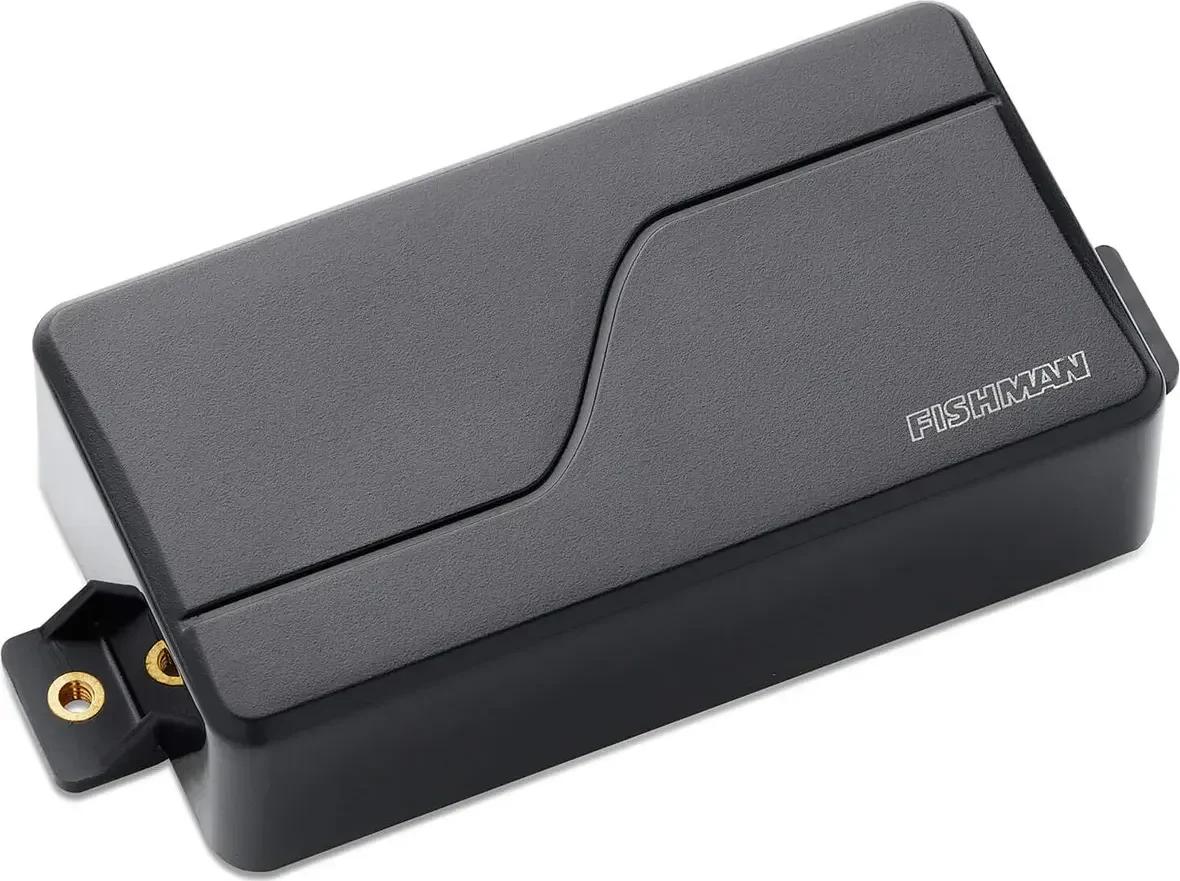
Fishman's Fluence pickups take this further. Instead of a wound copper coil, they use stacked layers of printed circuit "coils", wired in opposition to cancel hum, feeding a preamp that can switch between different voices. Premier Guitar's account of the design explains the principle, and notes that because the preamp buffers the signal, a long cable sounds the same as a short one.
The two differ on power, noise and upkeep
| Passive | Active | |
|---|---|---|
| Power | None | Battery, usually 9 V |
| Noise | Single coils hum; humbuckers cancel mains hum | Very quiet, by design |
| Tone | Huge range, from vintage to very hot | Consistent and even; tone set by the preamp |
| Effect of pots and cable | Significant treble loss with long cables or low-value pots | Little, thanks to the low output impedance |
| Usual pots | 250k or 500k | 25k (EMG and Fishman supply them) |
| Dynamics | Responds strongly to picking and the volume knob | More even and compressed, as players describe it |
| Upkeep | None | Battery changes or charging |
Active pickups trade dynamics for consistency
Reviewers and owners describe the EMG 81, the classic active humbucker, as tight and aggressive under high gain, with very little noise, and it has long been associated with metal players. The same evenness is the main criticism: Guitar World finds its clean tones sterile and compressed next to passive pickups, and owners at Thomann describe it as less dynamic than a good passive pickup.
Passive pickups cover everything from a glassy single coil to a high-output humbucker such as the Seymour Duncan JB or DiMarzio Super Distortion. Their interaction with the guitar's controls is part of their character, and many players value the way they clean up when played softly.
Multi-voice active designs blur the line. Fishman's Fluence Modern offers a high-output active voice, a passive-style voice and a single-coil voice from one pickup. The EMG 81 vs Fishman Fluence Modern comparison looks at the two leading active humbuckers in detail.
Battery life varies widely between designs
Active pickups normally run on a 9-volt battery in a compartment or the control cavity.
How long a battery lasts varies a great deal between designs. EMG's published figures for the 81, as Thomann lists them, are a current draw of 80 microamps at 9 volts and a battery life of about 3,000 hours. Fishman lists the Fluence Modern at 2.6 to 2.7 mA per pickup and up to 200 hours for a set on a 9-volt battery, and sells a rechargeable pack as an alternative.
Most onboard electronics use a stereo output jack as a switch: plugging in a normal mono guitar cable connects the battery, and unplugging it disconnects it. Leaving a cable plugged in is the usual way batteries go flat.
Active pickups need different controls
Active and passive pickups are not interchangeable without changing the controls. Active pickups need low-value pots: Seymour Duncan lists 25k or 100k for active pickups, and both EMG's solderless kits and Fishman's install kit come with 25k pots. Passive pickups on 25k pots would lose a great deal of treble. A battery clip and stereo jack are also needed.
EMG supplies its pickups with a solderless system of plug-in connectors, which makes an all-EMG swap easier than many passive installs. Fishman's install guide for the Fluence Modern describes a soldered installation. Mixing active and passive pickups in one guitar is possible but awkward, because of the different pot values and output levels.
Active electronics are far more common on bass
Music Man's StingRay, launched in 1976, paired its humbucker with a battery-powered preamp, and Seymour Duncan calls it the first production active bass. Many modern basses, Yamaha's TRBX304 among them, use passive pickups with an active EQ, which is a different thing from an active pickup. The bass pickups explained guide covers both.
The right choice depends on your music
- Choose passive if you want vintage or classic tones, play mostly clean to medium gain, value touch sensitivity and the response of the volume knob, or never want to think about a battery. It is also the only way to get the sound of a vintage single coil or PAF-style humbucker such as the Seymour Duncan '59.
- Choose active if you play high-gain music and want tight, quiet, consistent tone, use long cables or complex pedalboards, or want several distinct voices from one pickup.
- Not sure? Try a guitar fitted with active pickups before converting your own. If you do convert, the how to change a pickup tutorial covers the basics, and the guide to pot values explains why the controls need to change too.