Warm neck tones that keep every note distinct
In the neck, the ’59 gives a full, rounded tone without the woolly low end some neck humbuckers produce, so chords stay readable and leads sound smooth rather than muddy. It also cleans up well from the volume knob, which suits jazz and blues as much as classic rock. The figures are vintage: Seymour Duncan lists the neck model at 7.6k DC resistance, from an Alnico 5 magnet and 42 AWG plain enamel wire, well below hot bridge pickups such as the JB.
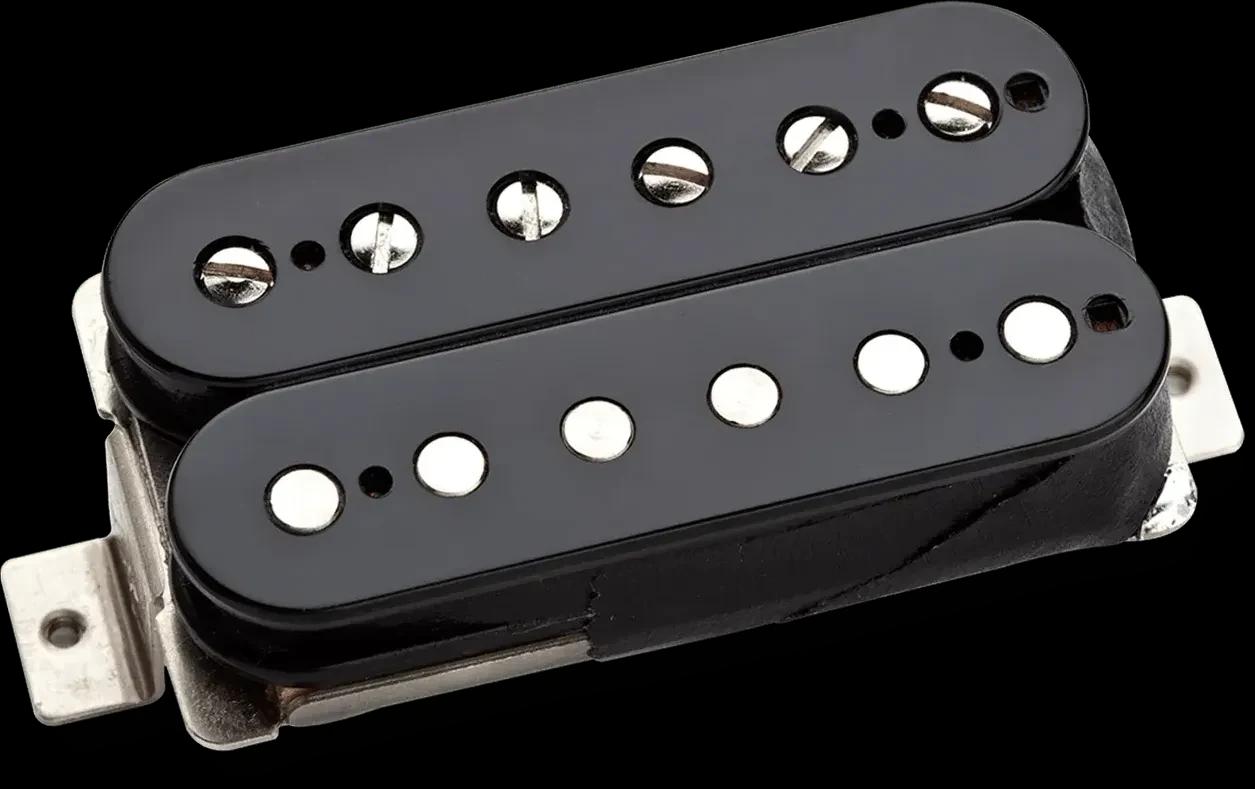
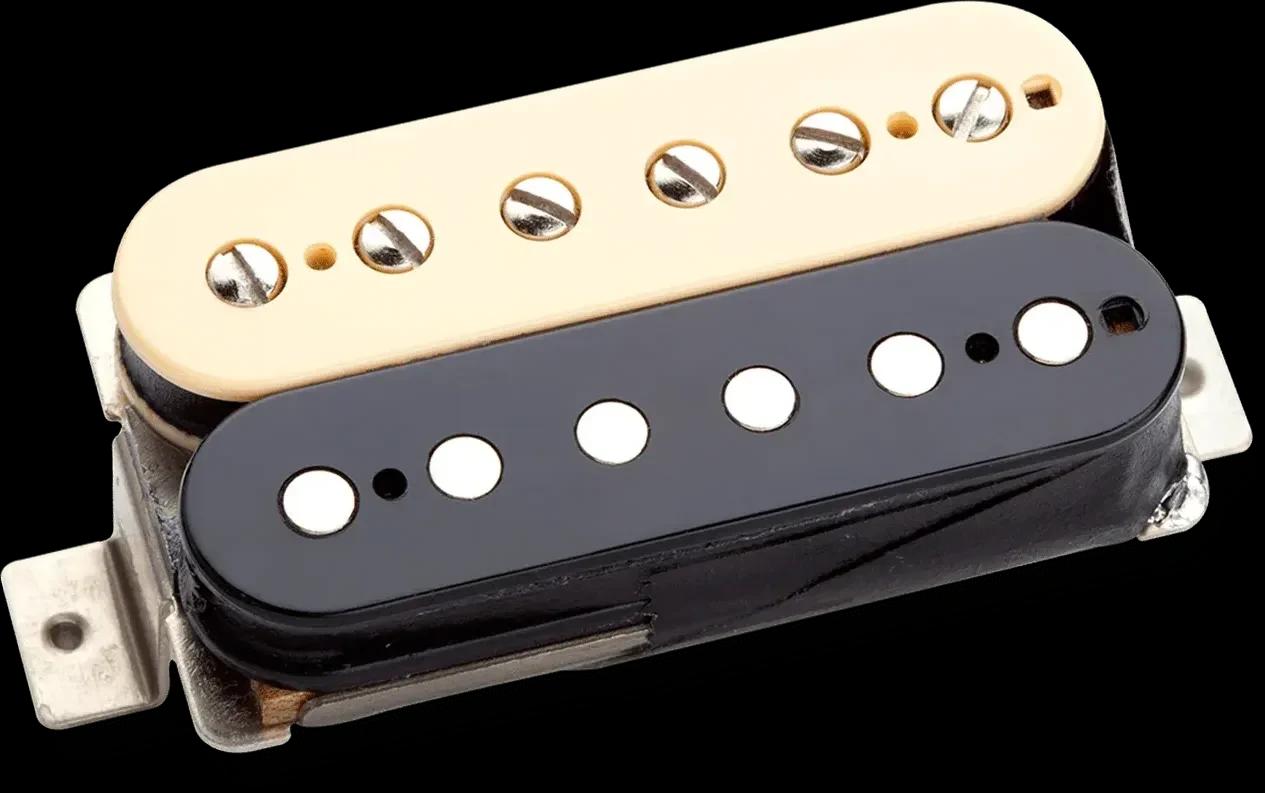
The ’59 Model is Seymour Duncan's version of the late-1950s humbucker sound, and the neck version (SH-1n) is one of its best-known pickups. There are two lead options. The vintage-style single-conductor braided lead suits traditional wiring. The 4-conductor shielded version allows coil splitting and series or parallel switching, so it is the one to choose if you plan any wiring mods.
Warm and clear rather than dark
Seymour Duncan describes the neck model as warm and full with sweet sustain and a clear attack, and owners at Thomann largely agree. The quality players praise most is that it stays defined: chords keep their individual notes, and single-note lines have body without the woolly low end some neck humbuckers produce.
Because the output is modest, it responds well to the guitar's volume control. Rolled back, it gives a clean, rounded tone suited to jazz and blues; turned up into a driven amp, it gives the smooth, vocal lead sound associated with classic rock. Gitarre & Bass and MusicRadar both single it out for blues and jazz players, and owners with the 4-conductor version rate its split-coil sounds too.
Guitars it suits
The ’59 neck is at home in the neck of an Epiphone Les Paul Standard ’50s or a PRS SE Custom 24, and it fits a standard humbucker route, though a couple of owners found it deeper than the pickup it replaced, so measure a shallow route first. Seymour Duncan recommends it as a partner for the JB in the bridge, and owners rate it alongside hotter bridge pickups generally: the hot bridge handles rhythm and gain, the ’59 handles cleaner tones and leads. Note that with a much hotter bridge pickup the neck can sound quieter, which careful pickup height adjustment helps balance.
Fitting it is the same job as any humbucker swap; see how to change a pickup.
Who should look elsewhere
If you mainly play high-gain rock or metal and want a neck pickup that keeps up with a hot bridge, the ’59 may feel too polite. In that case a higher-output passive neck pickup, or an active set such as the Fishman Fluence Modern, suits better. For a sense of how DC resistance and magnet choice shape output, read pickup specifications explained, and for more Les Paul options see best humbuckers for a Les Paul.