A pickup's product page usually carries a short list of numbers and materials: a resistance in k, a magnet type, maybe an output figure or an EQ chart. They look precise, and some of them are, but none tells the whole story on its own. This guide explains what each one measures, what it can and cannot tell you, and how to compare pickups from different makers.
If you are new to the subject, read how guitar pickups work first; it explains the magnet, coil and string that all of these figures describe.
DC resistance: the most quoted and least useful figure
DC resistance (DCR) is the resistance of the coil's wire, measured with an ordinary multimeter across the pickup's two output leads and quoted in kilohms (k). It is easy to measure, which is why nearly every maker lists it.
The problem is what it leaves out. Resistance depends on the length of wire and its thickness, so a pickup can reach the same reading with many turns of thicker wire or fewer turns of thinner wire. Seymour Duncan gives an illustration: to reach about 4.7k you need roughly 885 metres of 42 AWG wire, 685 metres of 43 AWG or 566 metres of 44 AWG. Those three coils would have very different numbers of turns and different sounds. DCR also says nothing about the magnet, which has a large effect on output.
DiMarzio's own FAQ makes the same point: it uses DCR to check that a pickup has been wound to its specification, not as a guide to tone or loudness, and says a passive pickup will normally read somewhere between 1k and 20k.
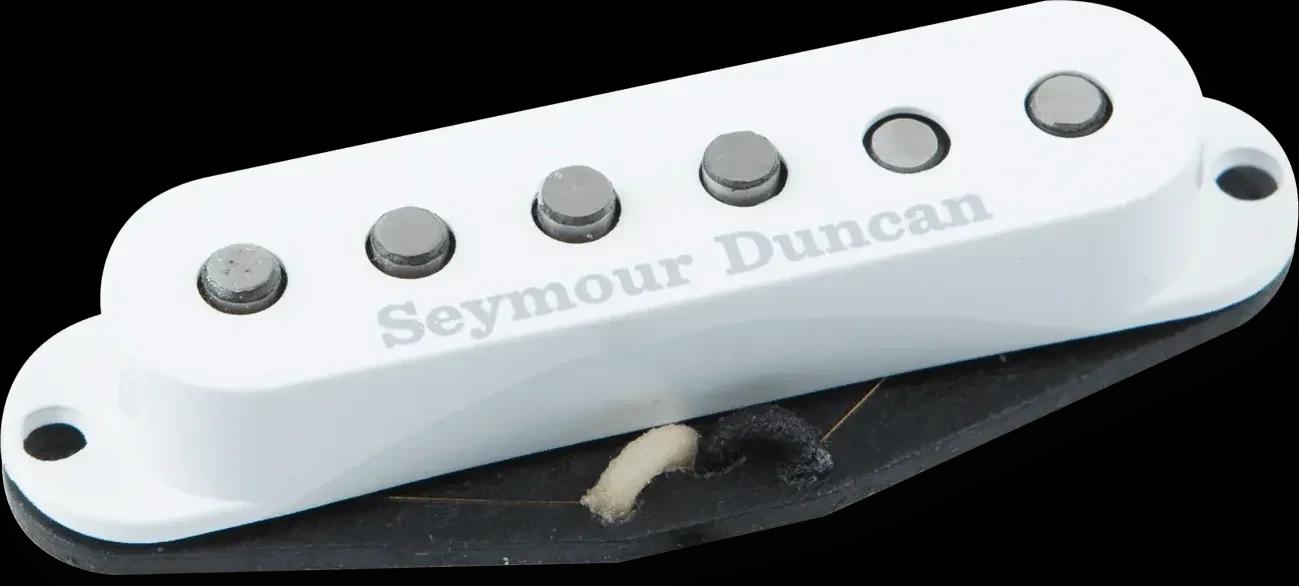
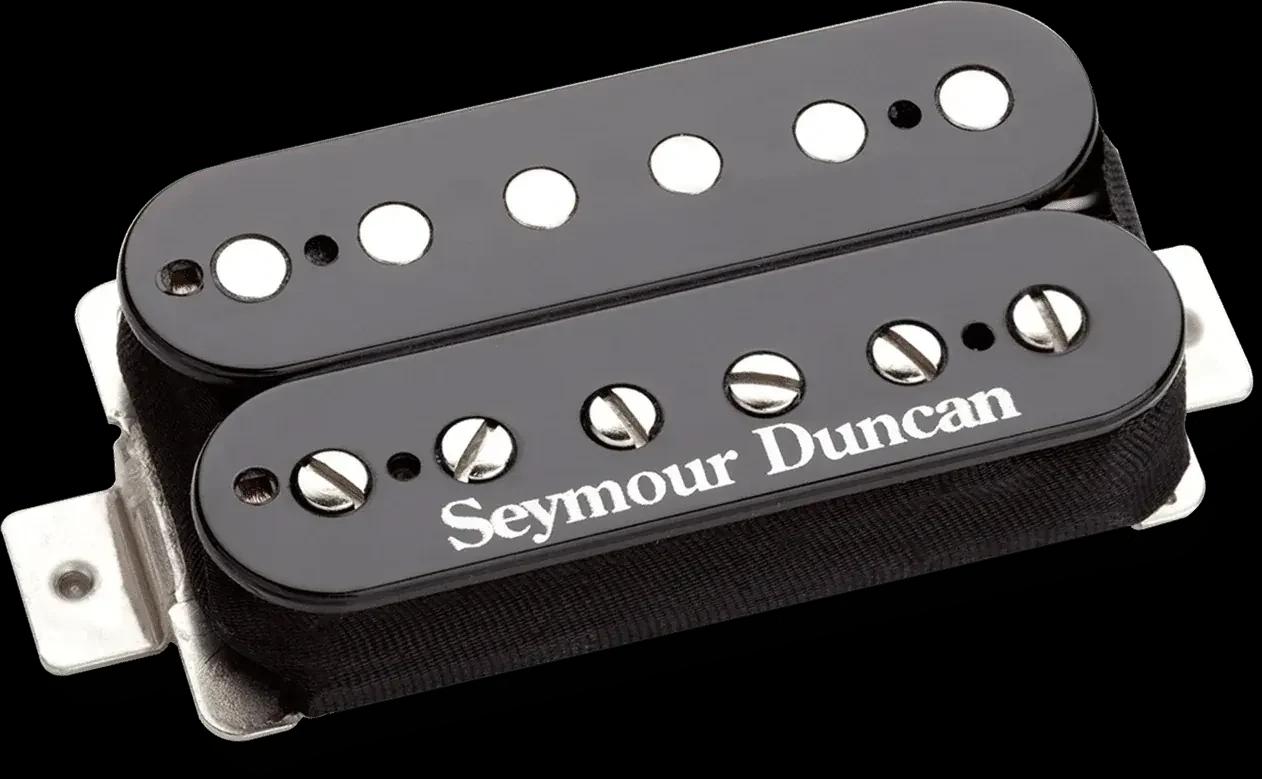
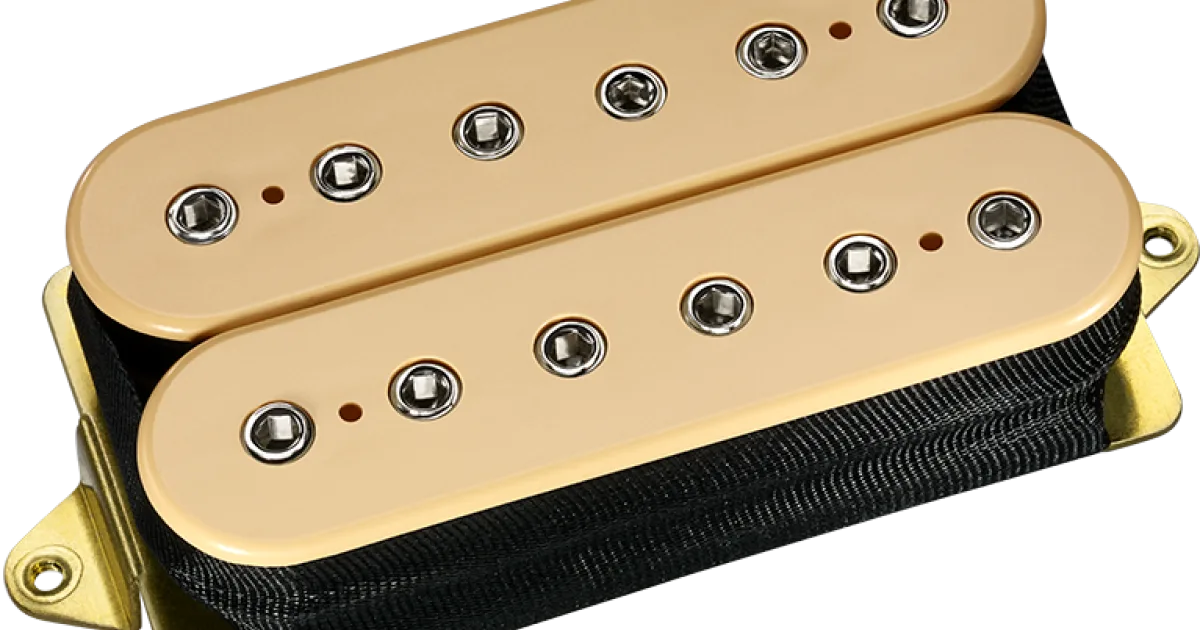
DCR is still useful in two ways. Within one maker's range and one wire gauge, a higher figure usually means a hotter pickup. And as a diagnostic, a reading of zero or no reading at all tells you a coil is shorted or broken. As rough reference points, Seymour Duncan lists its vintage-style SSL-1 Strat pickup at 6.5k, the '59 bridge humbucker at 8.2k and the high-output JB at 16.6k. DiMarzio lists the Super Distortion at 13.68k, but with a ceramic magnet, so it cannot be ranked against the alnico JB on resistance alone.
Inductance: a better guide to output and tone
Inductance, measured in henries (H), describes how strongly the coil resists changes in the current flowing through it. It rises with the number of turns and the size of the coil, and it is affected by the magnet and steel parts as well. Seymour Duncan's explanation sums up the practical effect: the more henries, the more output, and the more the coil rolls off treble in favour of the mids.
Inductance tells you more than DCR because it reflects the turns and the magnetic parts rather than the wire's thickness. It is harder to measure, needing an LCR meter, and fewer makers publish it. Fender is one maker that lists it alongside DC resistance on some of its pickup pages.
Resonant peak: where the treble rolls off
Every passive pickup behaves as a filter. Its inductance and the small capacitance between the turns of wire combine to give a resonant peak: a frequency where the response rises before falling away steeply above it. A pickup that peaks high sounds bright and open; one that peaks lower sounds thicker, warmer and more midrange-heavy.
The peak is not fixed by the pickup alone. The volume and tone pots, the tone capacitor and the guitar cable all load the pickup and pull the peak down and flatten it, which is why a 500k pot sounds brighter than a 250k one with the same pickup. Seymour Duncan's article on pot values describes the pickup as a filter with a resonance and the pot as a load on it. The guide to 250k vs 500k pots covers this in detail.
Because the load moves the peak, figures measured by different people or under different conditions are not always comparable. Fishman lists peak frequencies for each voice of its active Fluence Modern humbucker: 650 Hz for the alnico model's high-output voice, for example, and 4.7 kHz for its single-coil voice.
Output figures and EQ charts are relative
Some makers publish an output figure or a bass, mid and treble chart. These are useful within that maker's range and much less so between brands. DiMarzio lists output in millivolts and its FAQ describes the figure as a comparison of loudness between DiMarzio pickups; the Super Distortion is rated at 425. Seymour Duncan uses low-to-high output bars and bass, mid and treble charts that show roughly where each model sits. Treat both as a way to rank one maker's pickups against each other.
For active pickups, output is set by a preamp, and the spec sheet lists other things: output impedance, current draw and battery life. Fishman gives the Fluence Modern a 2k output impedance and a current draw of 2.6 mA (alnico) or 2.7 mA (ceramic) at 9 volts. See active vs passive pickups.
Magnets set the strength and shape of the field
Seymour Duncan's guide to magnet character describes the common types like this:
| Magnet | Character, as Seymour Duncan describes it |
|---|---|
| Alnico II | Full low end, stronger mids, sweet top end |
| Alnico III | Clear, warm bass, full mids, soft highs |
| Alnico IV | Tighter than II, even mids, sweeter than V |
| Alnico V | Bright, glassy highs, cutting mids, tight bass |
| Alnico VIII | Strong mids, tight lows, smooth treble |
| Ceramic | Bright, edgy upper mids, aggressive harmonics, punchy lows |
Alnico is an alloy of aluminium, nickel and cobalt with iron, made in several grades. Ceramic magnets are common in high-output and modern designs. The magnet can sit under the coil as a bar, as in most humbuckers and the P-90, or form the pole pieces directly, as in a Strat single coil.
Wire gauge and insulation both change the coil
Most passive pickups use copper wire of 42, 43 or 44 AWG, according to Seymour Duncan; the higher the number, the thinner the wire, and the more turns fit on a bobbin. The insulation coating matters too, because it sets the spacing between turns and so the coil's capacitance. Specs name it: Seymour Duncan lists 42 AWG plain enamel for the '59 and heavy Formvar for the SSL-1. Seymour Duncan names polyester and heavy poly as the other coatings it uses.
Conductors, polarity and spacing settle the practical fit
- Conductor count. A two-conductor (or single-conductor with braided shield) pickup has its coils fixed together inside. A four-conductor humbucker brings out both ends of both coils plus a bare shield, so it can be coil split or wired in series or parallel.
- Colour code. Each maker uses its own. Seymour Duncan uses black for hot, green and bare to ground, red and white as the series link; DiMarzio uses red for hot, green and bare to ground, black and white as the link. The wiring tutorials give the codes for each diagram.
- Polarity and wind. On single coils, look for RWRP (reverse wound, reverse polarity) on a middle pickup if you want hum cancelling in the in-between positions; see single coil pickups explained.
- Spacing. Humbuckers come in standard and wider spacings (sold as "trembucker" or "F-spaced") to line up with the strings on different bridges.
- Potting. Wax potting stops the coil and cover vibrating and squealing at high gain. DiMarzio pots all but two of its models.
Specs narrow a shortlist; your ears decide
Compare pickups from the same maker on DCR and output charts, check the magnet and the wire for a sense of voice, and confirm the practical details: position, spacing, conductor count and whether it needs a battery. Then listen to as many sound samples as you can, ideally through a similar guitar and amp. The pickup reviews and comparisons, such as Seymour Duncan JB vs DiMarzio Super Distortion, set the specs side by side with what reviewers and owners report hearing.