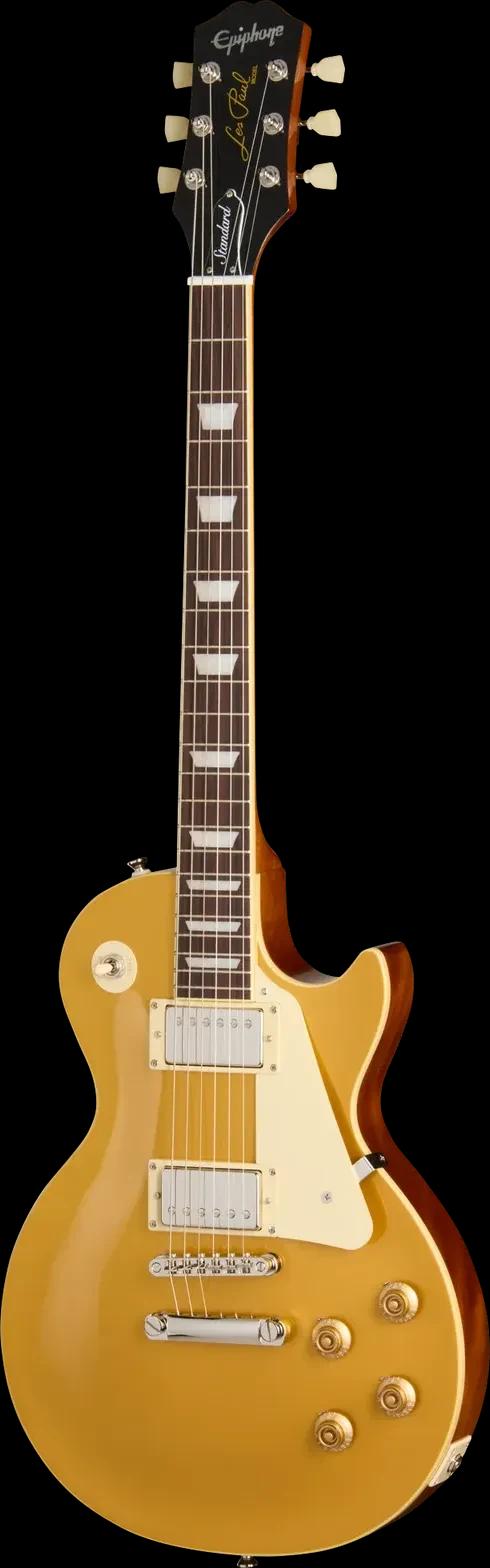
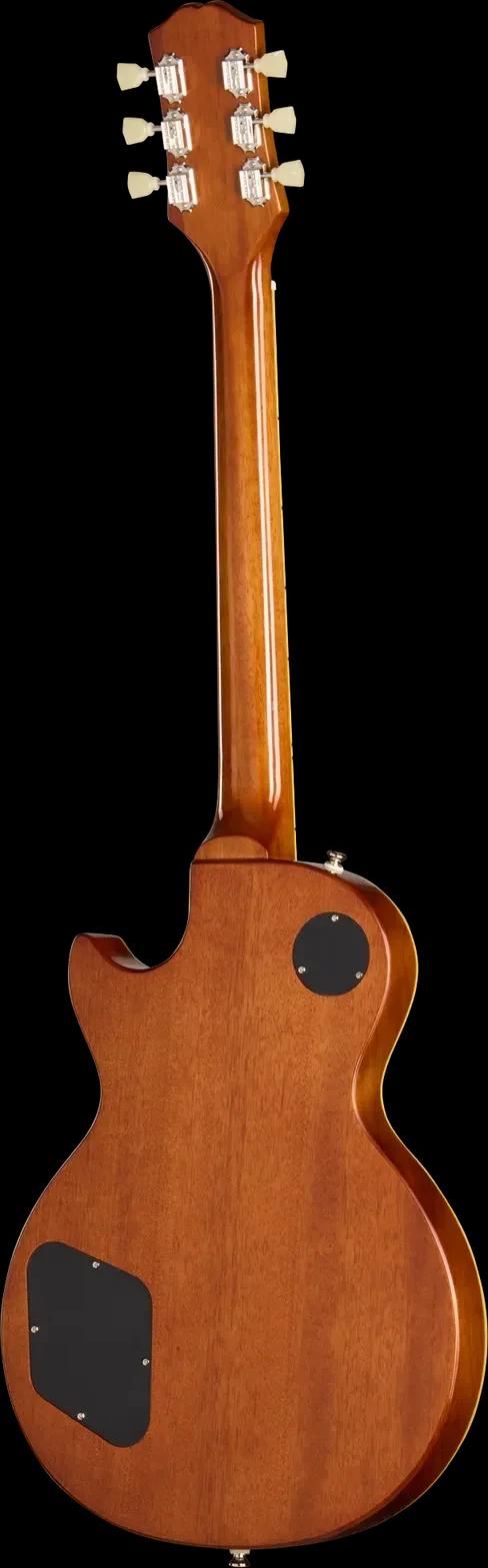
A 1950s-pattern Les Paul without the Gibson price
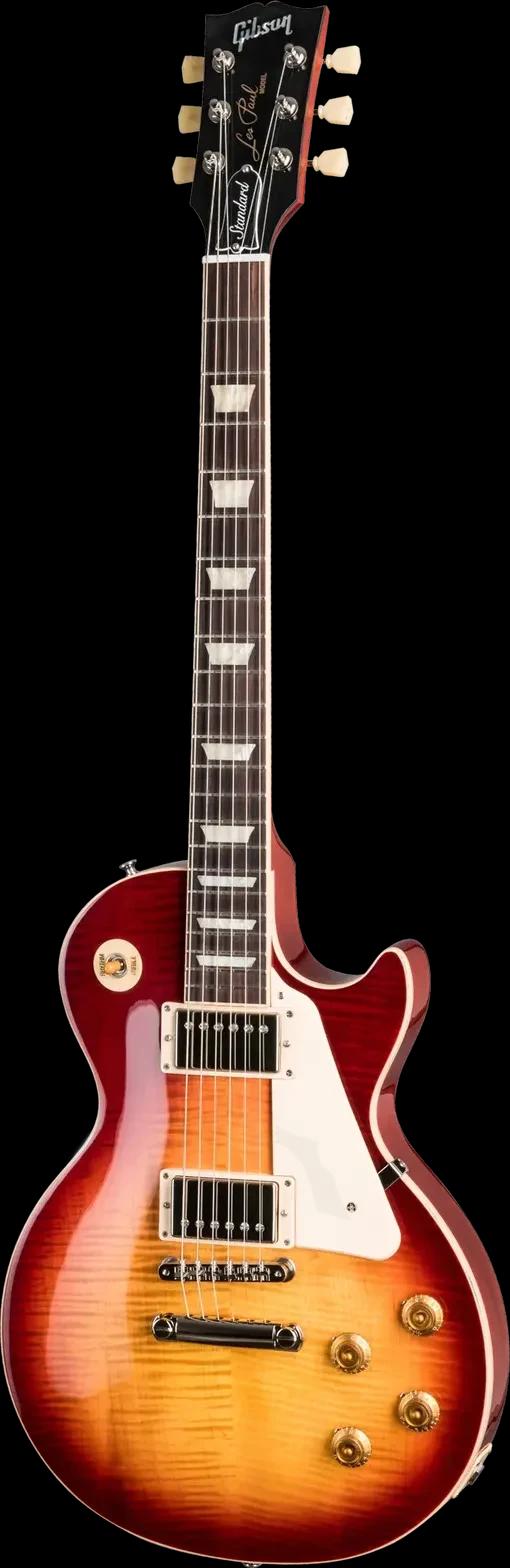
What this guitar offers is the traditional Les Paul recipe, built close to the Gibson original: a mahogany body with a maple cap, a glued-in mahogany neck with a long tenon, the Les Paul's 24.75-inch scale and a pair of ProBucker humbuckers wired to CTS pots with 50s-style wiring. The neck is carved to a rounded medium C that Epiphone calls a 1959 profile, on a bound rosewood fingerboard with a 12-inch radius and 22 medium jumbo frets. Epiphone fits a Graph Tech nut, Vintage Deluxe tuners, and a LockTone bridge and stop bar. Burst finishes add a figured maple veneer to the top, while the Goldtop has a plain top under the paint.
That is Epiphone's current specification. The first guitars, from 2020, had Indian laurel fingerboards and ProBucker 2 and 3 pickups, and Guitar.com's review of one counts the lack of 50s-style wiring among its few compromises, so a used guitar may differ.
The Les Paul Standard '50s belongs to Epiphone's Inspired by Gibson collection, which brought the budget brand's designs closer to the Gibson originals. The most visible sign is the headstock, which now takes the Gibson-style "Kalamazoo" shape in place of Epiphone's older design. Its sibling, the Standard '60s, has a slimmer neck for players who find this one too full.
What reviewers and owners report
Reviews are consistently warm. The neck is one of the most praised features: full and rounded, but comfortable enough that reviewers rarely call it a club. Several writers say the build and finish are hard to fault at the price, and one named it an editor's choice.
The ProBuckers come in for particular credit. Reviewers describe them as PAF-style: warm without turning muddy, with enough clarity for blues and enough push for classic rock. The 50s wiring means the tone stays clearer as you roll back the volume, which suits players who control their gain from the guitar. It is not a high-gain instrument out of the box, though.
The complaints are familiar ones. Les Pauls are heavy, and this one is no exception; reviewers suggest a wide, padded strap. A few have pointed to budget giveaways such as rough bevels on the truss rod cover, sharp-edged knobs and some textured plastic.
Why the pickups might be worth changing
Because the stock ProBuckers are well liked, many owners swap them only to chase a different sound. The routing is standard humbucker size, so standard-spaced pickups drop straight in. A Seymour Duncan JB in the bridge adds output and an aggressive upper midrange for hard rock. Pair it with a Seymour Duncan '59 in the neck for a smooth, vintage-voiced partner; the two are a long-standing combination. The DiMarzio Super Distortion is the heavier, more compressed alternative for the bridge. The guide on how to change a pickup covers the job, and Les Paul wiring: 50s vs modern explains what the stock wiring does.
Who it suits, and what to compare it with
It suits rock and blues players who like a substantial neck and the sound of two humbuckers through a driven amp. It is less suited to someone who wants single-coil sounds or a light, slim guitar.
The PRS SE Custom 24 is the main alternative at a similar level, with a thinner neck, a tremolo and a coil split. For a Fender-style contrast, see the Fender Player II Stratocaster. The guide to the best humbuckers for a Les Paul goes deeper on upgrades.