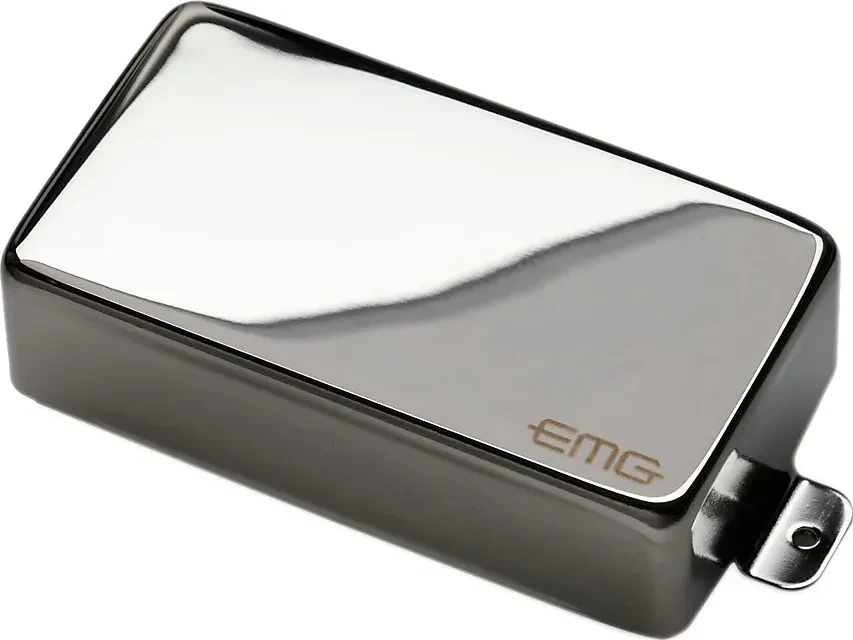
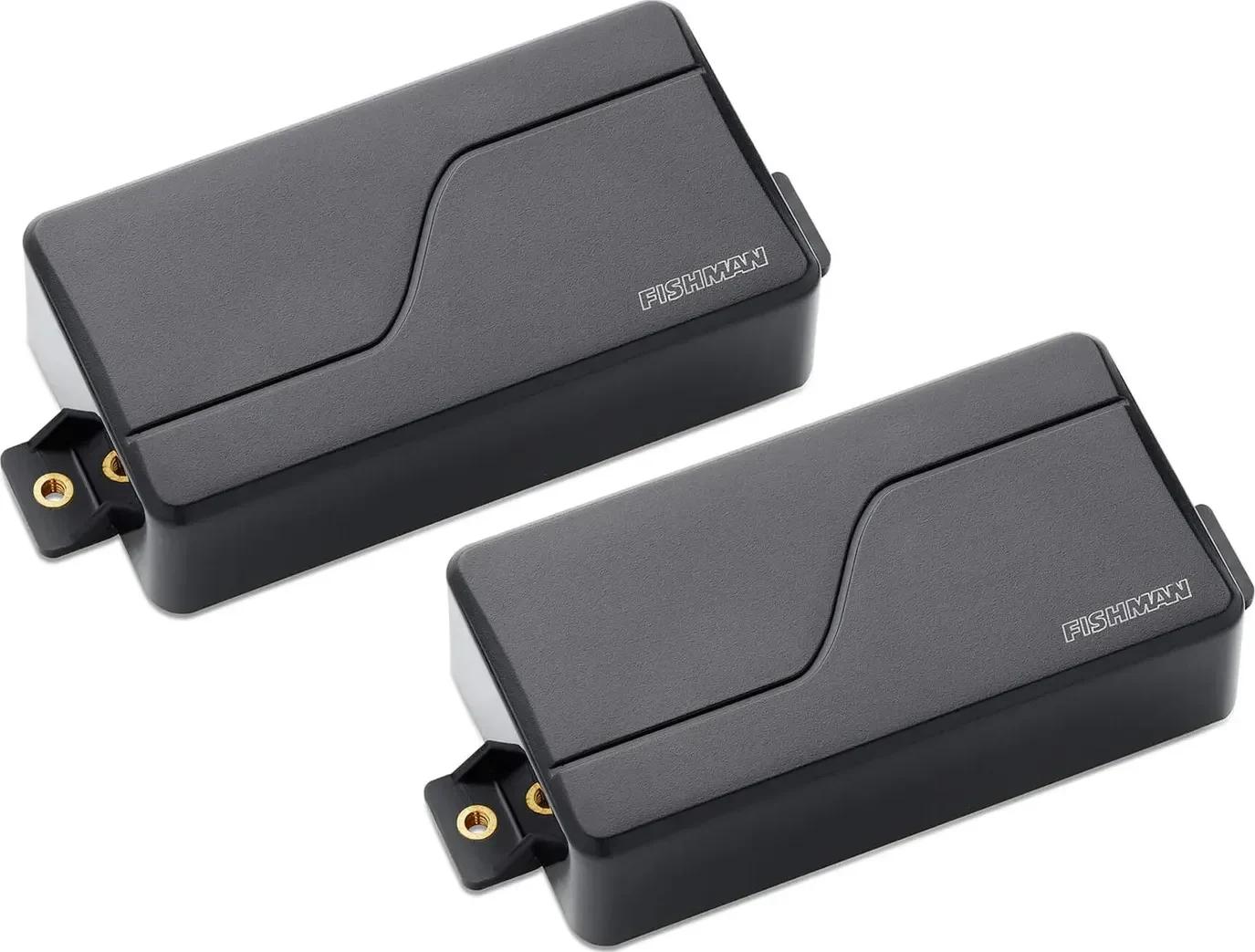
The short answer: a P-90 is one wide coil, and it sounds raw, gritty and open, but it hums. A humbucker is two coils working against each other, and it sounds thicker and smoother and stays quiet. Guitar World finds the two closer to each other than either is to a Strat-style single coil, so the choice is less about bright against dark than about bite against polish, and whether you can live with hum.
P90 vs humbucker: one wide coil against two
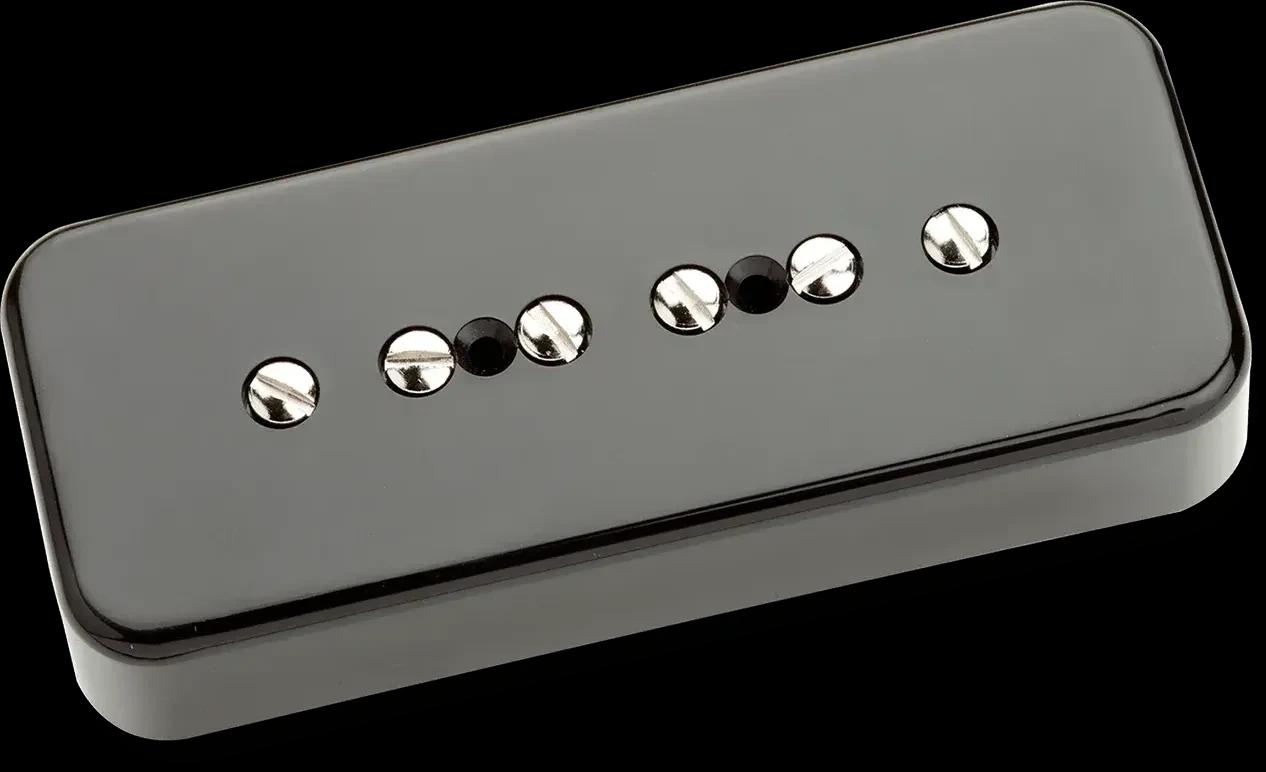
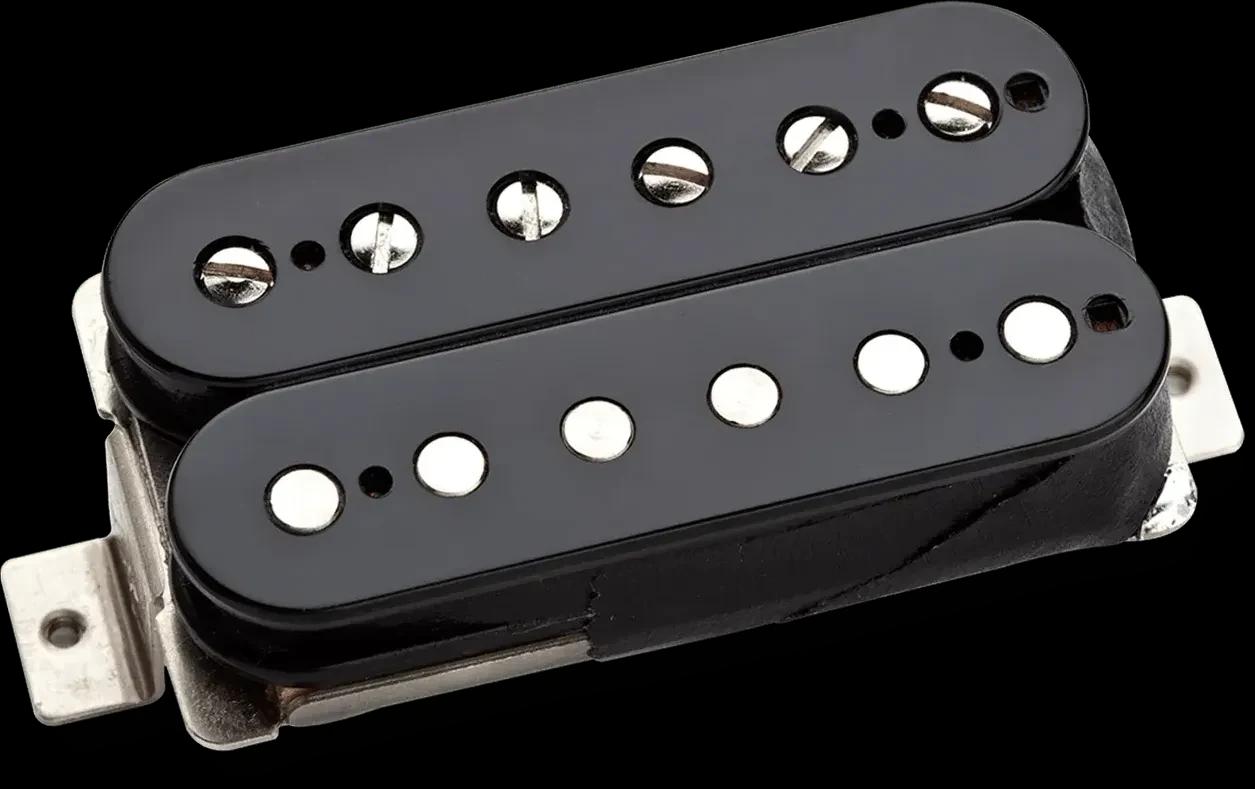
A P-90 is Gibson's single coil from 1946. Guitar World describes a short, wide coil round six adjustable pole screws, with two bar magnets under it and a steel spacer between them. A humbucker puts two coils side by side, wound in opposite directions over a single bar magnet under the coils, as Seymour Duncan describes it. Hum reaches both coils alike and cancels, while the string signal from the two adds together.
Seymour Duncan points out that the difference goes beyond the number of coils: the whole coil shape and magnet layout change too. A P-90 is not simply half a humbucker.
They differ on sound, noise and fit
| P-90 | Humbucker | |
|---|---|---|
| Coils | One, short and wide | Two, side by side, opposed |
| Magnets | Two bar magnets and a steel spacer | One bar magnet under both coils |
| Sound | Raw, gritty, open, with bite | Thicker, smoother, warmer |
| Noise | Hums like any single coil | Cancels mains hum |
| Output | Close to a vintage humbucker | From vintage to very hot |
| Route | Soapbar or dog-ear | Standard humbucker |
| Typical guitars | Les Paul Junior and Special, ES-330 | Les Paul Standard, most rock and metal guitars |
On paper a vintage-style P-90 and a vintage-style humbucker are close. Seymour Duncan lists its Vintage P90 (SP90-1) at 8k for the neck and 9.7k for the bridge, and its PAF-style ’59 bridge humbucker at 8.2k. Seymour Duncan's comparison still finds its P-90 slightly lower in output than its Seth Lover humbucker, and the hot end of the humbucker range goes far beyond any vintage P-90: the JB is listed at 16.6k. DC resistance is only a rough guide, as pickup specifications explained sets out.
The P-90 bites; the humbucker smooths
Seymour Duncan sums up the gap in a few words: humbuckers are generally less gritty, crunchy and dirty than a P-90. When the humbucker arrived, it adds, it was hotter and quieter, which let players drive amps without a master volume into overdrive more easily. Its vintage P-90 is a little cleaner than a humbucker with the guitar's volume rolled down.
The feel differs as well. Jon Gundry of ThroBak, interviewed by MusicRadar, hears a P-90 compress more under the pick than a PAF-style humbucker, with a little less dynamic range, and sound slightly squishier when distorted. Andertons describes the P-90 as bright, clear and raspy, and the humbucker as powerful, bassier and more aggressive than single coils, and the type that best handles high distortion.
The styles follow from that. Guitar World notes P-90s at home in punk, rock and blues, from Pete Townshend and Carlos Santana in the 1960s to the Les Paul Juniors of Mick Jones and Steve Jones in the 1970s, and Andertons adds jazz and country. Humbuckers carry most hard rock and metal, where their output and silence at high gain count most; the best pickups for metal are all humbuckers. Guitar World is clear that both can work across many genres.
Hum is the practical difference
A P-90 has one coil, so it hums: Andertons says P-90s hum like a single coil, and Guitar World notes that a P-90 can pick up radio interference that a humbucker rejects. The humbucker's two coils cancel mains hum, which is the reason it was invented.
For a recording guitar, or for high gain near lighting and computers, that can decide the matter. There are quieter P-90s. A matched pair such as the Phat Cat set has a reverse-wound, reverse-polarity neck pickup, so the two cancel hum with both on. Seymour Duncan's P90 Stack and DiMarzio's Virtual P90 are hum-free designs in a soapbar's shape, though neither is built like an original P-90.
P90 vs single coil
Against a Fender-style single coil the P-90 is the fuller pickup. Guitar World's history says it captures more bass and low mids and sustains longer, where a Fender coil decays more sharply, and that its two magnets give it high inductance and more output by single-coil standards. Seymour Duncan lists its vintage-style SSL-1 Strat pickup at 6.5k, below its Vintage P90's 8k neck model. Andertons hears the P-90 as less "clacky" than a traditional single coil, a little grittier and with rounder highs.
They share the hum, because both have one coil. MusicRadar adds a practical point: a P-90 has less magnetic pull on the strings than a Fender-style pickup, so it can be set closer to them. For the Fender side of the family, see single coil pickups explained, and for the classic two-way choice, single coil vs humbucker.
You can swap one for the other in some guitars
The routes differ, so a traditional P-90 does not go into a humbucker cavity without woodwork, as Guitar World points out. Humbucker-sized P-90s get round that. The Phat Cat is a single-coil soapbar P-90 under a humbucker cover, which Seymour Duncan says fits any humbucker guitar without modification. Premier Guitar's roundup of these pickups warns that moving from the P-90's wide, low coil to a humbucker's taller, narrower one changes the tone, so expect close rather than identical.
Going the other way, the P-90-shaped hum-cancelling pickups above fit a soapbar route. Seymour Duncan notes that the P90 Stack, at 0.95 inch, is taller than a typical P-90, so check the depth of the cavity.
The recommendation depends on gain and noise
- You play clean to crunchy blues, rock, punk or indie and like a raw, open sound: P-90s. A soapbar guitar takes the SP90-1 or Gibson P-90; the best P-90 pickups guide compares them.
- You play with high gain, or record near computers and lighting: humbuckers, from a PAF-style ’59 to a hot JB.
- You own a humbucker guitar and want P-90 bite: a humbucker-sized P-90 such as the Phat Cat, with no routing.
- You love the P-90 sound but not the hum: a matched reverse-wound pair, or a stacked or dual-coil P-90, accepting some distance from the original.
For the rest of the field, types of guitar pickups sets the P-90 beside every other design, and how to change a pickup covers the swap.