Warm, clear vintage tone for a Les Paul, SG or semi-acoustic
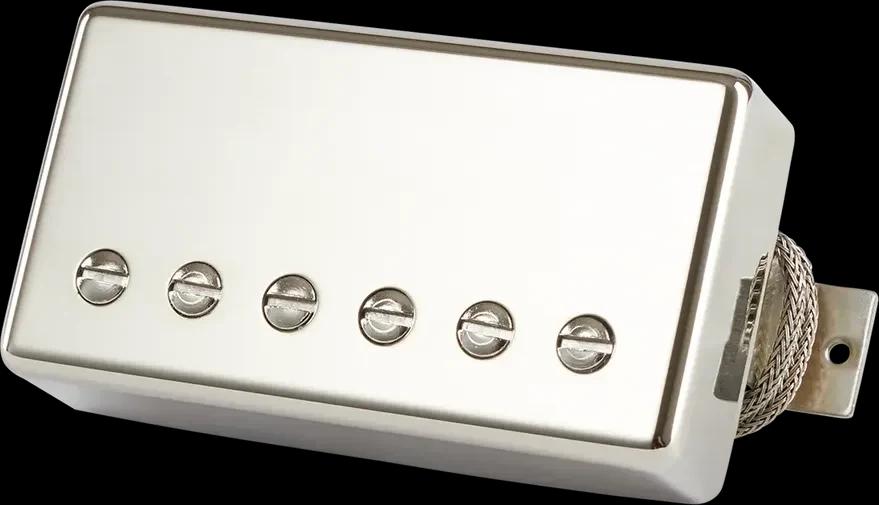
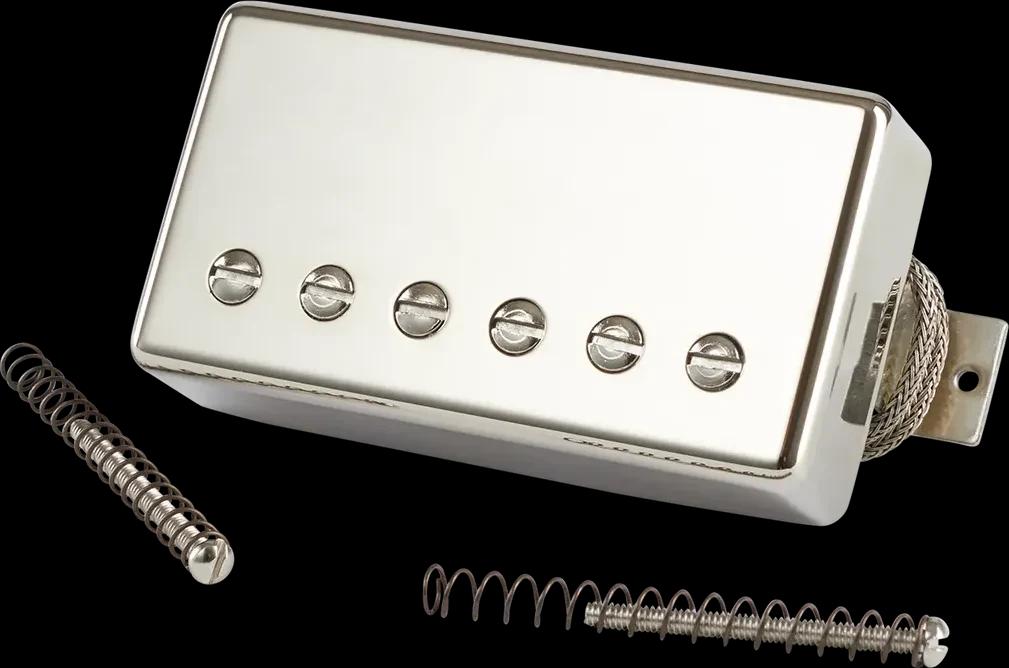
Fitted to a Les Paul, an SG or a semi-acoustic, the ’57 Classic gives a warm, clear, low-output voice for blues, jazz and classic rock, with notes that stay separate in a chord. It is the humbucker Gibson sells as its recreation of the late-1950s "Patent Applied For" pickup, the design every vintage-style humbucker is measured against.
The figures are firmly vintage. Gibson's own page would not load for this review, so they come from Thomann's listing and from Bonedo's test. Bonedo measured its two pickups at 7.81 kΩ and 7.88 kΩ, and Thomann lists the output as low. Gitarre & Bass measured an earlier pair somewhat higher, at 8.05 kΩ and 9.03 kΩ, and a Thomann owner noticed small differences between units. Pickup specifications explained covers what those numbers mean.
It uses an Alnico II magnet, and one pickup serves either position: Thomann lists it for both bridge and neck. It comes with a nickel or gold cover, or uncovered with black bobbins. Bonedo also notes that the coils are wax potted, which guards against squeal at volume.
The lead is two-conductor: a single core inside a braided shield. That is the traditional arrangement and it keeps the pickup humbucking only, so a coil split is not possible.
Warm, clear and dynamic, with one dissent
Two magazine tests and 30 owner reviews at Thomann were read for this page. Most of them agree. Bonedo gave the ’57 Classic full marks, describing a warm, round voice with smooth highs, clear string separation even with gain, and a close response to picking. Owners say much the same: clarity is the most repeated word, followed by warmth, and several mention its dynamics.
The styles named again and again are blues, jazz and classic rock. Ten owners report a clear improvement on the pickups they replaced, mostly in Epiphone Les Pauls, SGs and semi-acoustics. Many of them fitted it in the neck, and a few paired it with Gibson's ’57 Classic Plus in the bridge.
Gitarre & Bass is the dissent, in a 2005 comparison against an original PAF set. It praised the bridge pickup as full and warm, well suited to blues and slide, but judged the neck pickup muddy and short of sparkle beside the reference. One owner made a similar complaint about heavy bass in the neck of an Epiphone, so the neck position is not a guaranteed win.
Where it falls short
Output is the main limit. Bonedo and two owners say plainly that it is not a pickup for modern high-gain playing. Three owners regret that the two-conductor lead rules out a split. Two had fitting trouble in non-Gibson guitars: one pickup sat off-centre in an Epiphone cavity, and another stood too tall for an Ibanez semi-acoustic.
Guitars it suits and what to compare it with
It is at home in a Les Paul, an SG or an ES-style semi-acoustic. In a Gibson Les Paul Standard ’50s it replaces the stock Burstbuckers; one Thomann owner found the ’57 Classic the smoother and less harsh of the two. In an Epiphone Les Paul Standard ’50s it is the classic Gibson upgrade. Fitting is covered in how to change a pickup.
The closest rival is the Seymour Duncan ’59, which uses Alnico 5 and can be bought with a 4-conductor lead for splitting. Bare Knuckle's The Mule is the hand-wound, premium take on the same idea. For more output in the bridge, the Seymour Duncan JB is the usual step up. The wider field is in best humbuckers for a Les Paul.