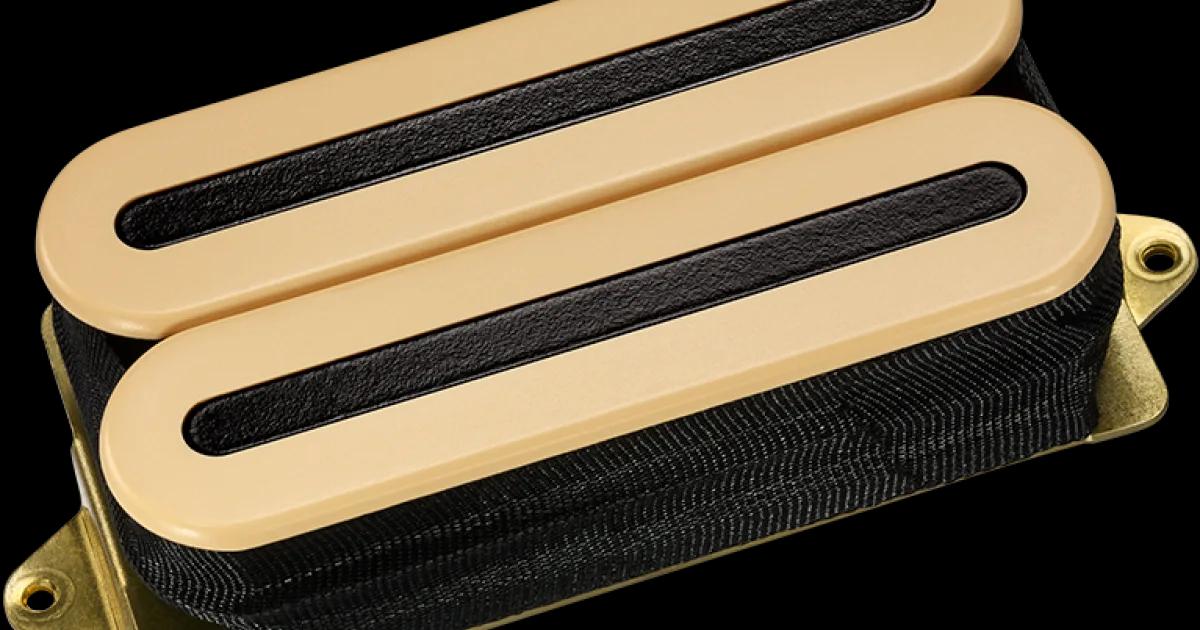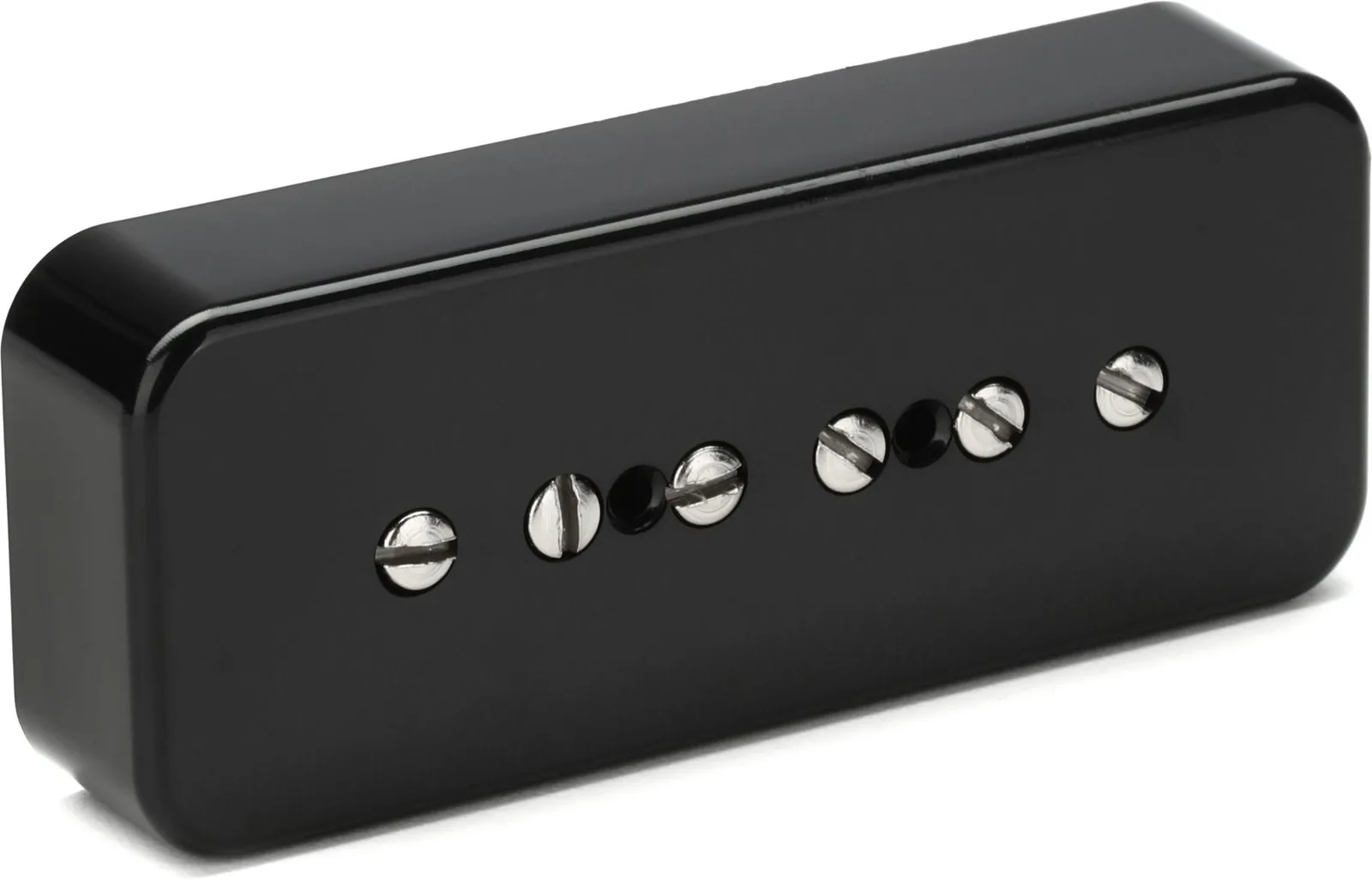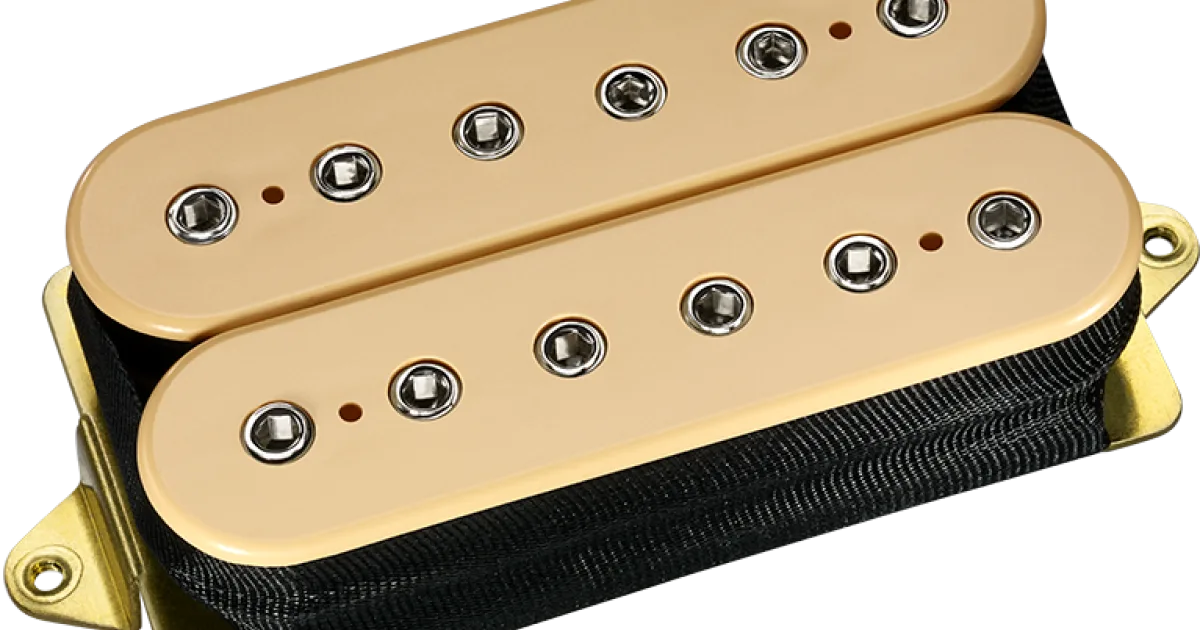
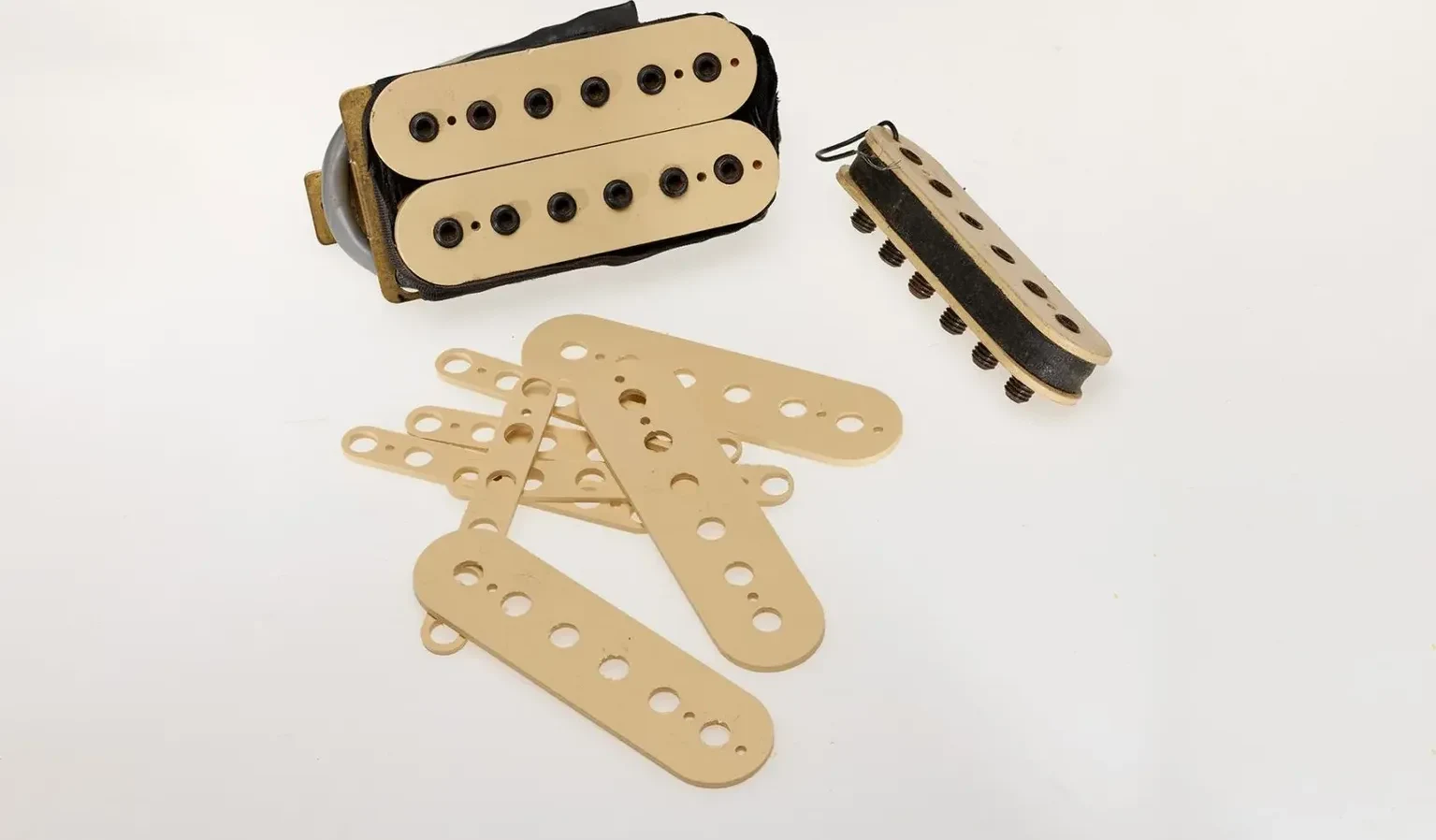
Thick, loud rhythm tones that stay articulate under gain
In the bridge, the Super Distortion drives an amp hard with a thick, mid-heavy sound: a big wall of rhythm for classic hard rock and 1980s metal, and Guitar World and owners agree it never turns muddy under high gain. The figures behind it are a ceramic magnet, a DC resistance of 13.68k and an output rating of 425 on DiMarzio's own scale, and DiMarzio's tone guide puts bass (8.0) and both mid bands (6.5) well ahead of treble (4.5).
The pickup dates from the early 1970s: Guitar Player has Larry DiMarzio settling the design by 1971, and his own account on DiMarzio's site has Ace Frehley asking to buy three in 1973. DiMarzio presents it as the first pickup designed to push a valve amp into heavy overdrive. Half a century later it is still in DiMarzio's catalogue under the model number DP100, and it is the pickup most other hot humbuckers are measured against.
The lead is 4-conductor, so it can be split to a single coil or run in parallel for a brighter, lower-output sound. It is made in standard and F-spaced versions and in a very long list of bobbin colours, including the two-tone combinations many players associate with it.
Thick, loud and mid-heavy
DiMarzio describes the tone as thick, with boosted mids, big lows and fat highs, and its own tone guide puts bass and mids well ahead of treble. Guitar World hears the same balance, leaning to the bass with full mids and a rolled-off top, but adds that it never turns muddy and stays articulate through high gain. Owners at Thomann agree on that clarity under distortion, and a few found it brighter and less heavy than its name suggests.
That character works in its favour with heavy rhythm parts and classic hard rock and 1980s metal, where it gives a big wall of sound. The flip side is that its restrained treble can feel dark in an already warm guitar, and it has less output than modern high-gain humbuckers. Its clean sounds are more usable than the name implies, and Guitar World notes that it cleans up well from the volume knob, though owners would not choose it for jazz or pristine cleans. DiMarzio calls it primarily a bridge pickup, though it notes it can work in the neck with a low-gain amp.
Guitars it suits
The Super Distortion fits any standard humbucker route. It is a good match for an Ibanez RG421, adding weight and output to a rock and metal guitar, and it suits the bridge of an Epiphone Les Paul Standard ’50s or a PRS SE Custom 24 for players who want more gain than the stock pickups give. If you have a bright guitar that sounds thin under gain, its restrained treble can help balance it.
Installation follows the usual humbucker steps in how to change a pickup. The 4-conductor lead makes it a candidate for series and parallel switching or a push-pull coil split.
How it compares with the JB
The obvious rival is the Seymour Duncan JB. The JB uses an Alnico 5 magnet and has a higher DC resistance, and Guitar World's guides describe it as brighter, with an upper-mid push, where the Super Distortion leans to the bass with a rolled-off top. The JB vs Super Distortion comparison goes into the detail. For a quieter, tighter high-gain option, see the active EMG 81. Higher DC resistance does not always mean a louder pickup, and pickup specifications explained covers why.