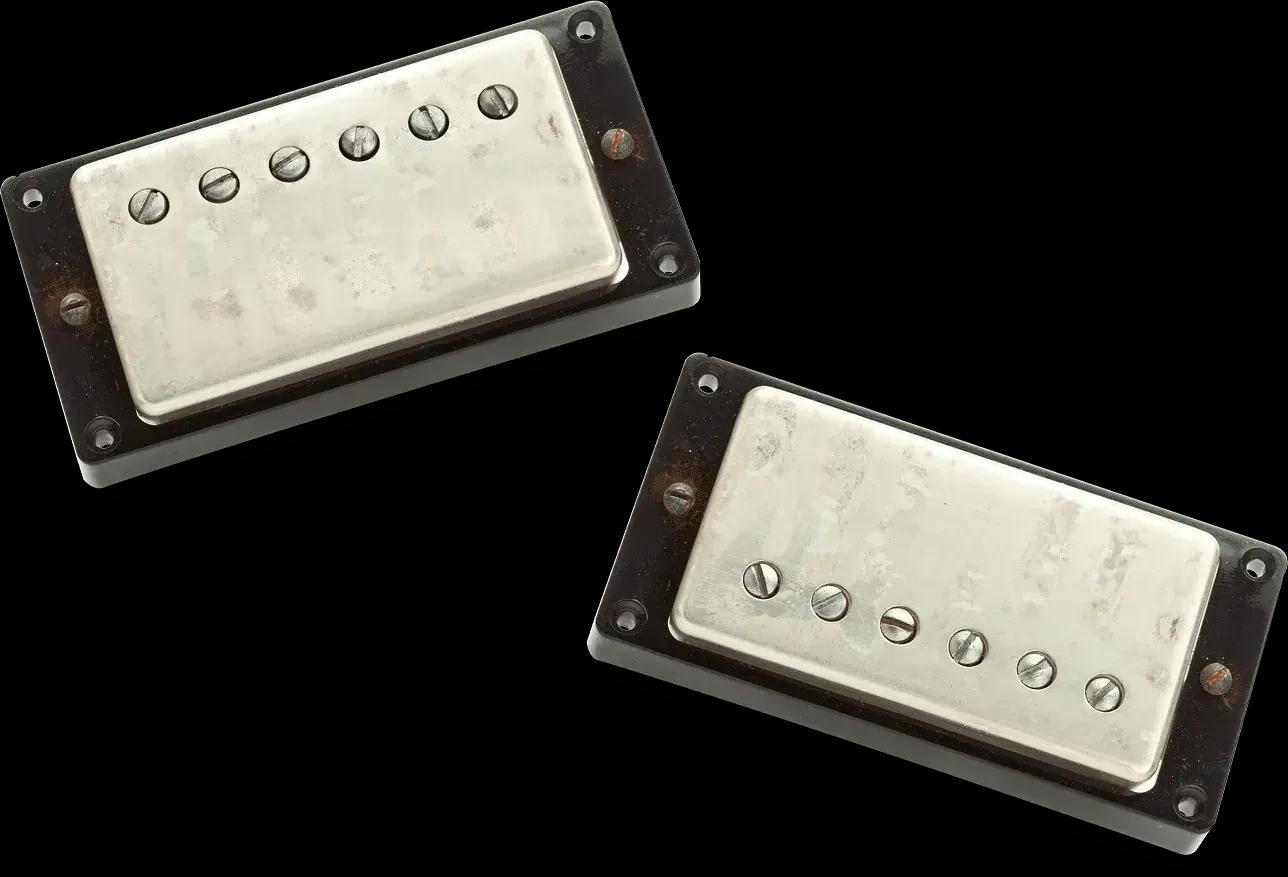
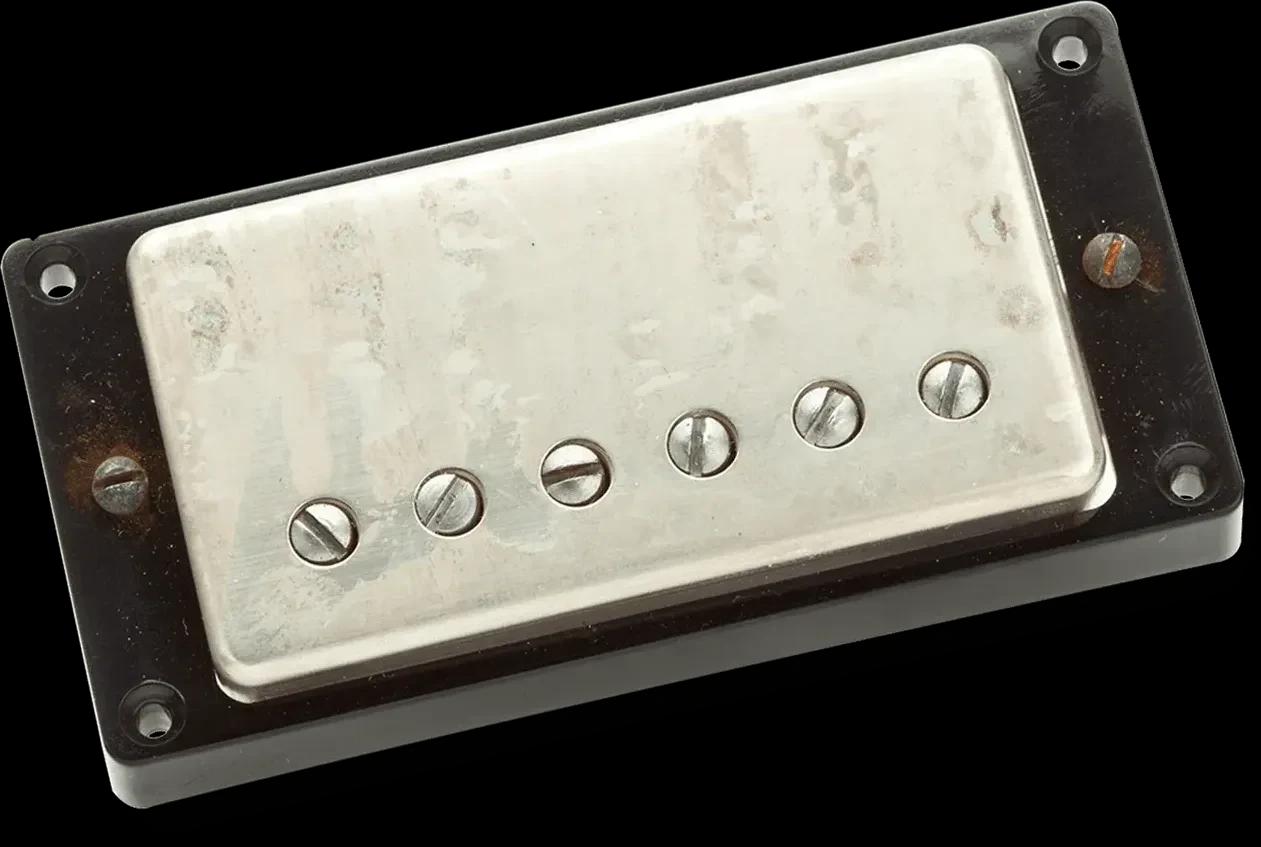
The sound and look of a 1950s PAF, for a vintage-style guitar
Fitted to a Les Paul or an SG, the Antiquity aims to give the guitar a late-1950s Gibson humbucker as one is found today, in sound and in looks, and the little evidence there is says it gets close. The one magazine test found judged it very close to an original set, and owners at Thomann describe a warm 1950s and 1960s sound and a marked improvement over the pickups they took out.
The figures are vintage throughout. Seymour Duncan lists the neck at 7.70k DC resistance and the bridge at 8.60k, the bridge wound a little hotter for balance. The parts follow the originals: each pickup has an Alnico 2 bar magnet, 42 AWG plain enamel wire, butyrate bobbins, a maple spacer, and a nickel silver cover and bottom plate with long mounting legs.
It is the most literal of Seymour Duncan's vintage humbuckers. Where the ’59 is a modern pickup in a 1950s voice, the Antiquity is built as a copy: Seymour Duncan ages it both cosmetically and magnetically, and says it is wound on a Leesona machine that came from Gibson's Kalamazoo factory. It is sold as a neck, a bridge or a matched set, with aged nickel, aged gold or unaged nickel covers.
Two period details matter when fitting it. The lead is single-conductor braided wire, so there is no coil split, and the coils are not wax potted, which is how PAFs were made.
Sweet in the neck, open in the bridge
Only one magazine review was found, so this account leans mostly on owners. Gitarre & Bass tested the set in 2005 as part of a long PAF comparison played through a Historic Les Paul against a real 1962 set. Its writer judged the Antiquities very close to the originals, close enough that some old sets would be hard to tell from a good pair, and picked out the neck pickup as sweet, nasal and light on its feet. He found distorted chords a little less rich in overtones, and noted that the low output keeps the sound clear and tight.
Owners at Thomann, where the set is the version sold, describe the same thing in plainer terms: a warm 1950s and 1960s sound, a rounded but defined neck and a bridge that stays pleasant clean and turns to crunch when pushed. Several fitted the set to a Gibson or Epiphone Les Paul or an SG and report a marked improvement, and two single out how closely it follows picking strength and the volume knob. Several also like the aged look and the period packaging.
The cost, and what it asks of the guitar
The reservations are consistent too. The Antiquity sits at the premium end of Seymour Duncan's range, and both the magazine and owners call it expensive; one owner hears nearly the same sound from the cheaper Seth Lover. Gitarre & Bass also found it demanding: it needs a strong valve amp and some time spent on pickup height, and the magazine's wider test adds that a cheap Les Paul copy will never show all it can do. One owner makes a similar point, that it suits some guitars and not others.
That makes it a pickup for a guitar that is already good. It fits a Gibson Les Paul Standard ’50s naturally, and owners report good results in the Epiphone Les Paul Standard ’50s, though one notes the set cost about as much as the guitar it went into. How to set pickup height covers the adjustment, and ’50s and modern Les Paul wiring is worth reading before the soldering iron comes out.
What to compare it with
The Seymour Duncan ’59 is the sensible alternative from the same maker, with an Alnico 5 magnet and a 4-conductor option for splitting. Gibson's own ’57 Classic is the obvious rival from Gibson itself, and the Bare Knuckle The Mule is another PAF-style humbucker reviewed here. Best humbuckers for a Les Paul sets the wider choice side by side, and humbuckers explained covers how the design works.