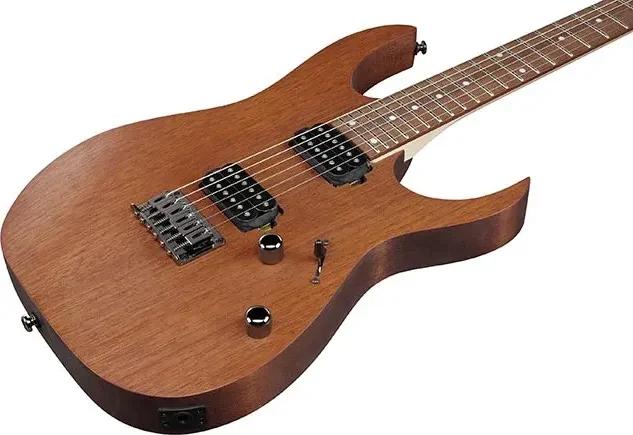
A thin, fast neck and a fixed bridge for budget rock and metal
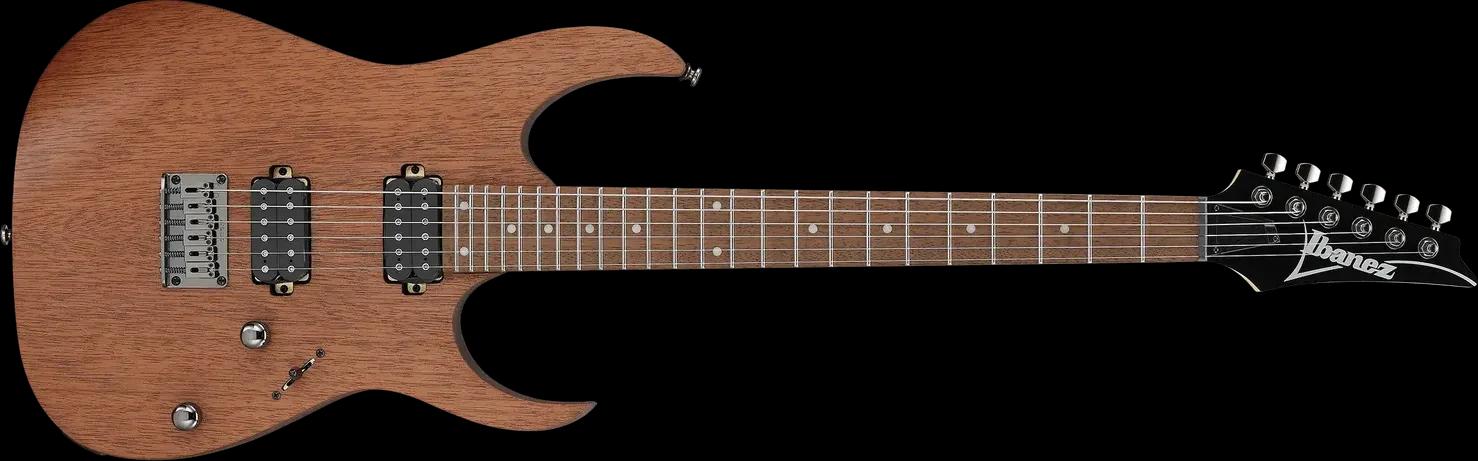
The RG421 gives a rock or metal player a neck built for speed and a bridge that keeps things simple. The maple Wizard III neck, which Ibanez describes as thin, flat and fast, measures 19 mm deep at the first fret and 21 mm at the twelfth, with a 43 mm nut, and the jatoba fingerboard has a flat 400 mm radius and 24 jumbo frets. Where many RGs carry a locking tremolo, this one has a fixed F106 bridge, which keeps tuning and restringing simple. Two passive Quantum humbuckers run through a five-way switch that adds split and parallel sounds, a single volume and a tone.
The body is meranti. The RG has been Ibanez's core rock and metal shape since the late 1980s, and the RG421 is one of the most affordable versions in the company's Standard range. Variants with different tops and finishes, such as the RG421EX, sit alongside it.
What owners report
No magazine has reviewed the RG421, so this account rests on owner reviews at Thomann. Value and build quality for the price are what they praise most, followed by the natural oil finish and the neck, which they describe as thin, flat, fast and comfortable. Owners also find it light to hold and wear. Several say it arrived set up and ready to play, while a few needed a setup, and a few found rough fret ends. The tuners and pots are basic, and a few owners report tuning slipping on big bends.
The pickups are the consistent weak point. Owners most often call the Quantums muddy or weak, and many replace them. The five-way switching wins praise for giving a usable range of sounds. A few owners also note that the open-pore oil finish dents and marks easily.
The fairest summary of what owners say is that it is a well-made, easy-playing platform whose electronics are built to a price.
Why the pickups might be worth changing
Since the stock pickups are owners' most common complaint, a pickup change is the upgrade most likely to make a difference. The routing takes standard humbuckers and Ibanez lists a 10.5 mm string spacing, so standard-spaced pickups line up. A DiMarzio Super Distortion is a passive, direct swap that adds output and midrange push for classic metal and hard rock. For a tighter, modern sound, active pickups are the usual choice: the Fishman Fluence Modern offers more than one voice, and the EMG 81 is the long-standing reference for high-gain metal. Both need power (a 9V battery, or Fishman's rechargeable pack for the Fluence), and the RG421 is built as a passive guitar, so plan where the battery will go before ordering. See how to change a pickup and active vs passive pickups.
Who it suits, and what to compare it with
It suits a beginner or budget player who wants to play rock and metal on a thin neck, and anyone looking for a cheap, stable platform to modify. It is less suited to players who want classic single-coil sounds or a vibrato.
The Yamaha Pacifica 112V is the all-rounder at a similar price, with single coils and a coil split. Moving up, the PRS SE Custom 24 adds a tremolo, a set neck and much better pickups. Pair any of them with a modelling amp such as the Boss Katana-50 Gen 3 for high-gain sounds at home.