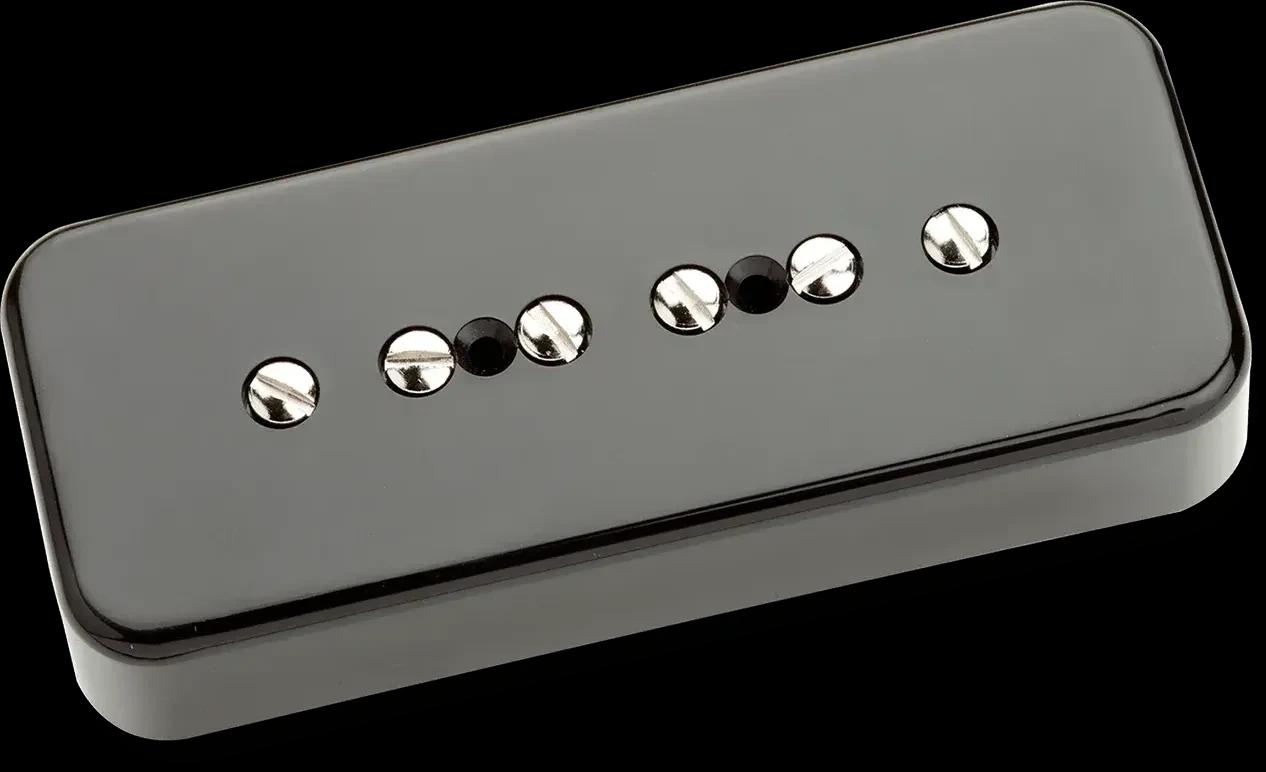
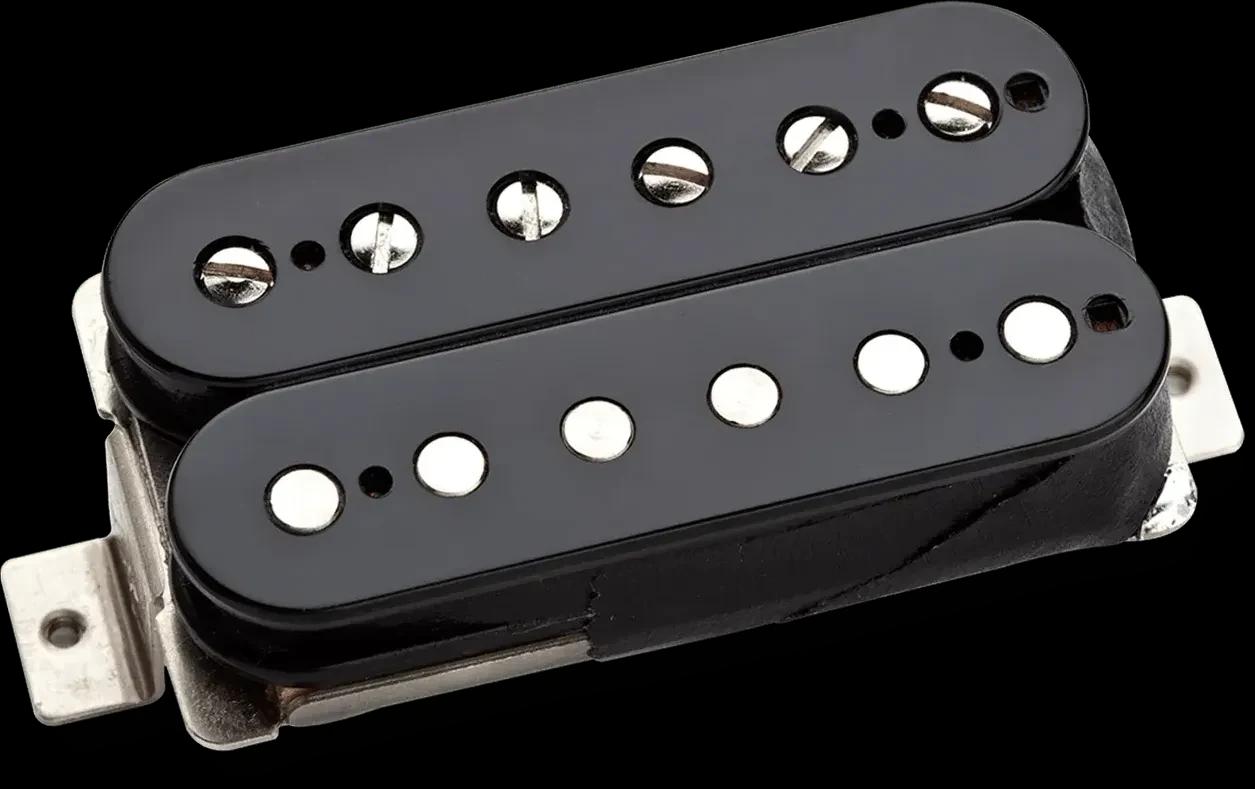
The Seymour Duncan JB and the DiMarzio Super Distortion have been the two default answers to "what hot humbucker should I put in the bridge?" for decades. Both date from the 1970s, both are passive, both are wound to drive an amp hard, and both have four-conductor leads. They are not interchangeable, though. On the makers' own descriptions the JB is the brighter, more cutting of the two, and the Super Distortion the more bass-heavy and mid-rich.
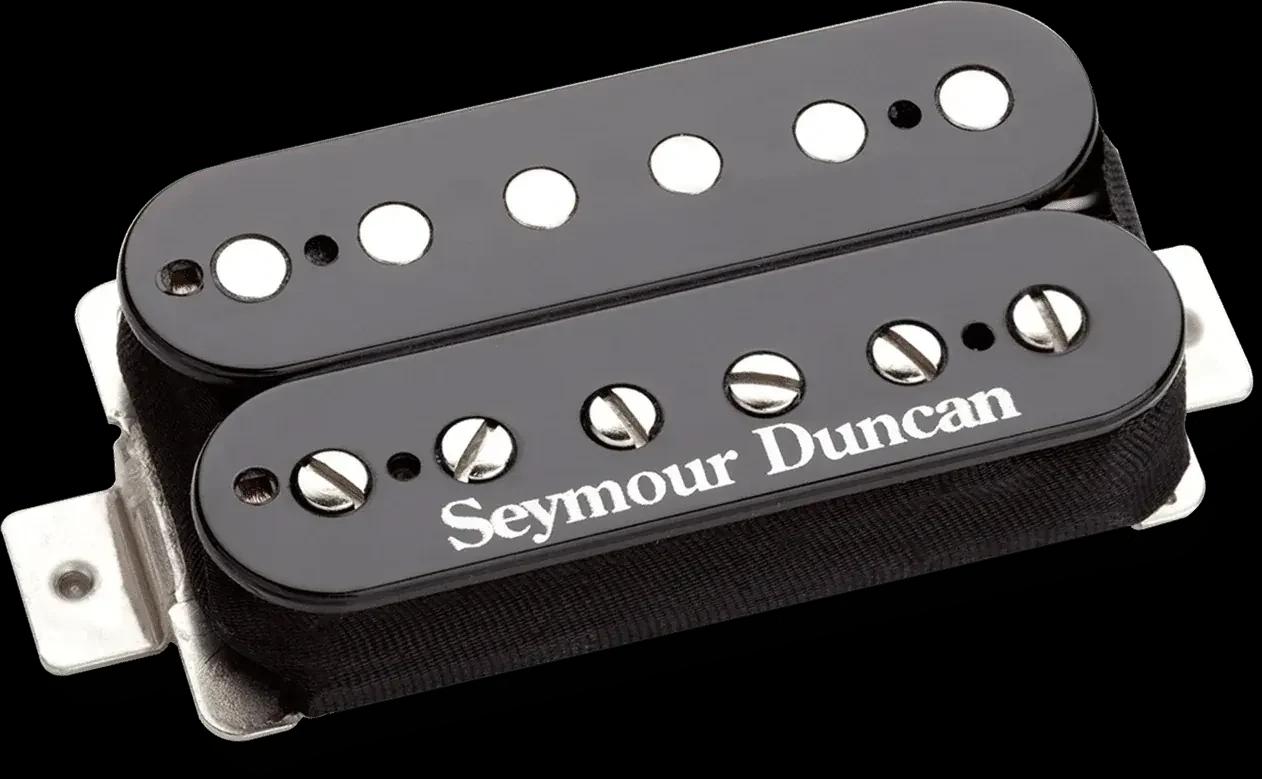
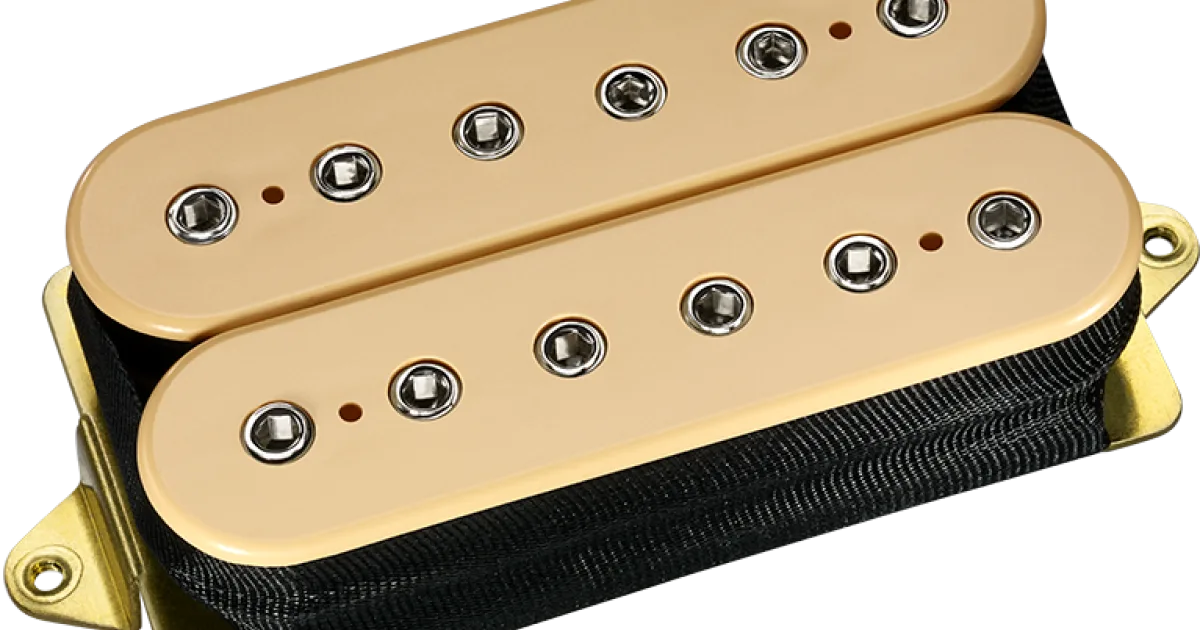
Both began in the 1970s
DiMarzio describes the Super Distortion as the first replacement pickup: before it, a player who wanted a hotter sound rewound or swapped factory parts. DiMarzio's product page gives 1974 as its year of introduction, and the company's own account dates its beginnings to the early 1970s. It was built to keep a valve amp sustaining and distorting longer, and it became one of the defining sounds of 1970s and 1980s hard rock.
The JB comes from the same period. Seymour Duncan's own history traces it to a guitar he built for Jeff Beck in London in the early 1970s, a Telecaster fitted with hot-rodded humbuckers that Seymour wound himself, which became the basis of the JB Model and its frequent partner, the Jazz neck pickup.
The specifications differ in magnet and resistance
| Seymour Duncan JB (SH-4) | DiMarzio Super Distortion (DP100) | |
|---|---|---|
| Type | Passive humbucker | Passive humbucker |
| Magnet | Alnico 5 bar | Ceramic |
| DC resistance | 16.6k (bridge) | 13.68k |
| Leads | Four-conductor, shielded | Four-conductor |
| Spacing options | Standard and Trembucker | Standard and F-spaced |
| Maker's tone description | Full low end, crisp highs, upper-mid bump | Thick, boosted mids, big lows, fat highs |
| Intended position | Bridge | Primarily bridge |
DC resistance makes the JB look hotter, but the two pickups use different magnets, and the pickup specifications guide explains why resistance alone cannot rank them. DiMarzio rates the Super Distortion's output at 425 on its own scale and draws its EQ with bass at 8.0, low and high mids at 6.5 and treble at 4.5; Seymour Duncan shows its EQ in a chart without figures. Neither maker's chart can be compared directly with the other's.
The JB adds edge and the Super Distortion adds weight
The JB is known for a full low end, a pronounced upper-midrange bump and crisp, detailed highs. Seymour Duncan describes the upper mids as what gives heavy chords their crunch and single notes a vocal quality, and Guitar World finds that it cuts through like little else. Its brightness is also the main caution: Seymour Duncan says the JB was originally designed around 250k pots, and that some players find it bright in guitars with 500k pots. Owners at Thomann report that its top end can turn harsh in some guitars, and several pair it with darker-sounding guitars or 250k pots.
The Super Distortion is voiced for weight. Its ceramic magnet and its EQ, with strong bass and comparatively restrained treble, give a wall of midrange that suits big power chords and classic hard rock. DiMarzio describes single notes and chords as full and powerful. Guitar World hears it leaning towards the bass with a tamed top end, yet never muddy and still articulate through high gain, and it cleans up well from the volume knob. Owners do not all hear it as dark, though: several at Thomann describe it as clear and fairly bright, and one finds it more defined than the JB.
In short, on paper one sharpens the sound and the other fills it out, though in practice the two are closer than their EQ charts suggest. Seymour Duncan's description of alnico V as bright with tight bass and ceramic as edgy with punchy lows fits each pickup's reputation, though the coil and voicing matter as much as the magnet.
Matching the pickup to the guitar
Because the two are voiced so differently, the guitar they go into matters more than which is "better".
- A warm, mahogany guitar such as a Les Paul or a mahogany-bodied PRS: the JB's brightness tends to balance it. Both pickups drop straight into the humbucker routes of guitars such as the Epiphone Les Paul Standard '50s and PRS SE Custom 24.
- A bright guitar with a maple neck, a light basswood or alder body or a bolt-on construction: the Super Distortion's heavier bass and restrained treble, on DiMarzio's EQ, can fill it out. It is also worth considering for a superstrat such as the Ibanez RG421.
- HSS Strat-style guitars: either works. The JB was designed around 250k pots, so it suits a guitar wired with them, though Seymour Duncan notes that most HSS guitars use 500k pots. Seymour Duncan's Trembucker version and DiMarzio's F-spaced version suit guitars with wide-spaced vibrato bridges.
For a neck partner, a lower-output pickup keeps the balance between positions. The Seymour Duncan '59 is a popular choice; the best humbuckers for a Les Paul guide covers others.
Both have four-conductor leads
Each can be wired for a coil split or for parallel operation as well as the standard series connection; DiMarzio also mentions series-parallel switching for the Super Distortion. The colour codes differ, which matters if you install one alongside another brand. Seymour Duncan uses black for hot, green and bare to ground, red and white joined as the series link. DiMarzio uses red for hot, green and bare to ground, black and white joined. See push-pull coil split wiring and series and parallel switching for diagrams, and how to change a pickup for the basics.
Height also changes how both sound. Set too close, either pulls on the strings, which DiMarzio says can cost sustain and make the guitar sound out of tune; the pickup height tutorial explains how to find the balance. DiMarzio's FAQ suggests at least 1.5 mm from the high E and 2 mm from the low E for full-size humbuckers.
The recommendation follows the guitar
- Choose the JB if your guitar is warm or dark, you want cutting upper mids for solos and riffs, or you play a range of styles from blues-rock to heavier rock and want clarity under gain.
- Choose the Super Distortion if your guitar is bright, or you want the mid-rich sound of 1970s and 1980s hard rock.
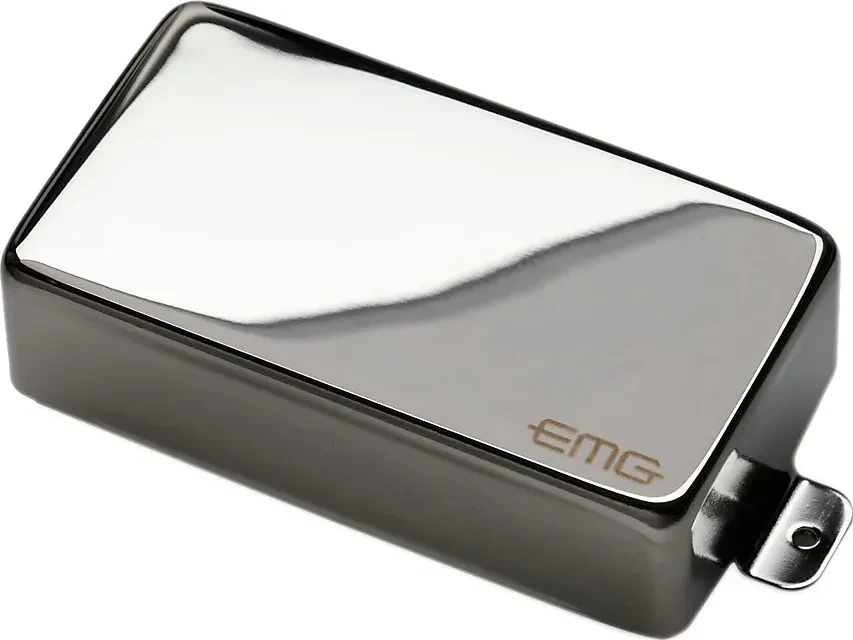
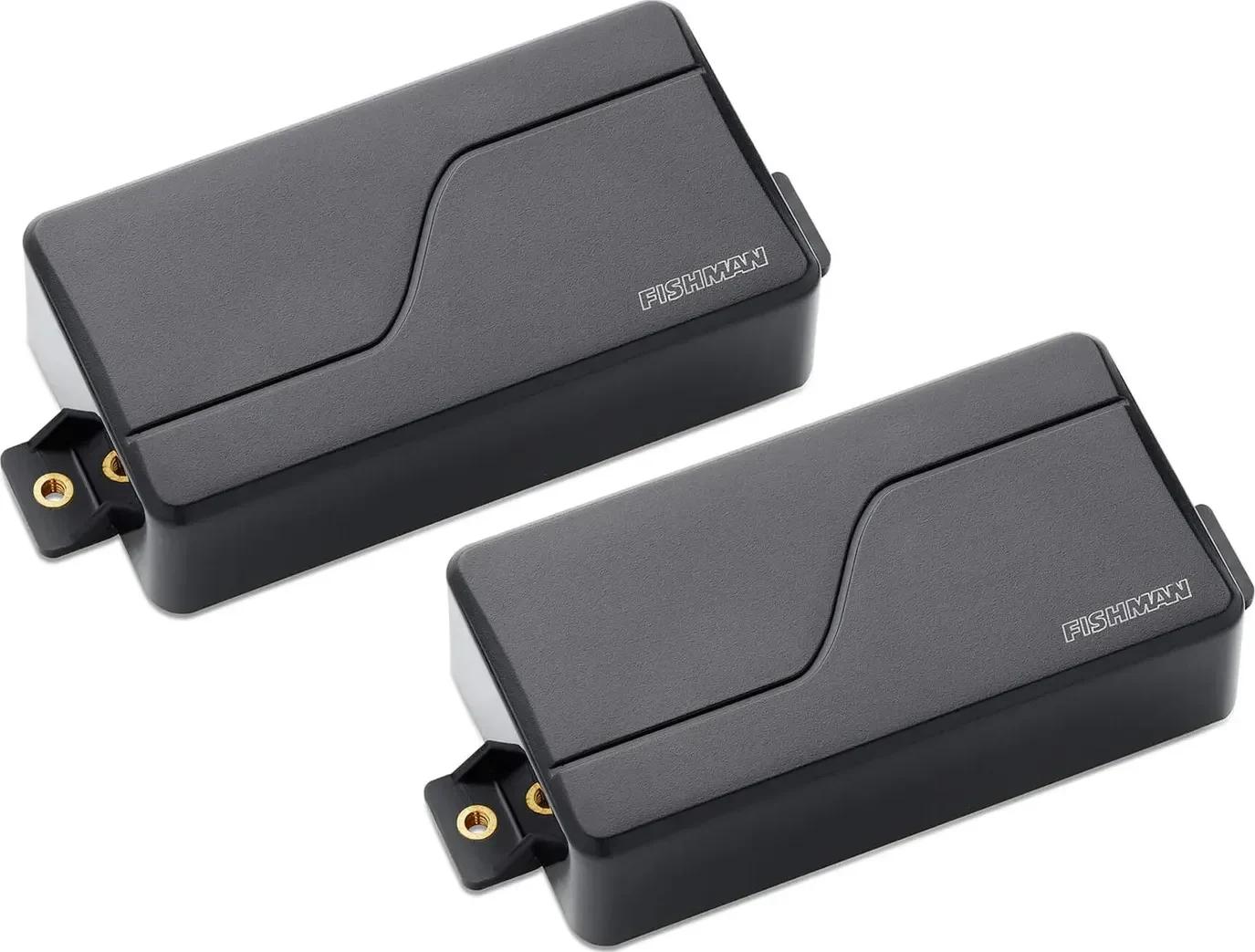
- If you play modern metal with a lot of gain, consider an active option as well; the EMG 81 vs Fishman Fluence Modern comparison covers the main two.
For more background, read humbuckers explained.