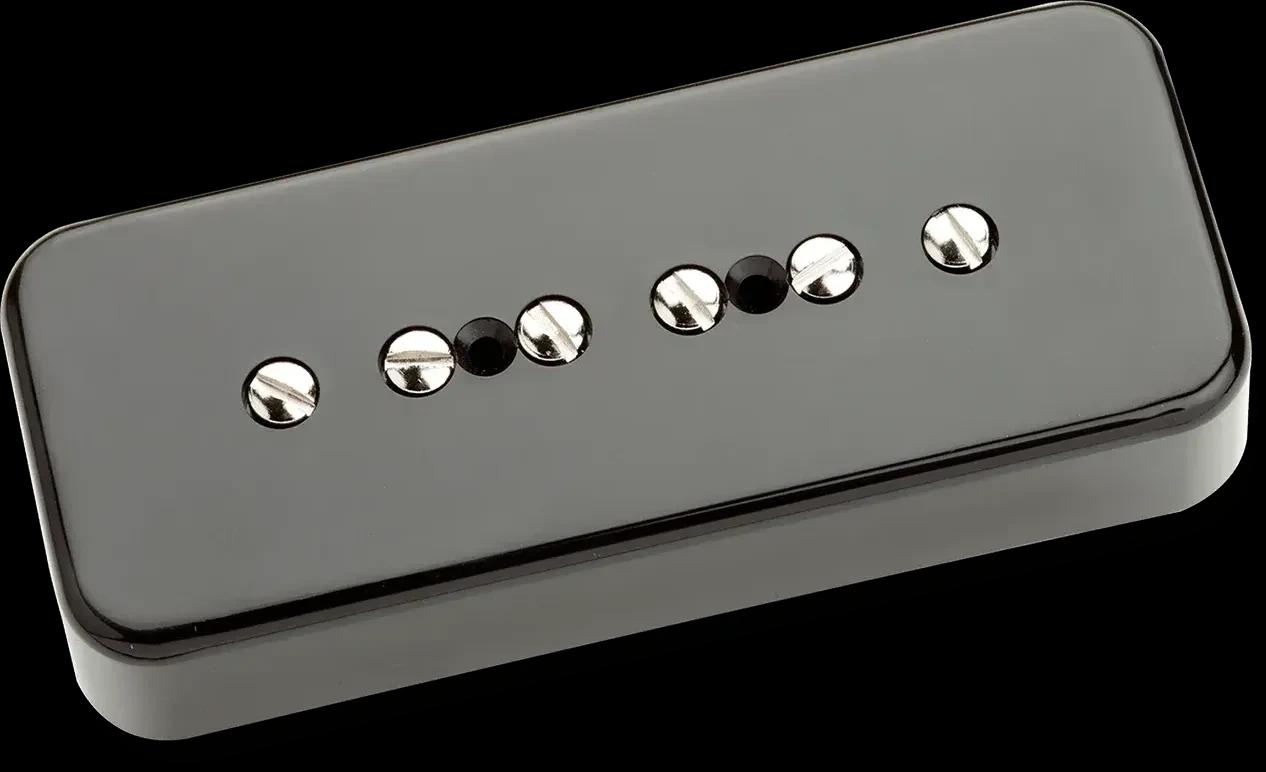
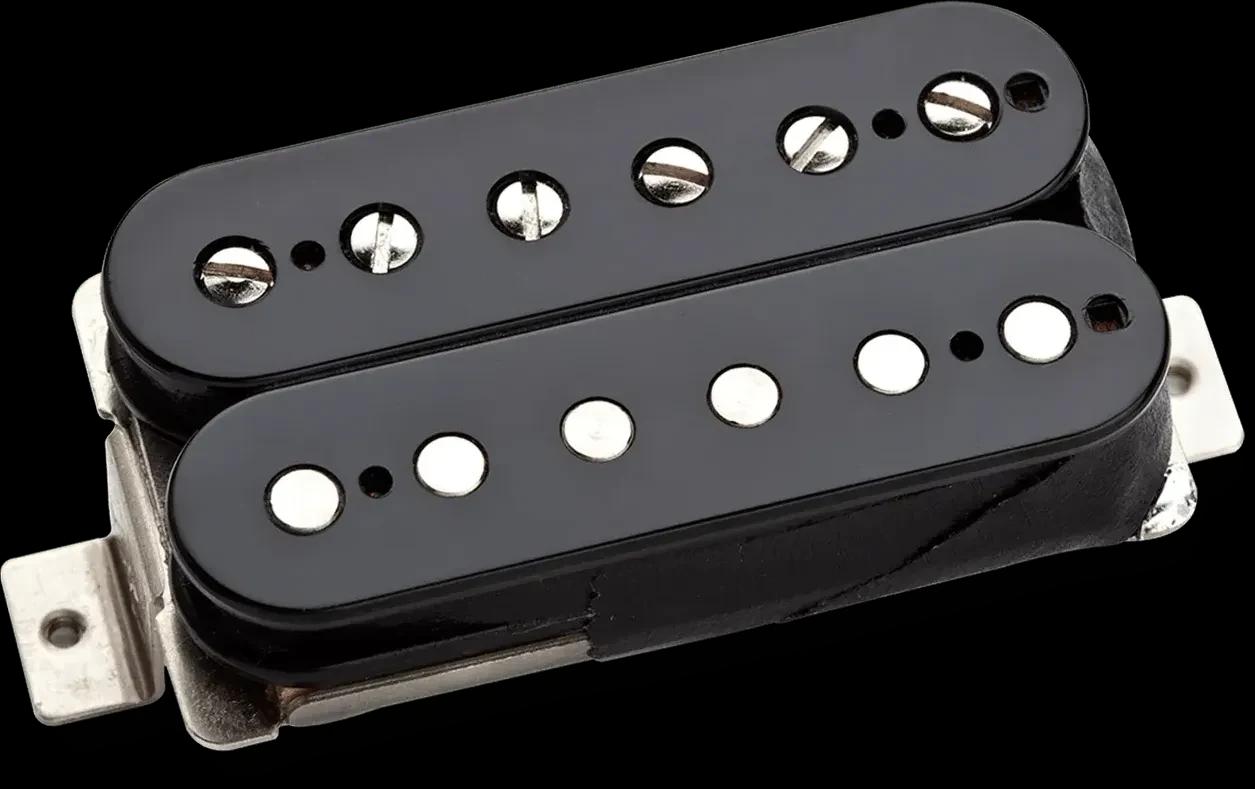
For a long time, "active humbucker" meant the EMG 81. It is the pickup most associated with tight, quiet, high-gain metal guitar, and it has been fitted as standard to many rock and metal guitars. Fishman's Fluence Modern is the newer challenger, built on a different kind of coil and offering several voices from one pickup. Both are active, both run on a 9-volt battery and both use 25k pots, so they compete directly. The choice comes down to whether you want one excellent, fixed sound or several, and how you feel about batteries.
Two different ways to build an active pickup
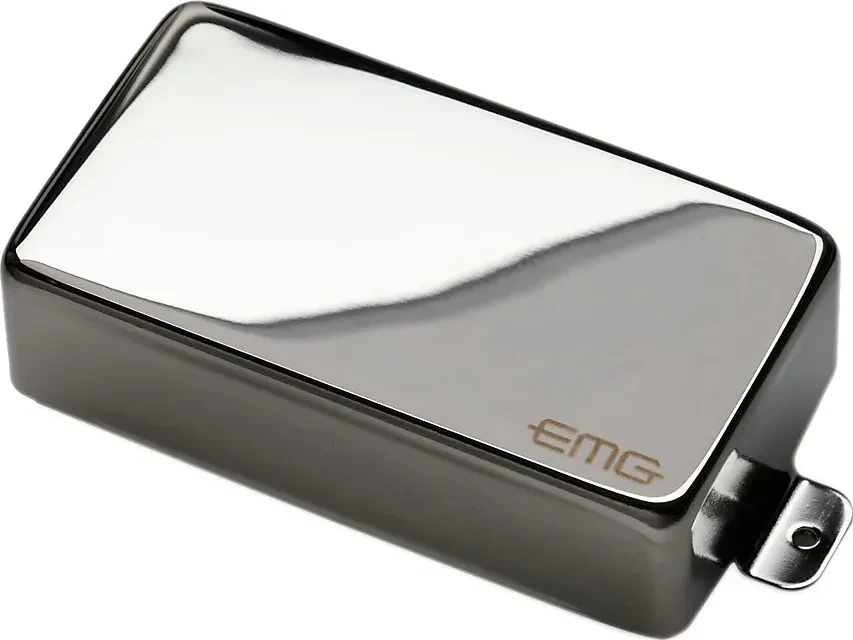
The EMG 81 follows the classic active recipe: a relatively low-output wound coil feeding a preamp built into the pickup. EMG's sheets describe its magnet structure as ceramic with steel, and one notes that it uses steel bars rather than individual pole pieces, which EMG credits with a more linear tone and long sustain. Bars also avoid the dip in volume when a string is bent away from a pole piece. Its output impedance is listed at 10k, low enough that cable length makes little difference to its tone.
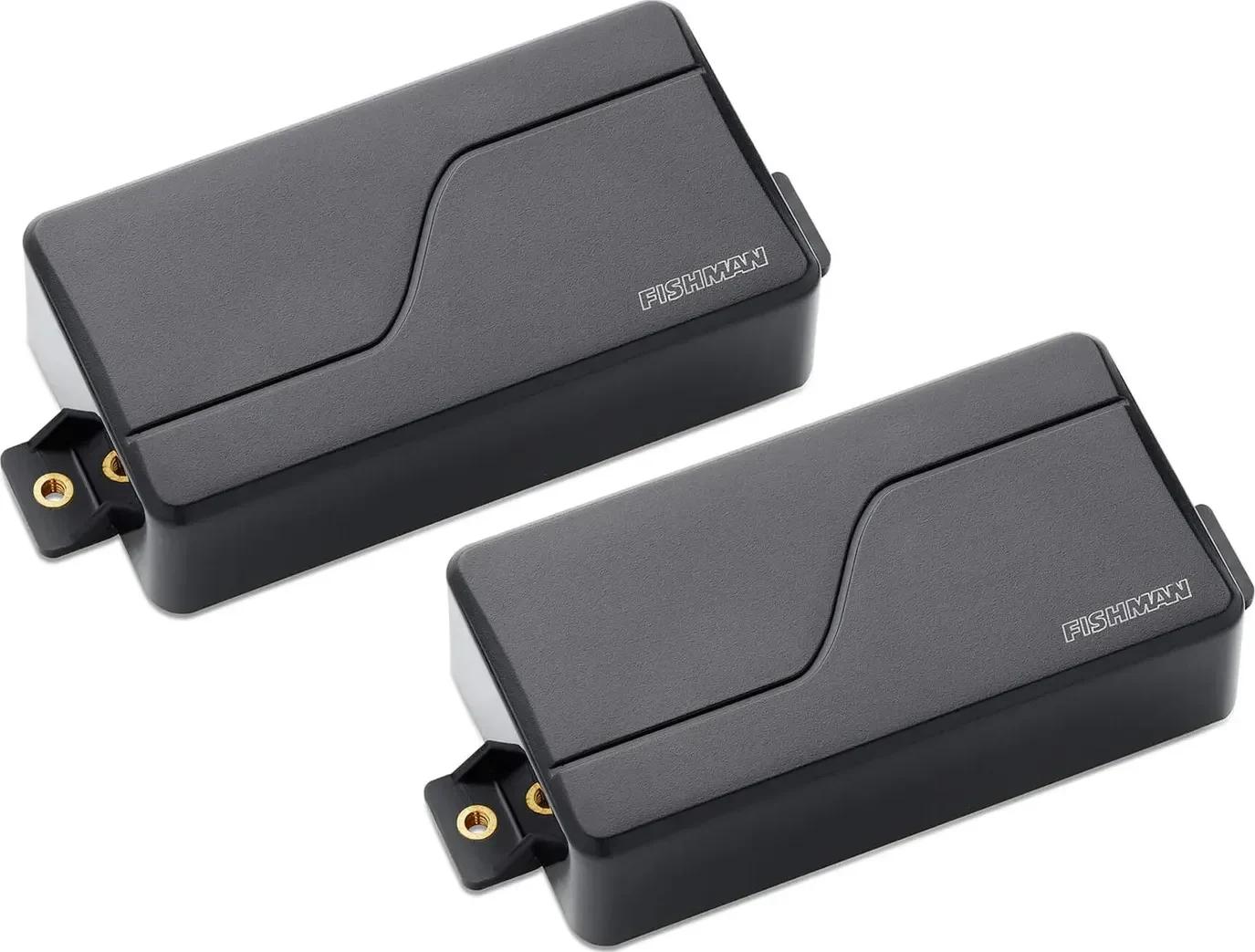
The Fluence Modern does away with wound wire. Fishman's Fluence pickups use stacked layers of printed circuit "coils", in two halves wired in opposition so external hum cancels, as Premier Guitar and MusicRadar describe in their accounts of how the technology was developed. A preamp then shapes the signal into different voices. Fishman lists a bar magnet with blades, in Alnico V for the alnico model and Ceramic VIII for the ceramic model, and an output impedance of 2k.
For background on the active approach in general, see active vs passive pickups.
The specifications show two different designs
| EMG 81 | Fishman Fluence Modern | |
|---|---|---|
| Type | Active humbucker | Active multi-voice humbucker |
| Coil | Wound | Printed circuit |
| Magnet | Ceramic and steel | Alnico V (alnico model) or Ceramic VIII (ceramic model) |
| Voices | One | Three on current models (earlier models two) |
| Output impedance | 10k | 2k |
| Power | 9 V (can run at 18 V with two batteries) | 9 V battery or Fishman rechargeable pack |
| Current draw | Microamps (a fraction of a milliamp) | 2.6 mA (alnico), 2.7 mA (ceramic) at 9 V |
| Battery life | Thousands of hours, per EMG's sheets | Up to 200 hours for a set on 9 V |
| Pots | 25k | 25k, plus push-pull switch, included |
The EMG has one voice and the Fluence has three
The EMG 81 is known for a tight, focused, compressed sound with strong bass that stays defined under heavy distortion, a cutting upper midrange and very little noise. Those are the qualities that made it a metal standard, and reviewers and owners broadly agree it does high-gain rhythm playing exceptionally well. The most common criticism is the other side of the same coin: many players find it flat and a little sterile when played clean or with light overdrive, and less responsive to picking dynamics than a good passive pickup. It is often paired with the EMG 85 in the neck, the combination EMG sells as its ZW set.
The Fluence Modern offers three voices on current models, switched with the supplied push-pull pot or a switch:
- Voice 1, Modern Active High Output. Fishman describes the ceramic version as crisp and searing, with tight bass, and the alnico version as full, round and boosted. Fishman lists peak frequencies of 630 Hz (ceramic) and 650 Hz (alnico).
- Voice 2. On the ceramic model, a passive-style high-output voice that Fishman calls "Modern, Passive Attack", peaking at 1.8 kHz. On the alnico model, a clean, crisp neck voice, with peaks at 420 Hz and 8 kHz.
- Voice 3, single coil. A bright, clear split-coil sound, peaking at 4.5 kHz (ceramic) or 4.7 kHz (alnico). Fishman's install guide notes that using two Fluence pickups together in this voice still cancels hum.
Fishman says the design aims for active output with more articulation and dynamics than a traditional active pickup, and reviewers generally find it more touch-sensitive than the EMG. Some players still prefer the EMG's more compressed, aggressive character for straight high-gain rhythm work.
Battery life is the biggest practical difference
EMG's installation sheets list the 81's current draw in microamps and its battery life in the thousands of hours, so many owners change the battery only occasionally. Fishman lists 2.6 to 2.7 mA per Fluence Modern and up to 200 hours for a set on a standard 9-volt battery. Fishman's answer is an optional lithium-ion rechargeable pack that charges in the guitar, which it says gives weeks of playing between charges.
EMG pickups can run at 18 volts with a second battery, which raises their headroom; EMG recommends 18 volts as the maximum. EMG's own guidance, as reproduced in its installation information, is that this is not necessary for its dual-coil guitar pickups and mainly helps players who hit very hard.
Both fit the same active circuit
Both are designed for an all-active guitar with 25k pots and a stereo output jack that switches the battery on when a cable is plugged in. Both come with solderless or plug-in connections: EMG's solderless installation system includes 25k volume and tone pots, a battery clip and an output jack, and Fishman supplies wiring, 25k pots and a push-pull switch with the Fluence Modern. Replacing an EMG 81 with a Fluence Modern in an existing active guitar is therefore usually straightforward.
Converting a passive guitar to either needs new pots, a stereo jack and somewhere to put the battery. Mixing active and passive pickups in one guitar is possible but awkward. The how to change a pickup tutorial covers the basics, and the guide to 250k vs 500k pots explains why active pickups need lower-value pots.
Either is a natural fit for a superstrat such as the Ibanez RG421, with routing for a battery compartment if the guitar has none.
The recommendation turns on voices and batteries
- Choose the EMG 81 if you play mostly high-gain rhythm and lead, want the established metal sound, value a battery that lasts a very long time, or want the simplest possible active setup.
- Choose the Fishman Fluence Modern if you want one guitar to cover high gain, cleaner passive-style tones and a single-coil sound, want more dynamics from an active pickup, and are happy to charge or change a battery more often.
- If you want passive output and character instead, the Seymour Duncan JB and DiMarzio Super Distortion are the classic hot passive choices; see the JB vs Super Distortion comparison and humbuckers explained.