Weight for heavy rhythm playing, even in low tunings
What the Invader gives a guitar is weight: a thick low end and midrange for heavy rock and metal that, by owners' accounts, stays clear under heavy distortion and copes with dropped and baritone tunings. It does that as a passive pickup, with no battery to find room for.
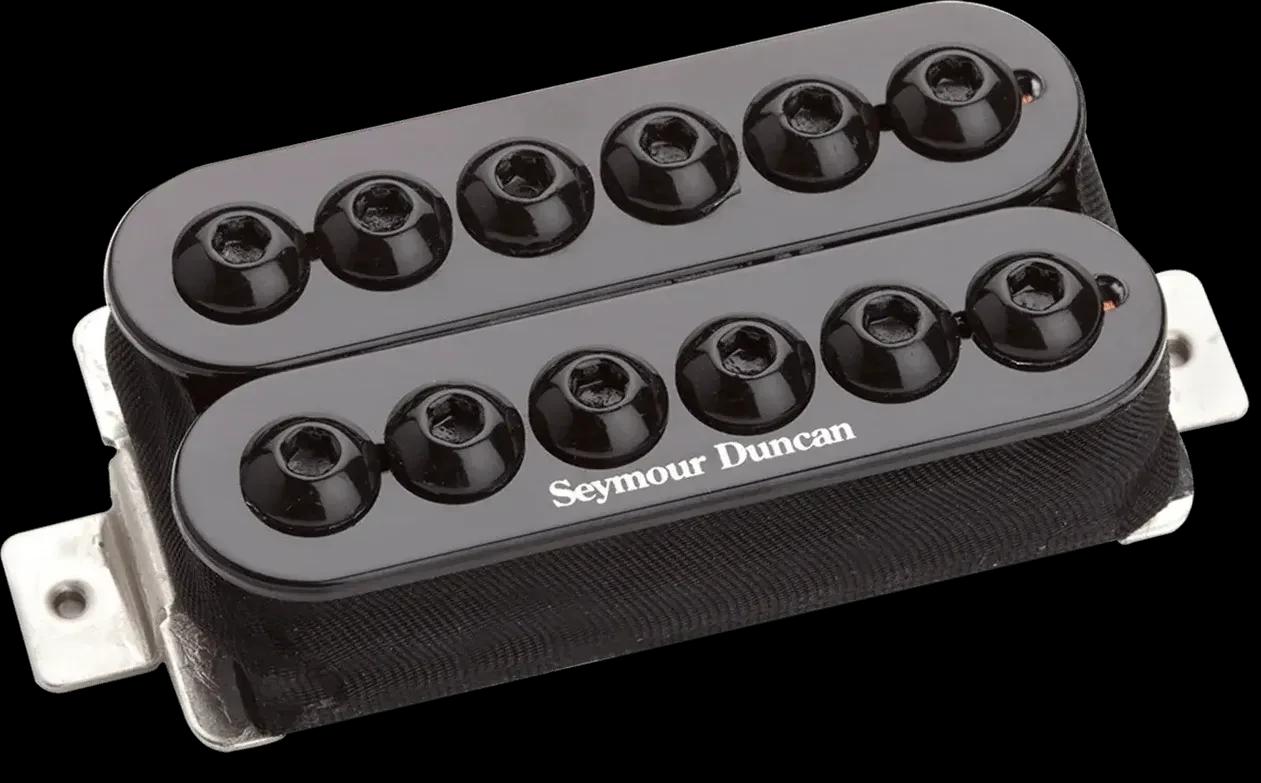
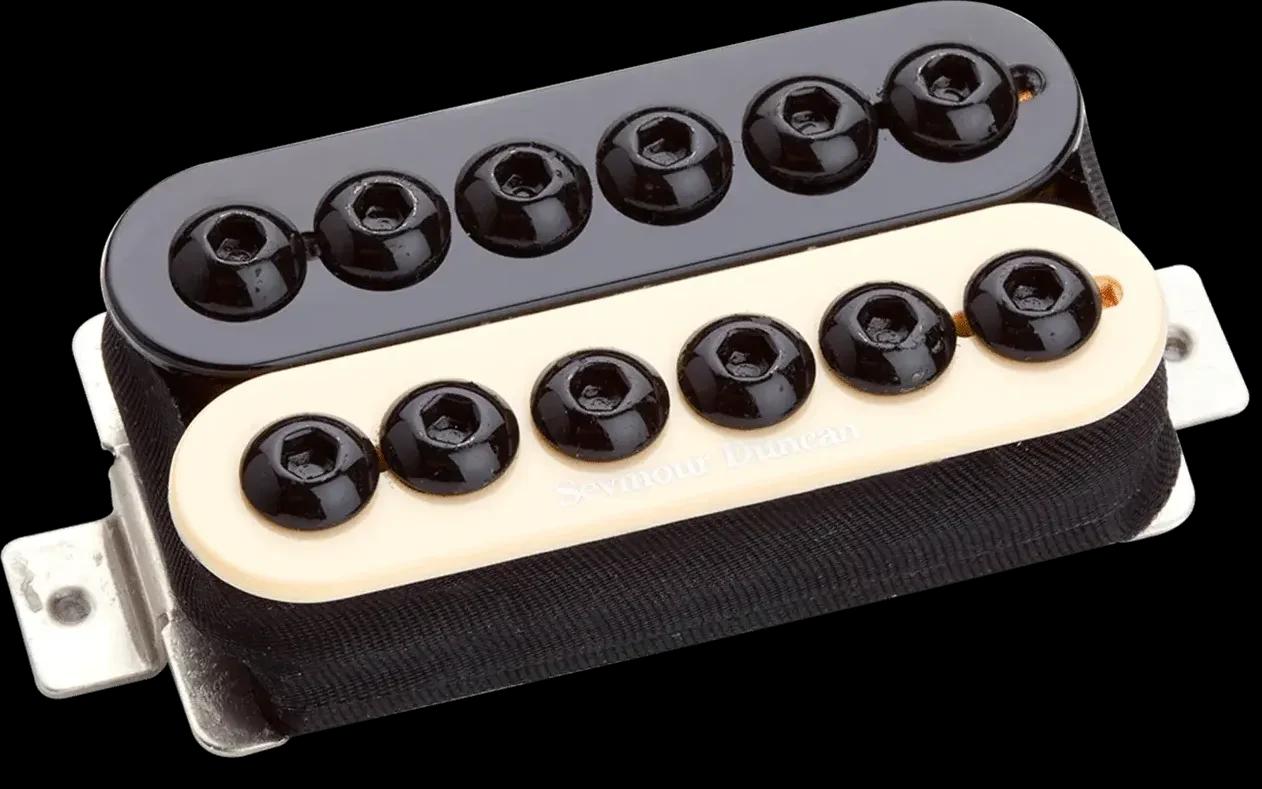
The construction explains the sound. The Invader is easy to recognise by its oversized pole pieces with large hex caps, and underneath are overwound coils and three large ceramic bar magnets. Seymour Duncan describes it as ultra-high output, with the thickest, deepest low end of any passive pickup it makes.
The spec sheet is a useful lesson in reading numbers. The bridge model is listed at 16.6k DC resistance, the same figure Seymour Duncan gives for the JB, yet the two are built differently: the JB has an Alnico 5 magnet, the Invader three ceramic ones and, by Seymour Duncan's account, a far deeper low end. Pickup specifications explained covers why resistance alone says little.
The neck model is a much milder 7.5k, which Seymour Duncan calls warm and smooth. Both have a 4-conductor lead, and the Invader is also made for 7 and 8 strings.
Thick, loud and clearer than expected
Guitar World's review, of a bridge and neck set fitted to a PRS, found more sustain and power on driven sounds, with low notes that stayed thick but well defined in drop D. It judged the set stronger for rhythm than for lead, and ideal for modern rock and metal.
Thirty owner reviews read at Thomann point the same way. More than half describe it as a pickup for heavy rock, punk and metal, and eight pick out the weight in the lows and mids. Five use it in dropped or baritone tunings and report that it copes, and four say it stays clear under heavy distortion.
Clean tones are where opinion divides. Guitar World found the clean sound crisp and better than expected, and six owners agree. Another six say the opposite: that it is aggressive by nature, short on dynamics or awkward to clean up, and better left to heavy music.
The other reservation is the treble. Guitar World found the bridge pickup brighter than expected, though not shrill, and turned the tone control down to balance it; two owners call the highs harsh. One owner needed to adjust the pickup's height and the amp's EQ to stop the bass overloading, so allow time for setting up: see how to set pickup height.
Guitars it suits
The Invader fits a standard humbucker route. Owners report fitting it to Les Paul and PRS-style guitars, Ibanez and LTD models, and one to the bridge of a Yamaha Pacifica, so candidates on this site include the Epiphone Les Paul Standard ’50s, the Ibanez RG421 and the Yamaha Pacifica 112V. One owner felt it was unnecessary in a Les Paul Custom that already had plenty of weight, and another credits it with taming bright, thin-sounding guitars; that is a fair guide to where it helps most.
Several owners describe the fitting as simple with the supplied wiring instructions, and three rate the split or parallel sounds the 4-conductor lead allows. How to change a pickup covers the job.
What to compare it with
Among passive pickups, the JB is the one Guitar World rates for covering the most ground, so it is the safer choice for players who need more than heavy sounds. The DiMarzio Super Distortion, which Guitar World calls an old classic, is the long-standing ceramic rival, and the Bare Knuckle Nailbomb is another passive option reviewed here.
The other route to a heavy bridge sound is an active pickup: the EMG 81 or the Fishman Fluence Modern. One Thomann owner compared the Invader's output to an EMG 81's but with more midrange; another found it lower than an active pickup, though enough with some gain. Active vs passive pickups explains the trade-off.