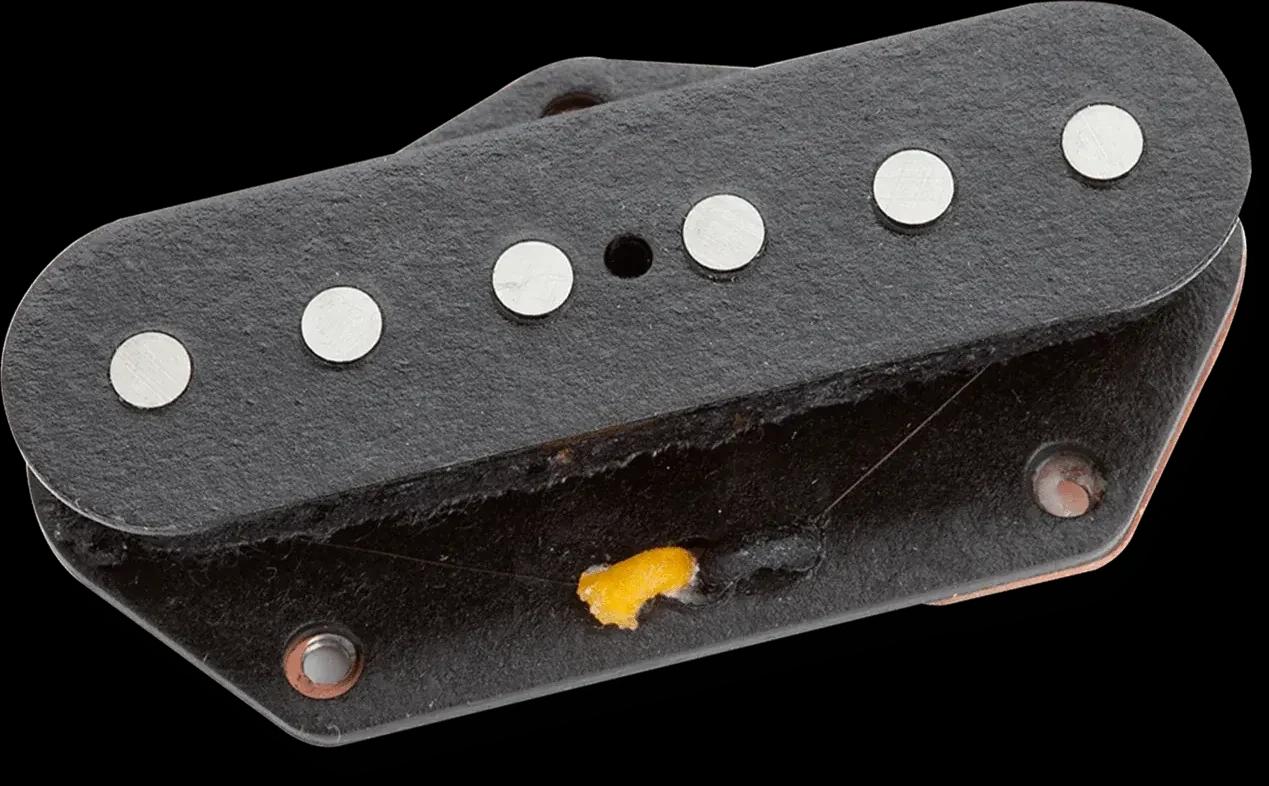
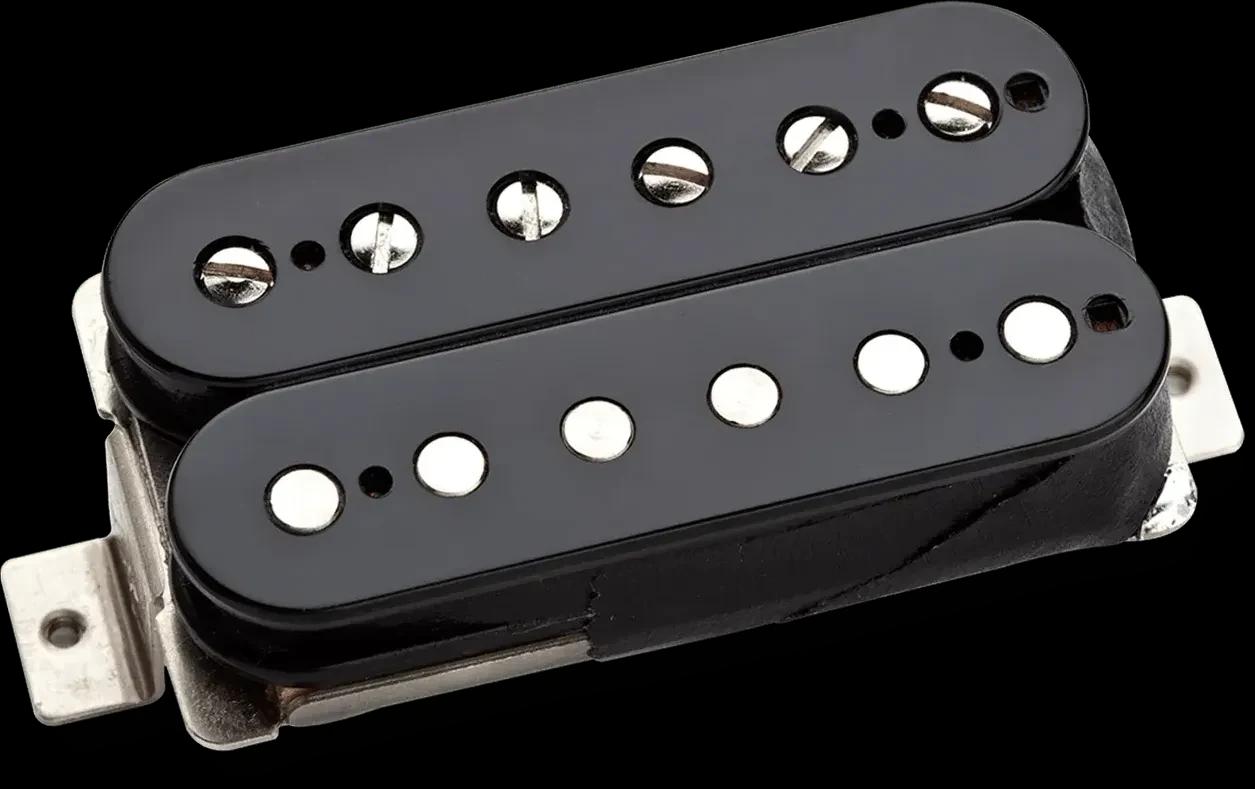
A pickup cover is the shell over a pickup's coils. On a humbucker it is usually metal, soldered to the baseplate, and it does three jobs: it shields the coils from some interference, protects them from picks, nails and strings, and sets the look of the guitar. Single coils and P-90s wear plastic covers that simply push on or are held by the pickup's screws. This guide covers what a humbucker cover is made of, what it changes and what makers say it does not, the sizes and string spacings, how one is fitted, and the covers on other pickups.
A humbucker cover is a metal shell over both coils
The covered humbucker goes back to the first one. Seymour Duncan notes that Seth Lover used covers on his humbucker to reduce electrical interference, and that metal covers on humbuckers and on Telecaster neck pickups still serve that purpose, against the noise from transformers, light dimmers and bad wiring. Covers also keep picks and fingernails off the coils, stop strings snagging the bobbins, and change the look.
Nickel silver is the usual metal. StewMac's covers are nickel-silver reproductions of 1950s PAF covers, polished and plated, measuring 69.85 by 38.10 by 15.88 mm. Seymour Duncan's are nickel silver too, plated in nickel, gold or chrome.
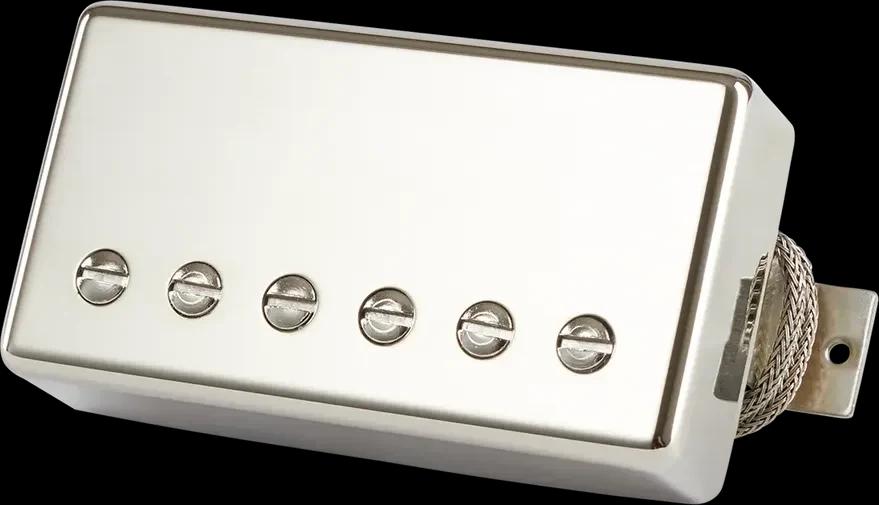
A cover is often a matter of choice when you buy: Seymour Duncan sells the ’59, JB and Pearly Gates open or covered, and its Antiquity comes with aged covers. DiMarzio offers its 12-pole humbuckers with a polished nickel cover, and satin, gold, black or unplated finishes for an extra charge.
What a cover changes, and what makers say it does not
The makers are fairly relaxed about tone. Seymour Duncan's own explanation is that covers normally do not alter the tone of an instrument, but that the plating and the cover material can. Nickel silver is the standard on Gibson-style humbuckers because it has less effect on the high end; some companies use aluminium or brass, which Seymour Duncan says cut too much treble. Its Custom Shop chose nickel silver because its testing showed the metal did not affect the tone and because it was used historically.
Guitar World's comparison of P-90s and humbuckers puts it in practical terms: open-cover humbuckers usually sound slightly brighter than covered ones, and metal covers generally reject interference better, though not always. So expect a small change in brightness at most from a good nickel-silver cover, and a larger one from brass.
The real risk is noise of another kind. A cover is a thin metal can, and if it is loose it can vibrate and squeal at high gain. Seymour Duncan describes wax potting as what stops the coils and cover vibrating; most modern humbuckers are potted, though the original PAFs were not.
Covers come in two common spacings
A cover's pole holes have to line up with the pickup's pole screws, and humbuckers come in two common spacings, outer pole to outer pole:
- Standard: 1.93 inches (49 mm), in Seymour Duncan's figures. It suits fixed bridges such as a tune-o-matic, and Seymour Duncan says most guitars with stock humbuckers use it. StewMac's vintage-style covers are 1-15/16 inches (49.21 mm).
- Trembucker: 2.07 inches (52.6 mm), Seymour Duncan's wider spacing for Fender-style vibratos, Floyd Rose bridges and any fixed bridge with strings wider than 2 inches apart. Its Trembucker bobbins are also slightly longer. DiMarzio calls its wider version F-spaced and uses it in the bridge position with Floyd Rose and Fender-style vibratos; all its seven-string humbuckers are F-spaced.
Seymour Duncan's rule of thumb is to measure the strings from E to E over the bridge pickup: 2 inches or less, use the standard version. Its covers follow the same split: the standard humbucker cover fits all its regular six-string humbuckers but not the Trembuckers, which have their own cover. StewMac also sells a solid cover with no pole holes.
Not every humbucker can be covered. DiMarzio says models with solid bar pole pieces are not designed for a metal cover, and that full-size humbuckers with visible coils have a moulded-in colour that cannot be changed.
Fitting a humbucker cover takes two solder joints
StewMac's instructions are short:
- Slide the cover on, taking care not to pinch any wires between the cover and the baseplate.
- Clamp it. Hold the cover in place with a clamp or a small vice.
- Solder it with two small joints, one on each side, where the cover wall meets the baseplate.
- Sand or file lightly where the solder goes if it will not take to the plating.
Taking a cover off means melting those two joints and lifting the cover clear. Make each joint quickly so heat does not build up in the pickup, keep the iron in its stand between joints, and work somewhere ventilated if you use lead-based solder. Fitting the pickup itself is covered in how to change a pickup.
Single coils and P-90s use plastic covers
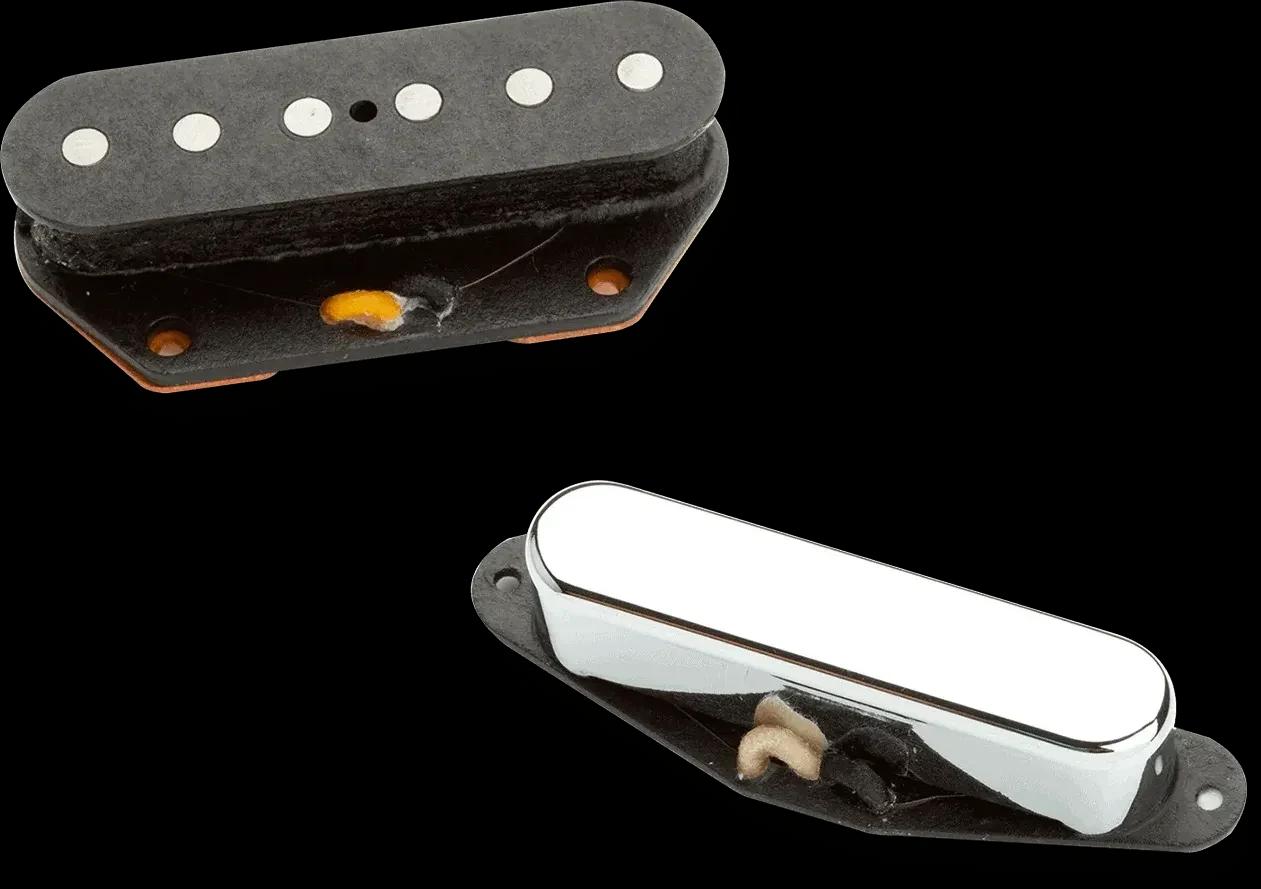
Strat-style covers are plastic, with six holes so that the rod-magnet pole pieces, which Seymour Duncan notes are staggered to balance the strings, come through. DiMarzio says most of its Strat and Tele replacement pickups have replaceable covers in a range of colours. Spacing matters here too: StewMac sells a modern set with neck, middle and bridge covers at 48, 50 and 52 mm, and a vintage set with all three at 52 mm. The Tele neck pickup is the exception, with a metal cover.
P-90 covers are plastic too, and come in soapbar and dog-ear shapes. StewMac's Gibson-pattern soapbar cover measures 85.7 by 34.9 mm and its dog-ear 117.5 by 41.3 mm, both with a 49.2 mm pole spread, while its import-pattern covers have a 50 mm spread, so check which you have before ordering. A humbucker-sized P-90 such as the Phat Cat wears a metal humbucker cover instead, which Seymour Duncan says gives more shielding and noise reduction than a standard soapbar cover. P-90 pickups explained covers the two shapes.
Match the spacing first, then choose the finish
Measure the pole spacing of your pickup, or the strings over it, and buy a cover to match; then choose the finish. Nickel silver is the safe metal, and covered or open is mostly a question of looks, with at most a slight loss of brightness from the cover. For the rest of the hardware, the Parts hub collects the site's guides, including guitar control knobs, and humbuckers explained covers what sits under the cover.