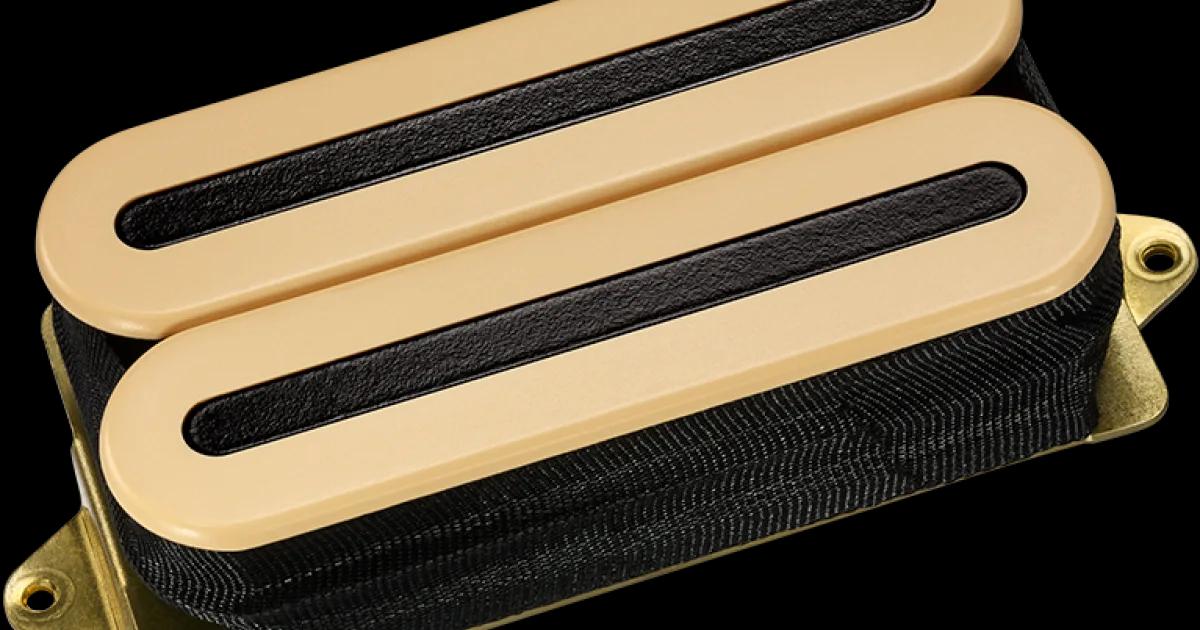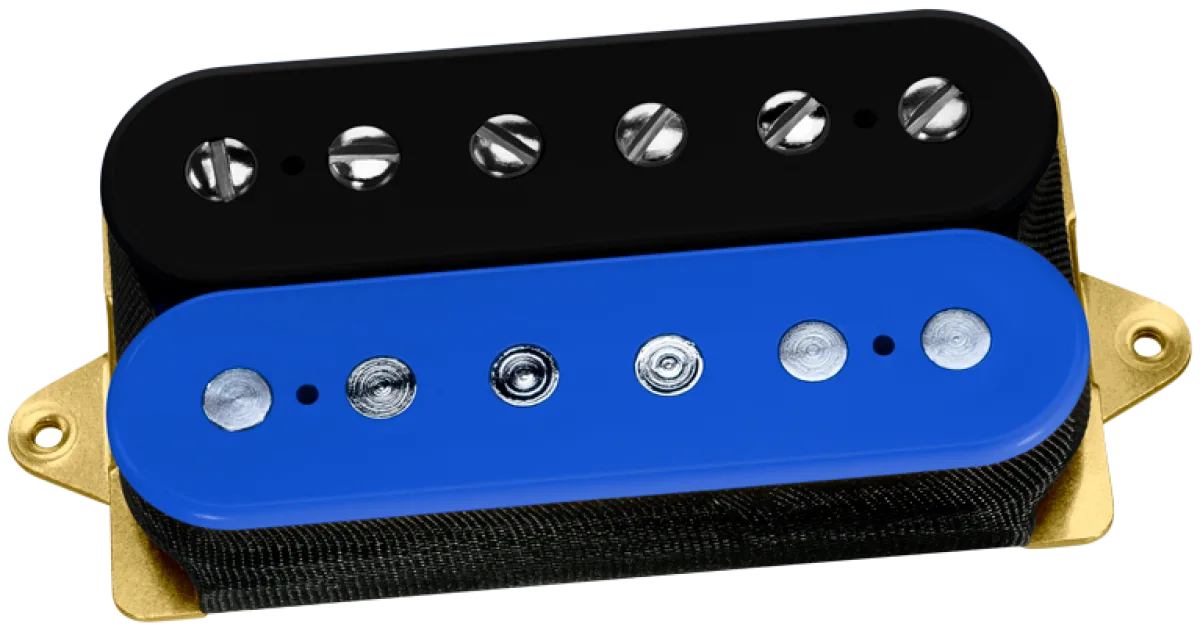
A bridge pickup that fills out a thin-sounding guitar
Put a Tone Zone in the bridge and the guitar gets heavier. DiMarzio's own tone guide rates it bass 9.5, low mid 8.5, high mid 8.0 and treble 4.0, which is why several owners fitted it to bright or thin-sounding guitars to fill them out, and why some find it too much in a dark one. DiMarzio credits its patented dual-resonance coils for the overtones a pickup this fat still carries.
It uses an Alnico 5 magnet and a 4-conductor lead, and DiMarzio lists its DC resistance at 17.31k with an output rating of 375 on its own scale. That is a higher resistance than the Super Distortion's 13.68k but a lower output rating than its 425, a useful reminder that resistance alone does not say how loud a pickup is; pickup specifications explained covers why. It comes in standard and F-spaced versions and a long list of bobbin colours and covers.
The Tone Zone joined DiMarzio's range in 1991 and has stayed in it since. DiMarzio recommends it for the bridge position of solid-body guitars and files it with its high-power humbuckers, alongside the Super Distortion.
Thick lows, smooth highs
Beyond one independent review, from Tone Journey, this account rests on owners: 30 reviews at Thomann, across five versions of the pickup. Most describe what the tone guide promises. The sound is thick, with a heavy push in the bass and low mids, and the output is high. Around a third say it nonetheless stays clear and defined under gain, with single notes that stand out, and several add that the treble is smooth and never harsh. DiMarzio's claim that it responds to picking strength gets some support from an owner who praises how it cleans up from the volume knob.
It is also liked as a split pickup. DiMarzio says the split mode gives a good single-coil sound, and four owners agree. The 4-conductor lead suits a push-pull coil split or series and parallel switching.
Where the bass becomes too much
The same weight is the main complaint. Four owners found the low end too strong for their guitar, two of them returning the pickup because it turned muddy at high gain and lacked the treble to cut through. Others heard it differently, as sharper and less warm than expected. The verdict depends heavily on the guitar: one owner would not put it in a thick-bodied Les Paul, while several fitted it to brighter or thinner-sounding guitars to fill them out.
Three owners also place it firmly in the hard rock and metal of the 1980s and 1990s. That is praise for most of them, but anyone wanting the tight, percussive low end of a modern metal pickup is better served elsewhere.
Guitars it suits and what to compare it with
The Tone Zone fits a standard humbucker route and is made in standard and F-spaced versions. Owners most often fit it to Ibanez superstrats, which makes the Ibanez RG421 a natural home, and to the bridge of humbucker-equipped Strat-style guitars such as the Yamaha Pacifica 112V. DiMarzio's suggested neck partners include the Air Norton and PAF Pro, and owners report the Air Norton pairing works well. How to change a pickup covers the fitting.
Against the Super Distortion, DiMarzio's own figures show the difference: the Tone Zone has more bass and far more midrange, with slightly less treble. The Seymour Duncan JB is the brighter alternative, and one owner prefers the Tone Zone to it for its heavier low mids. For more aggression, look at the Seymour Duncan Invader or the active EMG 81.