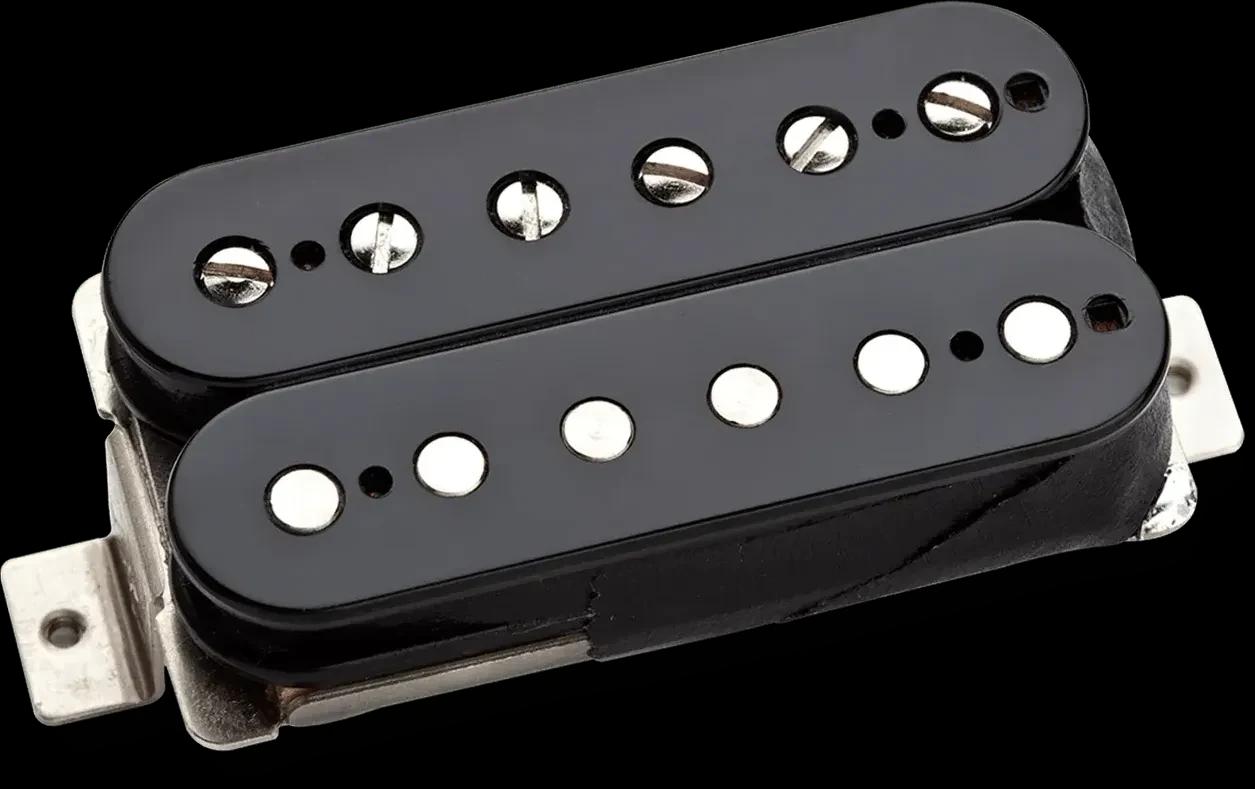
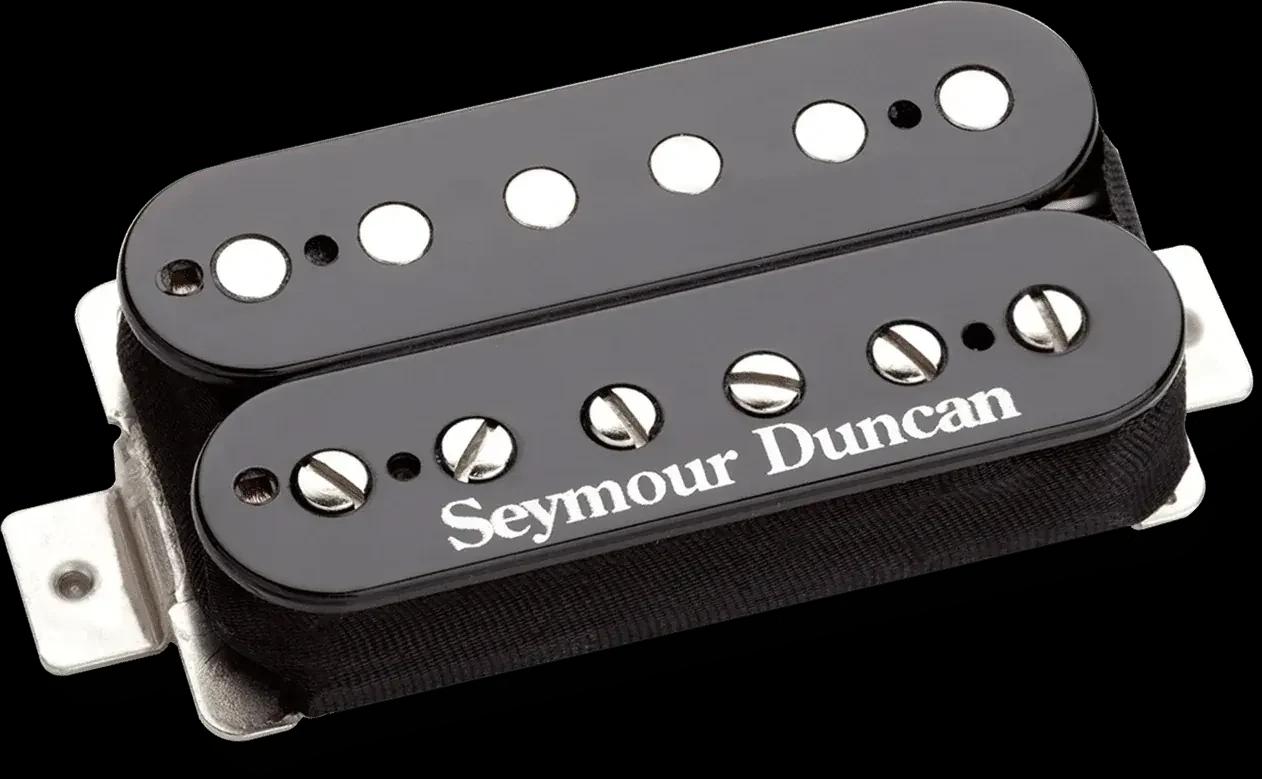
A mini humbucker is a full two-coil, hum-cancelling pickup built on a narrower footprint than a standard humbucker. It is not simply a scaled-down PAF in sound, though: its narrower aperture and smaller coils put it between a single coil and a full-size humbucker, brighter and more focused than the second but without the hum of the first.
It began at Epiphone, not Gibson
Gibson bought Epiphone in 1957. Epiphone had its own narrow single-coil pickup, the "New York", and when Gibson began building Epiphone guitars it wanted a pickup of Epiphone's own that would fit those existing body cutouts with little change. The answer was a smaller humbucker. According to Guitar World's history, the first mini humbuckers appeared on Epiphones in 1961, the same year Gibson used them on its Johnny Smith signature archtop.
The pickup reached a much wider audience in 1969, when Gibson fitted it to the new Les Paul Deluxe. The Deluxe kept mini humbuckers as standard until 1982. Rock players of the 1970s, Pete Townshend and Thin Lizzy's Scott Gorham among them, used minis on stage, which did much to give the pickup its reputation.
A narrower aperture means a brighter sound
Any pickup senses a short length of each string, and the width of that window, its aperture, affects the tone. A full-size humbucker has two coils spaced well apart, so it hears a wide stretch of string; some frequencies are partly cancelled across that width, which is part of why humbuckers sound warm and rounded.
A mini humbucker's coils are smaller and closer together, so its aperture is narrower. Its coils also have less inductance than a full-size humbucker's: Guitar World puts the original Epiphone mini at about 4,250 turns a coil against the PAF's nominal 5,000. The combined effect is less bass and low midrange, more clarity and more treble. That places it between a PAF-style humbucker and a single coil, which is why minis suit players who find full humbuckers muddy but cannot live with single-coil hum.
For the physics behind aperture and coil size, see how guitar pickups work and pickup specifications explained.
Two designs share the same size
There are two quite different pickups of roughly mini humbucker size, and they are often confused.
The Epiphone and Les Paul Deluxe type is built like a small PAF. It has one alnico bar magnet under the coils, one coil with six narrow, adjustable pole screws and one with a steel bar in place of poles. You can adjust the height of each pole screw, as on a full-size humbucker.
The Firebird type first appeared on the Gibson Firebird in 1963, as a hybrid of the Epiphone and Johnny Smith designs. It has no pole screws. Instead, it uses two alnico V bar magnets, one inside each coil and set in opposite polarity, under a plain cover. Guitar World notes that Firebird pickups have even lower inductance than Epiphone-style minis, so they are brighter and chimier again, and hold their clarity well under overdrive.
When you shop for a replacement, the listing should say which type it copies. A pickup sold as a "Firebird" humbucker will not have the same voice as one sold as a Deluxe-style mini.
Minis turn up on more guitars than you might expect
Guitar World's history traces them through the 1961 Epiphone range, including the Riviera, Sheraton and Windsor and later the Crestwood and Wilshire solid bodies, Gibson's Johnny Smith archtop, the Firebird and the Les Paul Deluxe. Several modern makers build signature minis as well: DiMarzio's PG-13, for example, is a mini humbucker developed for Paul Gilbert.
The route in your guitar decides how easy a swap is
Check which of these matches your guitar.
- Mini humbucker route to mini humbucker: a direct swap. Check the mounting ring height and whether the guitar's existing ring suits the new pickup's screw spacing.
- Soapbar P-90 route: Gibson's pattern shop worked out that minis would fit into P-90 cavities, and designed a P-90-sized plastic ring to hold the pickup and cover the gaps.
- Full-size humbucker route: the opening is larger than a mini, so the gap has to be covered with an adaptor ring sized for the job. Measure before buying, because a standard mini ring is smaller than a full-size route.
- Single-coil route: a Strat or Tele route is too small without wood removal, so a single-coil-sized humbucker is the usual alternative.
The wiring is the same as for any other humbucker. Some modern minis, such as Seymour Duncan's Custom Mini Humbucker, have four-conductor leads, so they can be split or wired in parallel; see push-pull coil split wiring and series and parallel switching. The how to change a pickup tutorial covers the soldering, and how to set pickup height covers getting the balance right afterwards.
A mini suits players caught between humbucker and single coil
Pick a mini humbucker if you want a humbucker's freedom from hum and its body for overdrive, but more top end and definition than a PAF gives you. They suit classic rock, indie, country-rock and clean playing well. A full-size humbucker is the better choice for heavy gain and the warmth of a Les Paul neck pickup; the humbuckers explained guide covers the range, from vintage models such as the Seymour Duncan '59 to hot ones such as the JB. And if it is the brightness and snap of a Strat you want, nothing replaces a true single coil; the single coil vs humbucker comparison sets out the trade-offs.